History
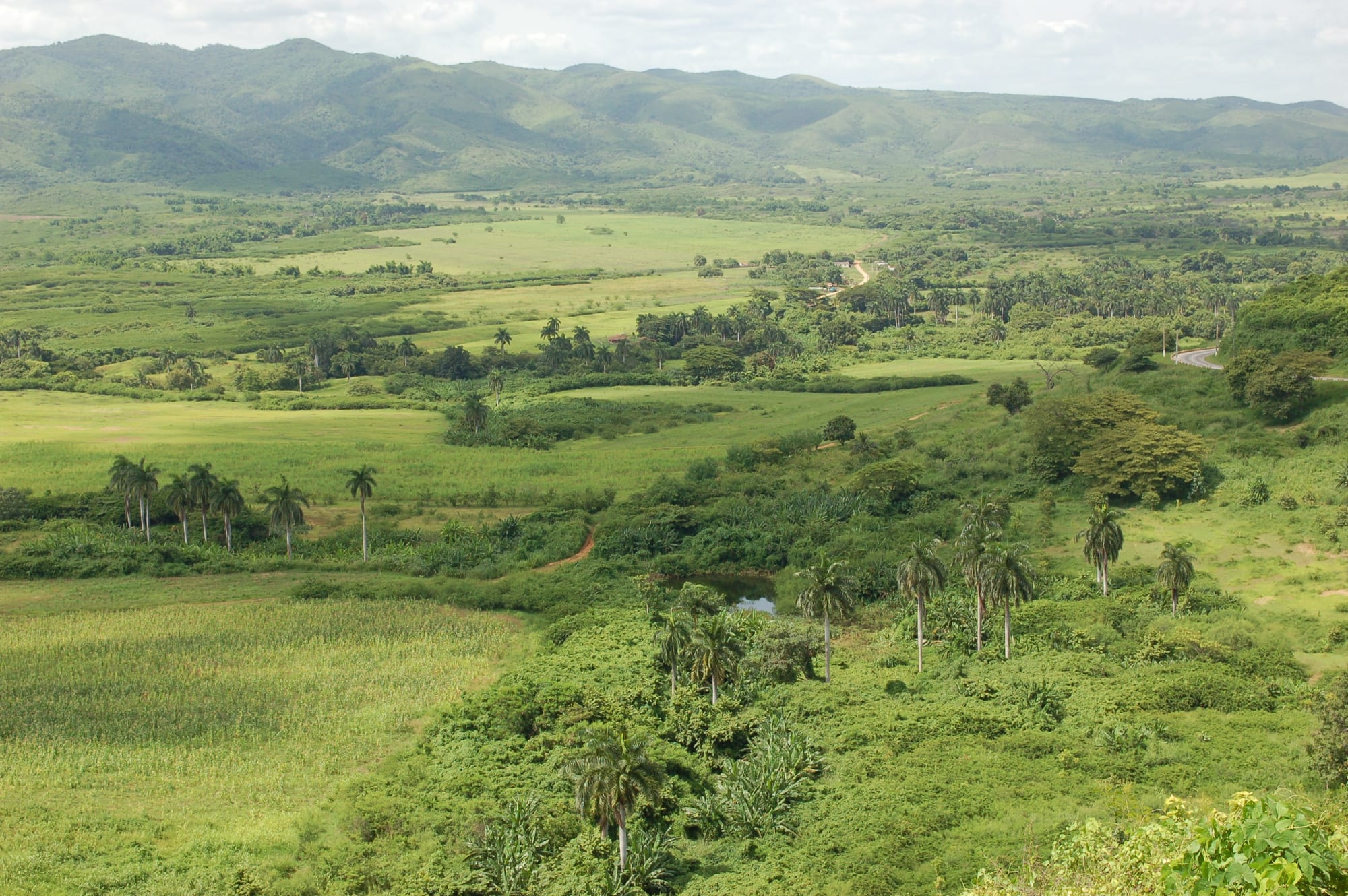
Diego Velázquez founded both Trinidad and Sancti Spíritus in 1514, among the first Spanish towns on the island, and Remedios, near the north coast, dates from the same early decades. For two centuries they remained small towns. Trinidad's fortunes changed in the late 18th and early 19th centuries, when dozens of sugar mills were built in the valleys outside the town, worked by enslaved Africans; the planters' wealth built the mansions around the Plaza Mayor. When the wars of independence in the later 19th century ended the valley's sugar boom and the mills declined, Trinidad stopped growing, which is why its centre survived almost intact.
Cienfuegos had a different origin. In 1819 the Spanish authorities settled French colonists from Bordeaux and Louisiana, led by Louis de Clouet, on the bay guarded since the 18th century by the Castillo de Jagua, and the city was laid out on a regular grid. Santa Clara was founded in 1689 by families from Remedios.
The region's place in modern history was fixed in December 1958, when rebel columns under Che Guevara took Santa Clara and derailed an armoured government train, a defeat that led Batista to flee on 1 January 1959. After the revolution the Escambray mountains became the base of an armed anti-government insurgency that the new state fought until the mid-1960s. In 1997 Che Guevara's remains, found in Bolivia, were brought to the mausoleum in Santa Clara.