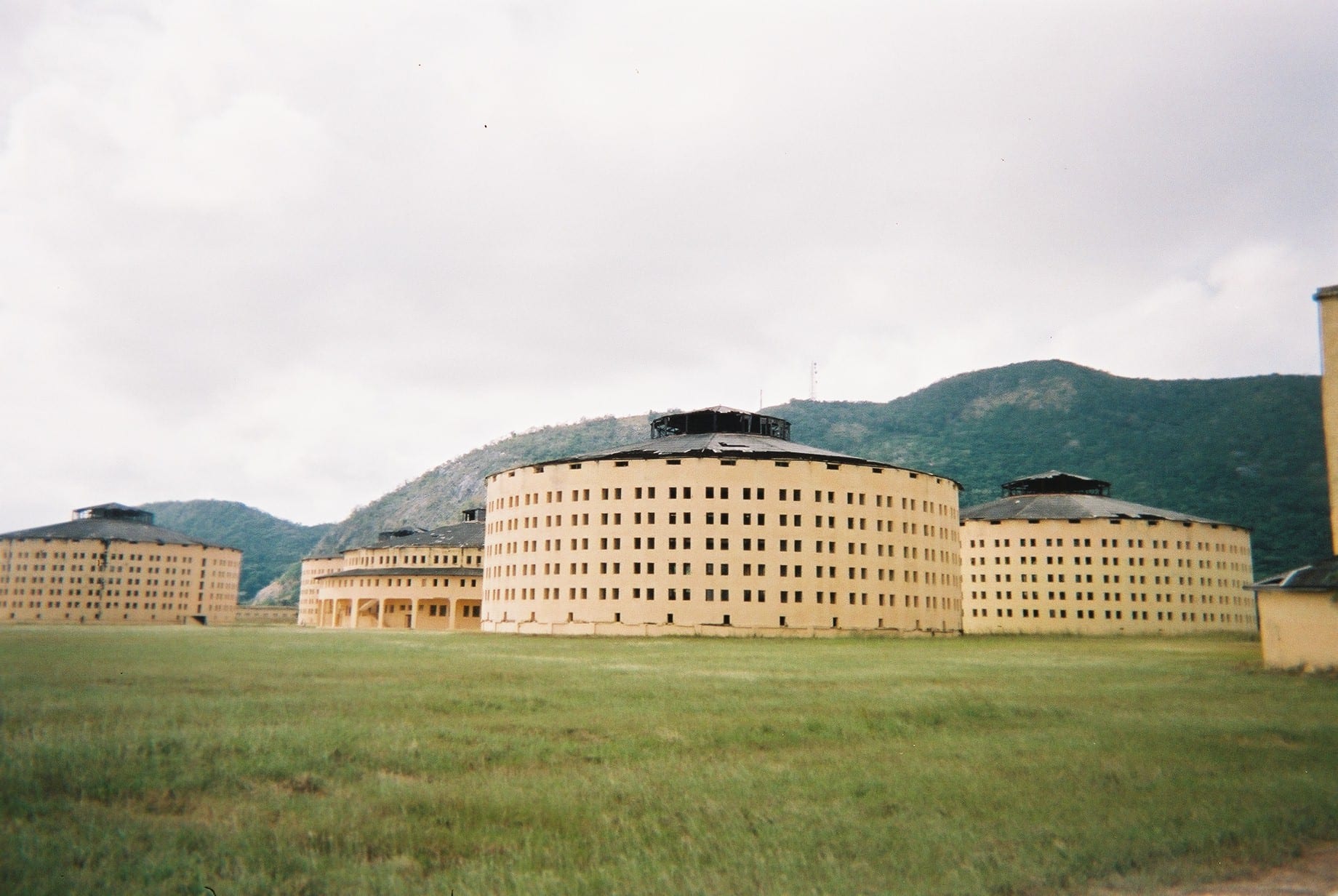
Round multi-storey cream prison blocks with rows of small windows on a grassy plain below green hills

Havana, Viñales & the West, Cuba

Nueva Gerona

The circular cell blocks of the Presidio Modelo on the outskirts of Nueva Gerona. (Friman / Wikimedia Commons · Public domain)

The capital and largest town of the Isla de la Juventud, Cuba's second-largest island, on the Río Las Casas in the island's north. Founded by the Spanish in 1830, it was the main town of an island largely owned by Americans in the early 20th century, and on its outskirts stands the Presidio Modelo, the circular prison where Fidel Castro was held, now a museum.

Neighbourhoods

  • Centro
    • First-time visitors
    • Local life

    The town centre beside the Río Las Casas, with the main plaza and its cinema, shops and most services, and the river that gives the town a navigable way to the sea.

    Open in Maps
  • Chacón
    • History
    • Quiet and residential

    A suburban quarter on the edge of town, home to the Presidio Modelo, whose former administration building is now a school and research centre.

    Open in Maps
  • José Martí
    • Close to the airport

    A suburban quarter on the outskirts of town where the island's airport is located.

    Open in Maps

Things to do

History

  • Presidio Modelomuseum

    A 'model prison' of five circular panopticon blocks built between 1926 and 1931, where Fidel and Raúl Castro and other survivors of the 1953 Moncada attack were held until 1955; it closed in 1967 and is now a museum and national monument.

    Open in Maps

The town and its surroundings

  • The hills above the towntrail

    A short hike of around twenty minutes into the hills that overlook Nueva Gerona, with views over the town.

    Open in Maps
  • Playa Paraísobeach

    A beach near Nueva Gerona, the closest place to swim from the town.

    Open in Maps
  • Río Las Casasattraction

    The river that crosses the town and gives it a navigable waterway to the Caribbean Sea.

    Open in Maps

Nights out and sport

  • The cinema on the plazaattraction

    A cinema with about 600 seats on the town's main plaza.

    Open in Maps
  • Estadio Cristóbal Labraattraction

    The home ground of the Piratas, the Isla de la Juventud baseball club.

    Open in Maps

Eat and drink

Long-standing places and food districts in Nueva Gerona. Hours, ratings and directions come from your maps app, always current.

Island food

  • Restaurants in the town centreneighborhood

    Small state and private restaurants around the centre serving Cuban staples, fish and island fruit to a mostly local clientele.

    Open in Maps
  • Citrus and fruit from the island farmsmarket

    The island grows citrus fruit and vegetables, once famous for grapefruit grown for export, and its produce is sold in the town.

    Open in Maps

Experience Nueva Gerona

History

The island off Cuba's south-west coast was known at various times as the Isle of Parrots and Treasure Island, and pirate activity around it left its mark on English literature: Robert Louis Stevenson's Treasure Island and J. M. Barrie's Peter Pan are said to draw on accounts of it. For centuries it was thinly settled. Nueva Gerona was founded in 1830 by Francisco Dionisio Vives, then the Spanish governor of Cuba, on the Río Las Casas in the north of what was called the Isla de Pinos, the Isle of Pines.

After Spain lost Cuba in 1898, the island's status was left unsettled. Cuba and the United States signed the Hay–Quesada Treaty recognising Cuban sovereignty in 1903, but the US Senate only ratified it in 1925, over the objections of some 400 American citizens and companies who by then owned or controlled about 95 per cent of the island's land.

Between 1926 and 1931 the government of Gerardo Machado built the Presidio Modelo on the town's outskirts. Survivors of the 1953 Moncada attack, Fidel and Raúl Castro among them, were held there until 1955. After the revolution foreign-owned property was expropriated, the prison was closed in 1967, and in 1978 the island was renamed the Isla de la Juventud, the Isle of Youth.

Culture & Customs

The Isle of Youth has a character of its own. Its early 20th-century American settlers left a mark on the landscape and the island's memory, and migrants from the Cayman Islands and Jamaica settled the south coast, where their descendants, known as caimaneros, are English-speaking Cubans. Later, thousands of young people from Cuba and abroad came to study at the island's schools in the countryside.

The Presidio Modelo dominates the town's sense of its history. Its circular cell blocks, built to watch prisoners constantly, held thousands of inmates in harsh conditions, while the Moncada prisoners in the hospital wing turned their imprisonment into a school of politics; after 1959 it held prominent political prisoners of the new government before it closed. Today it is a museum and national monument.

Baseball is followed closely, with the island's club, the Piratas, playing at the Estadio Cristóbal Labra, and life in the town centres on the plaza, where the cinema stands. The pace is slower than on the mainland, and the island's isolation is part of its identity.

Daily Life

Nueva Gerona had about 59,000 people in 2012, the largest share of the island's population, which was estimated at about 83,500 in 2019. The town is divided into quarters (repartos) — Centro, Abel Santamaría, Sierra Caballo, Nazareno, Saigón, Chacón and José Martí — spreading out from the river to the hills.

Agriculture and fishing are the island's main industries, with citrus fruit and vegetables the main crops, and marble is quarried from the low ridges in the north of the island. As the island's capital, Nueva Gerona holds its government offices, port, airport and main services, and the old administration building of the Presidio Modelo is now a school and research centre.

Daily life follows the national pattern of shortages of fuel, food and medicine, power cuts and queues, made harder by the island's dependence on boats and planes from the mainland. Emigration has left many families divided, and remittances from relatives abroad keep many households going.

Food

Island food is the Cuban staple repertoire — rice and black beans cooked together as moros y cristianos or congrí, roast or fried pork, chicken, root vegetables such as yuca with mojo, a garlic-citrus dressing, and fried plantain, both savoury tostones and sweet maduros — with fish from the island's fishing fleet, as fishing and farming are the island's main industries.

Citrus is the island's own crop. Its groves once supplied grapefruit for export, and citrus fruit and vegetables are still the main crops. Fresh juice and fruit appear on tables when the harvest is in, though supplies depend on what the shortages allow.

Rum from Cuba's sugar cane goes into the mojitos and other drinks served in the town's bars, and strong, sweet coffee, cafecito, punctuates the day. Bread, coffee and sugar are staples of the ration. With few restaurants, many visitors eat at their homestays, where families cook what the island's farms and boats bring in.

Planning tools

Budget

The Isle of Youth is among the cheapest parts of western Cuba for visitors, though with few places to stay and eat. Casas particulares are the usual option. Getting there by boat or plane is the main cost, and fuel shortages have made prices and services harder to predict since early 2026.

Daily Budget Midrange
USD 70–130 (a good casa with meals, taxis around the island, a dive trip)
Daily Budget Shoestring
USD 35–60 (casa particular, home-cooked meals, local transport)

Bring enough euros or dollars in cash for the whole stay, as there are few ways to get money on the island.

Best Time to Visit

December to April is the driest and most comfortable time, and the best for diving off the island's coasts. May to October is hotter, more humid and wetter, and September and October carry the highest hurricane risk.

Suggested Number of Days

Two days are enough for the town and its outskirts. Allow four or five to explore more of the island or dive, and keep a spare day, because boat and plane schedules are easily disrupted.

First Visit
2 days
With Surroundings
4–5 days

Transportation

The town centre is small and walkable. Taxis are the way to reach the outer quarters and the rest of the island, and fuel shortages make all transport less reliable than it was.

Confirm the return boat or flight before going and keep plans flexible.

Airport & Station Connections

The island lies about 47 kilometres south of the Cuban mainland across the Gulf of Batabanó. Hydrofoils and catamarans cross from Batabanó, on the south coast of the mainland, to Nueva Gerona in two to three hours, and a slower cargo ferry takes around six. Domestic flights land at Rafael Cabrera Mustelier Airport, in the town's José Martí quarter.

Walkability

The centre is compact and easy to walk, and the hills above the town are a short hike away. The Presidio Modelo, the airport and the beaches need a taxi or bicycle.

Safety

Cuba has low levels of violent crime and is generally very safe for visitors. The west is safe by regional standards, and the island's quiet capital has few crime concerns, but power cuts, water shortages and hurricanes affect the whole region.

Keep a torch for blackouts, carry basic medicines, and swim where local people do. Check current official travel advice before travelling.

Climate

Tropical, with a drier season from November to April and a hot, wet season from May to October. Winter cold fronts reach the west of Cuba from the north, and the island lies in the path of many Atlantic hurricanes.

Summer
hot and humid in western Cuba, around 30–33°C by day, with heavy afternoon storms
Winter
warm days in western Cuba around 24–27°C, with cooler nights during cold fronts

Local Customs

Islanders have a character of their own, shaped by the American settlers of the early 20th century, by migrants from the Cayman Islands and Jamaica whose descendants on the south coast still speak English, and by the young people from Cuba and abroad who once studied at the island's schools.

Ask before photographing people, and treat the Presidio Modelo as a place of memory as well as a museum.

Common Payment Methods

The currency is the Cuban peso (CUP), and services for visitors may be priced in US dollars or euros. Cash is essential: ATMs are unreliable and US-issued cards do not work at all.