💰 Budget
Viñales is cheaper than Havana, with a very large supply of casas particulares and family-run restaurants. Guided walks, horse rides and cave visits are the main extra costs. Fuel and food shortages have made prices harder to predict since early 2026, and cash is needed for almost everything.
- Daily Budget Midrange
- USD 80–150 (a good casa with meals, restaurant dinners, a guided ride or cave visit, private taxis)
- Daily Budget Shoestring
- USD 35–60 (casa particular, home-cooked meals, walking and cycling)
Carry enough euros or dollars in cash for the whole stay; walking the valley tracks costs nothing.
📅 Best Time to Visit
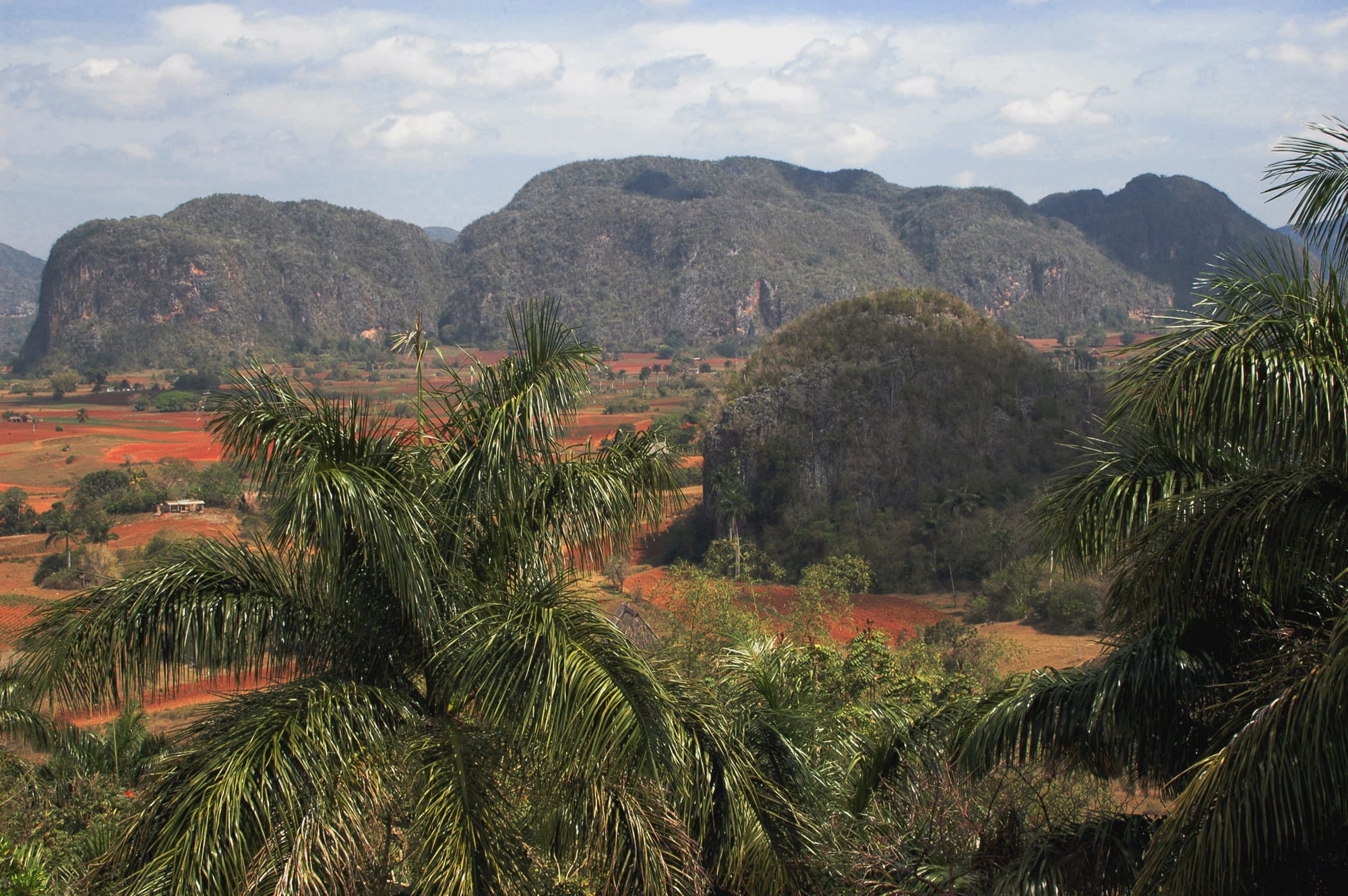
December to April is the driest and most comfortable time, and the best for walking and riding in the valley. Tobacco is planted in the autumn and harvested in the first months of the year, when the drying barns are full. May to October is hotter and wetter, and September and October carry the highest hurricane risk.
⏳ Suggested Number of Days
Two or three days are enough for the valley at an easy pace. Allow four or five to include the larger caves to the west or a day on the cays off the north coast. Transport disruption makes a spare day sensible.
- First Visit
- 2–3 days
- With Surroundings
- 4–5 days
🚆 Transportation
The town centre is small and walkable. Visitors get around the valley on foot, by bicycle, on horseback or with taxis and tours; some sights are too far to walk to. Shared taxis (colectivos) and Víazul buses link the town with Pinar del Río and Havana, though fuel shortages disrupt them.
Confirm onward transport the day before, as bus departures are unreliable and schedules change.
🛬 Airport & Station Connections
Viñales lies about 26 kilometres north of the city of Pinar del Río. Visitors arrive from Havana, three to four hours to the east, by Víazul bus via Pinar del Río, by shared taxi or on tours. The nearest international airport is José Martí in Havana.
🚶 Walkability
The town is easy on foot, with most services along the main street and the square. The valley tracks are good for walking but often rough, muddy after rain and exposed to the sun, and the caves and western sights need transport.
🛡️ Safety
Cuba has low levels of violent crime and is generally very safe for visitors. The countryside of the west has few crime concerns, but power cuts, water shortages and hurricanes affect the whole region, and homestays may run on generators when the grid goes down.
Agree prices for rides and taxis in advance, carry water and sun protection on the valley tracks, and keep a torch for blackouts. Check current official travel advice before travelling.
🌦️ Climate
Tropical, with a drier season from November to April and a hot, wet season from May to October. Winter cold fronts bring cooler nights to the valley, and the west lies in the path of many Atlantic hurricanes; Hurricane Ian caused severe damage in Pinar del Río Province in 2022.
- Summer
- hot and humid in western Cuba, around 30–33°C by day, with heavy afternoon storms
- Winter
- warm days in western Cuba around 24–27°C, with nights that can drop to the low teens in the valleys during cold fronts
🤝 Local Customs
This is guajiro country, the land of the Cuban rural farmer, and many families descend from Canary Island settlers. Farmers welcome visitors to their fields and drying barns, and tips from tourism are an important income. English is spoken less widely than in Havana.
Ask before photographing people, keep to the paths across farmland, and dress modestly away from the pool.
💳 Common Payment Methods
The currency is the Cuban peso (CUP), and many services for visitors are priced in US dollars or euros. Cash is essential: ATMs are unreliable and US-issued cards do not work at all.