💰 Budget
Otavalo is inexpensive. Because tourism is its main industry, it has many more hostels, hotels and tour operators than most towns its size, so rooms are plentiful. Buses to the surrounding villages are very cheap; taxis to the lakes are the main extra cost.
- Daily Budget Midrange
- USD 60–120 (hotel or hacienda, sit-down dinners, taxis to the lakes or a guided day trip)
- Daily Budget Shoestring
- USD 25–45 (hostel bed, market meals, local buses)
Bargaining is accepted at the market, but prices are already low; buying in the villages where crafts are made puts more money in the makers' hands.
📅 Best Time to Visit
Any Saturday for the full market. June brings Inti Raymi and falls in the highlands' drier season, from June to September, which also gives the clearest views of the volcanoes and the best walking around the lakes. February or March brings Pawkar Raymi in Peguche.
⏳ Suggested Number of Days
One or two days are enough for the town and the market, ideally including a Saturday. Allow three or four to include the lakes, the villages and neighbouring craft towns. Many visitors come as a day trip from Quito, but an overnight stay sees the market before the crowds arrive.
- First Visit
- 1–2 days
- With Surroundings
- 3–4 days
🚆 Transportation
The town is small and walkable. Buses to nearby villages and towns leave frequently from the main terminal, and taxis are cheap for Peguche and the lakes; the Mojanda lakes are reached by taxi or on foot.
Arrange a return time with taxi drivers when going to the more remote lakes.
🛬 Airport & Station Connections
Otavalo is about two hours north of Quito on the Panamerican Highway. Buses leave from Quito's northern Carcelén terminal and stop at the small terminal in town; Quito's airport is the usual arrival point, and a taxi straight from the airport avoids going into the city. Buses also run frequently to Ibarra, a short ride to the north.
🚶 Walkability
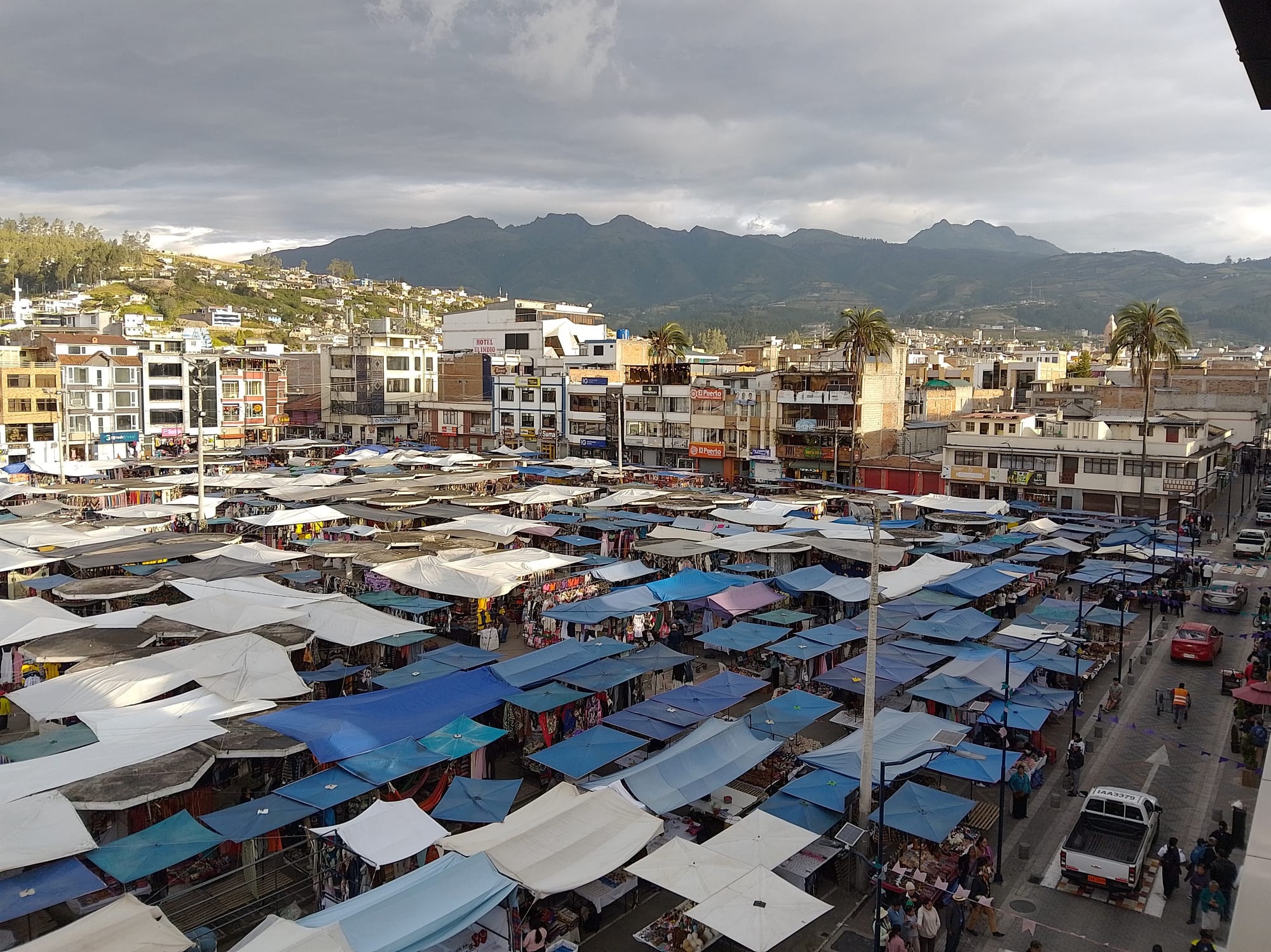
The centre is compact and flat, and the market, Parque Bolívar, the food market and the bus terminal are all a few blocks apart. Peguche waterfall is within walking distance; the other lakes and villages need a bus or taxi.
🛡️ Safety
Ecuador's security has deteriorated sharply since about 2019, with a surge in organised crime, gang violence, and prison unrest, especially in Guayaquil, Esmeraldas, Manta, and the northern border with Colombia. Otavalo is on the highland tourist route, which remains much calmer than the coastal cities. The crowded Saturday market is the place where pickpockets and bag-snatchers work.
Keep bags closed and in front in the market crowds, and use registered taxis after dark. Check current official travel advice before travelling.
🌦️ Climate
A mild highland climate averaging about 16°C, with temperatures ranging between about 12 and 25°C. Days are spring-like and nights cool all year, with a drier and a wetter period.
- Summer
- the drier season, June to September: sunny days reaching the low to mid 20s °C, with cool nights and wind
- Winter
- the wetter months, October to May: afternoon rain, with nights down to about 12°C
🤝 Local Customs
Otavalo is a Kichwa town, and traditional dress is everyday wear: women in white embroidered blouses with lace sleeves, dark skirts and strands of gold beads; men in white trousers and dark ponchos. Greetings are 'buenos días' or 'buenas tardes', and older people are addressed as 'usted'.
Ask before photographing people, especially in traditional dress or at festivals. Many restaurants add a service charge, so a further tip is optional.
💳 Common Payment Methods
The currency is the US dollar. Market traders, buses and village guesthouses want cash, in small notes; hotels and some shops take cards. Damaged notes are refused. There are ATMs in the centre.