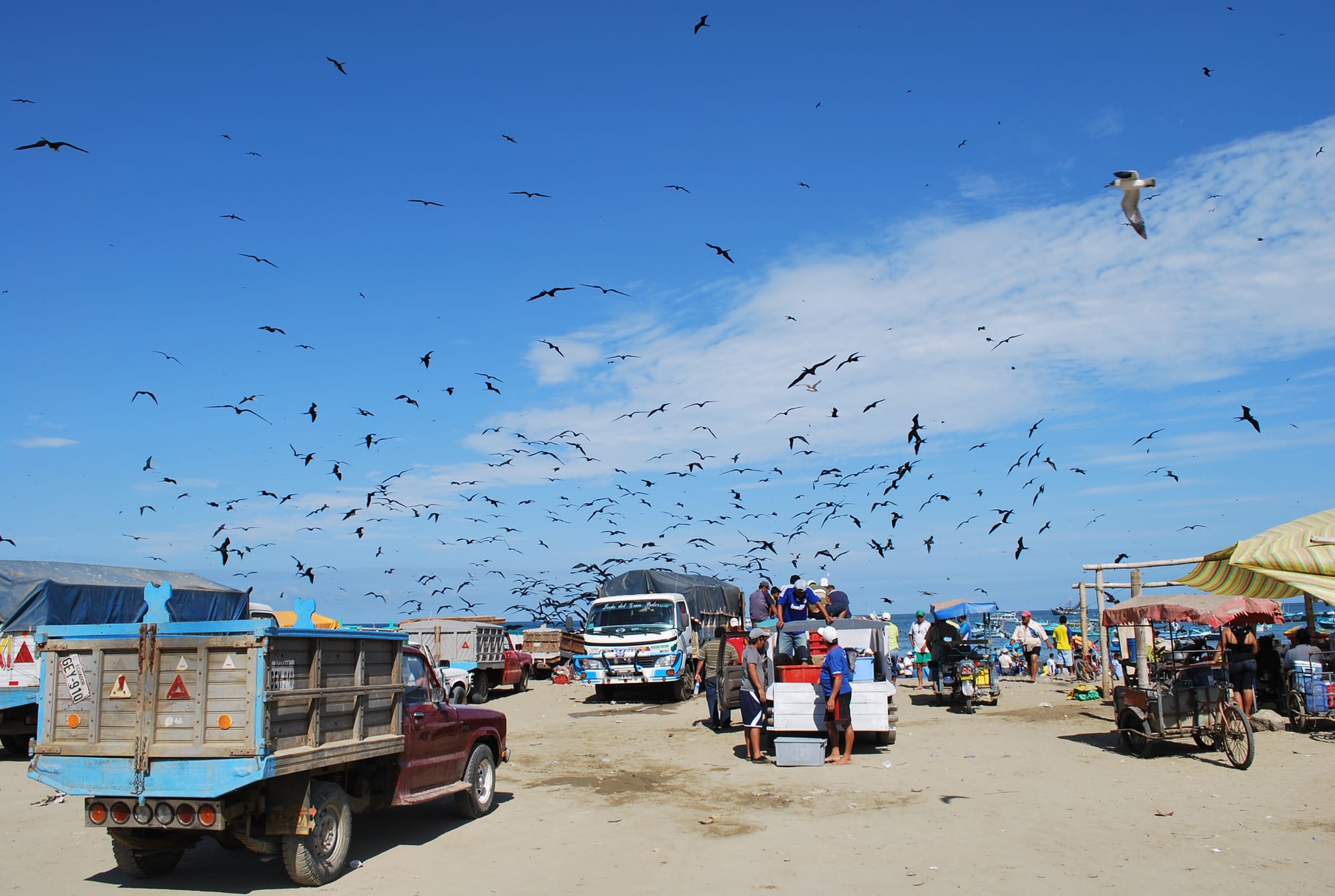
Frigatebirds wheeling over a sandy beach where fishermen load the catch into trucks and tricycle carts under a blue sky

Guayaquil & the Pacific Coast, Ecuador

Puerto López

Fishermen load the day's catch on the beach at Puerto López as seabirds circle overhead. (DickClarkMises / Wikimedia Commons · CC0)

A fishing town of about 12,600 people on a wide bay in southern Manabí, settled by fishermen in the 19th century on a shore inhabited for thousands of years before that. It is the headquarters of Machalilla National Park and the base for humpback whale trips, Isla de la Plata and the beach at Los Frailes.

Neighbourhoods

  • The malecón and the beachfront
    • First-time visitors
    • Beaches
    • Best for food

    The seafront promenade along the curve of the bay, lined with seafood restaurants, beach cabañas selling drinks and ceviche, and the pier for boat tours to the islands. The fishing fleet lands its catch on the beach near the pier.

    Open in Maps
  • The town centre
    • Local life
    • Quiet and residential

    A few blocks of low houses, shops and food carts behind the seafront, where most residents live. Everything here is within walking distance, and mototaxis cover the rest.

    Open in Maps
  • Salango and the coast to the south
    • Quiet and residential
    • Beaches

    A short bus ride south, the fishing community of Salango sits in the park's buffer zone, facing its own small island, with an archaeological museum and community-run ecotourism.

    Open in Maps

Things to do

The town and the bay

  • The morning fish landingattraction

    Each morning the catch — wahoo, tuna, swordfish and sharks among it — is brought onto the beach near the pier and sold off fast, with frigatebirds and pelicans crowding in for scraps.

    Open in Maps
  • Whale watchingattraction

    From mid-June to October humpback whales come to these waters to mate, and licensed boats leave from the bay to watch them; dolphins are often seen on the way.

    Open in Maps

Short trips into Machalilla National Park

  • Machalilla National Parkpark

    A park founded in 1979 that covers beaches, dry and fog forest and two larger islands, with more than 270 bird species and a breeding ground for humpback whales; Puerto López is its headquarters.

    Open in Maps
  • Los Frailesbeach

    A protected beach in the park just north of town, reached by a trail of about two hours past a black-sand cove, the small beach of La Tortuguita and a lookout.

    Open in Maps
  • Agua Blancaattraction

    A community inside the park, east of the town, living on an archaeological site, with a small museum, a brightly painted church, guided walks and a sulphur lagoon where visitors bathe in the mud.

    Open in Maps
  • Isla de la Plataattraction

    An island of the park about 40 kilometres offshore, called the poor man's Galápagos for its blue-footed, red-footed and Nazca boobies, frigatebirds and other seabirds, with snorkelling on the surrounding reef.

    Open in Maps
  • Salango Islandattraction

    A small island about a kilometre off Salango, part of the park, home to blue-footed boobies, with sea lions and whales sometimes seen in the waters around it.

    Open in Maps
  • Montañitaattraction

    The surf and backpacker village down the coast in Santa Elena province, about an hour by bus.

    Open in Maps

Seasonal events

  • Humpback whale seasonmid-June to October

    The months when humpback whales mate off the coast, behind Salango Island and in the park's waters.

Eat and drink

Long-standing places and food districts in Puerto López. Hours, ratings and directions come from your maps app, always current.

Puerto López classics

  • Seafront seafood restaurantsneighborhood

    The shoreline is lined with restaurants serving the local catch — fish, shrimp and ceviche — in the coast's set menus and à la carte.

    Open in Maps
  • Beach cabañasneighborhood

    Thatched stands on the sand selling ceviche and drinks by day, and playing salsa and reggae through the evening.

    Open in Maps

Street food

  • Food carts in the centreneighborhood

    Carts a few blocks back from the shore selling empanadas and other cheap snacks to residents and travellers.

    Open in Maps

Experience Puerto López

History

The wide bay has drawn people for thousands of years. The coast that is now the canton of Puerto López — Salango, Agua Blanca, Machalilla and the neighbouring shore — was home to the Valdivia, Machalilla, Chorrera, Engoroy, Bahía and Manteño cultures, and remains found here span the period from the pre-ceramic era to the Manteño. Agua Blanca, now a community inside the national park, lives on one of their sites, and Salango's museum keeps an archaeological collection covering more than 4,500 years before the Spanish conquest.

The modern town is young. Around 1810 a Spaniard, José González, and a Chilean, Juan Carpite, settled on the cove. From about 1820 fishermen from Palmar in what is now Santa Elena province came for the plentiful catch, living for short seasons in rough houses on the sand, because the land behind was dense forest. From 1840 some of them settled for good at a place called La Ensenada, and by 1900 the names of resident families appear in the record.

Puerto López later became the seat of its own canton, and in 1979 Machalilla National Park was created around it, taking in its beaches, dry forest and islands. The park made the town its headquarters, and whale watching and island trips turned a fishing village into one of the main tourist stops on the coast, though fishing remains central to its life.

Culture & Customs

The town's identity is tied to the sea. Its flag and coat of arms show the beaches and islands, a fishing boat, the dry and humid forests of Machalilla and the stone seat that was the Manteño culture's seat of power, together with the words "tourism, fishing and agriculture". The pre-Hispanic past is part of local pride, and communities such as Agua Blanca and Salango run their own museums and guided visits on their land.

Daily rhythm follows the boats. Each morning the catch comes onto the beach near the pier, and it is sold off quickly, with frigatebirds and pelicans circling overhead. In the evenings the cabañas on the sand play salsa and reggae, and residents and visitors stroll along the bay.

Football is the most popular sport. With no well-known club of its own, the town follows the two Guayaquil giants, Barcelona and Emelec, and the cantonal stadium, which holds about 800 people, also hosts concerts and cultural events. Ecotourism has brought guides, tour agencies and language schools, but fishing still sets the town's pace.

Daily Life

At the 2022 census Puerto López had about 12,600 people, the eleventh-largest town in Manabí. Fishing, trade and tourism are the main sources of work: the boats land amberjack, dolphinfish, wahoo, marlin and several kinds of tuna, while tour operators, guides, restaurants and small hotels depend on the whale season and the national park.

The town is one urban parish, with two rural parishes making up the rest of the canton. Schools follow the coastal calendar, starting in April and finishing in February, and the rains of the wet season damage some school buildings each year. Most people live in the low streets behind the seafront, and the bus terminal stands on the coast road north of town.

Life begins early with the fish landing and slows in the midday heat; evenings are spent outdoors along the bay. Like the rest of the coast, the town lives with Ecuador's security crisis, and states of emergency and curfews have been imposed at times in the coastal provinces.

Food

Seafood is what Puerto López eats. The restaurants along the shore cook the local catch, and the coast's standards are everywhere: ceviche of shrimp or fish served with popcorn and chifles, thin plantain chips; encebollado, the fish, cassava and pickled-onion soup eaten as a hangover cure; and encocado, seafood cooked in coconut. Beach cabañas sell ceviche straight from the sand.

This is Manabí, whose kitchen is built on peanuts and green plantain. Look for viche, a fish and seafood soup thickened with peanut; corviche, fried green-plantain and peanut dough filled with fish; and salprieta, a condiment of toasted maize and peanut. A bolón de verde, a ball of mashed green plantain with cheese or pork crackling, is a common breakfast.

Cheap snacks such as empanadas come from food carts a few blocks back from the shore. Fruit juices, batidos and coconut water are sold everywhere, and the usual beer is Pilsener, served in large bottles.

Planning tools

Budget

Puerto López is one of the cheaper bases on the coast, with plenty of simple hostels, cabañas and seafood set lunches. The main costs are the boat trips: whale watching, Isla de la Plata and Salango Island are sold as tours, and Agua Blanca charges a small entry fee. Rooms fill and prices rise during the whale season and the Ecuadorian holidays.

Daily Budget Midrange
USD 70–140 (beachfront hotel or cabaña, restaurant meals, a boat tour)
Daily Budget Shoestring
USD 25–40 (hostel bed, seafood set lunches, buses and mototaxis)

Book whale-watching and island trips with operators licensed by Machalilla National Park.

Best Time to Visit

Mid-June to October for the whales, when skies are often grey and the air a little cooler. From about December to May it is warmer, with short, sometimes heavy rains, and the beaches are at their sunniest.

Suggested Number of Days

Two or three days allow time for the bay, a boat trip and the park's beaches. Allow four or five to add the villages and communities along the coast, or more than one boat trip.

First Visit
2–3 days
With Surroundings
4–5 days

Transportation

The town is small: everything except the bus terminal, about 1.5 kilometres north on the coast road, is within walking distance, and mototaxis cover short hops. Buses running along the coast road stop at Los Frailes, Agua Blanca and Salango, and tour agencies arrange the boat trips.

Travel between towns by day and use registered intercity buses.

Airport & Station Connections

Buses from Guayaquil take about four hours via Jipijapa; others come up the coast from Santa Elena and Montañita, about an hour away, or down from Portoviejo via Jipijapa. International travellers usually arrive at Guayaquil's José Joaquín de Olmedo International Airport; Manta also has a smaller airport.

Walkability

The centre and the seafront are flat and easy on foot, and the walk along the bay is the town's main promenade. The bus terminal is too far out to walk with luggage; mototaxis wait there.

Safety

Ecuador's security has deteriorated sharply since about 2019, with a surge in organised crime, gang violence, and prison unrest, especially in Guayaquil, Esmeraldas, Manta, and the northern border with Colombia. The coast is the part of the country most affected, and UK government advice warns against all but essential travel to most of the coastal provinces, Manabí among them. The beach towns are calmer but not crime-free, and strong currents make some beaches dangerous.

Use licensed boat operators, travel between towns by day, keep valuables out of sight, follow curfews and local news, and swim only where locals do. Check current official travel advice before travelling.

Climate

A warm semi-arid climate, with an average temperature of about 23°C that changes little through the year. A warm, lightly rainy season runs from about December to June, when rain can be heavy but brief; the rest of the year is dry and a little cooler. Humidity makes it feel hotter than the thermometer suggests.

Summer
December–June: warm and humid, with brief showers; March is the warmest month, averaging about 25°C
Winter
July–November: dry and slightly cooler, often grey; September is the coolest month, averaging about 21°C

Local Customs

Puerto López is a working fishing town first, and life starts early on the beach. Like most of the coast it is easy-going, but beachwear belongs on the sand. Football is followed passionately, with most residents supporting the Guayaquil clubs Barcelona and Emelec.

Keep a respectful distance from wildlife on the islands and stay on marked trails in the park; ask before photographing fishermen at work.

Common Payment Methods

Ecuador uses the US dollar. Bring small, clean notes: breaking a USD 20 can be hard and damaged bills are refused. Cards are accepted in tourist areas, but cash is needed for buses, mototaxis, food carts and park community fees.