💰 Budget
Salinas is more expensive than the backpacker villages up the coast: much of the accommodation is in apartment towers and hotels aimed at Ecuadorian families, and prices rise sharply in the beach season and at holidays. Seafood is good value, and the beaches are free; boat trips, deep-sea fishing and taxis are the extras.
- Daily Budget Midrange
- USD 80–140 (seafront hotel or rented apartment, restaurant meals, a boat trip or taxis)
- Daily Budget Shoestring
- USD 30–50 (simple guesthouse, ceviche and set lunches, local buses)
Weekdays outside the December–May season are far quieter.
📅 Best Time to Visit
December to May is the beach season, hotter and sunnier, when Salinas is crowded, above all at weekends. June to October brings humpback whales and grey, cooler days. The peninsula is the driest part of the coast.
⏳ Suggested Number of Days
Two or three days are enough for the beaches and the peninsula's western tip. Allow four or five to add the neighbouring towns and the coast to the north, or a boat trip, which depends on the season.
- First Visit
- 2–3 days
- With Surroundings
- 4–5 days
🚆 Transportation
The centre is easy to cover on foot along the malecón, and taxis and local buses link Salinas with Punta Carnero, La Libertad, Santa Elena and the coast road north. Many visitors drive from Guayaquil, and a hire car makes it easy to explore the peninsula.
Use registered taxis, and travel between towns by day.
🛬 Airport & Station Connections
Salinas is about 124 kilometres west of Guayaquil by the Vía a la Costa highway. Most people come by road: several bus companies run from Guayaquil's terminal, and shared private cars are an option. General Ulpiano Paez Airport is a joint civil and military airport, but most travellers fly into Guayaquil's José Joaquín de Olmedo International Airport and continue by road.
🚶 Walkability
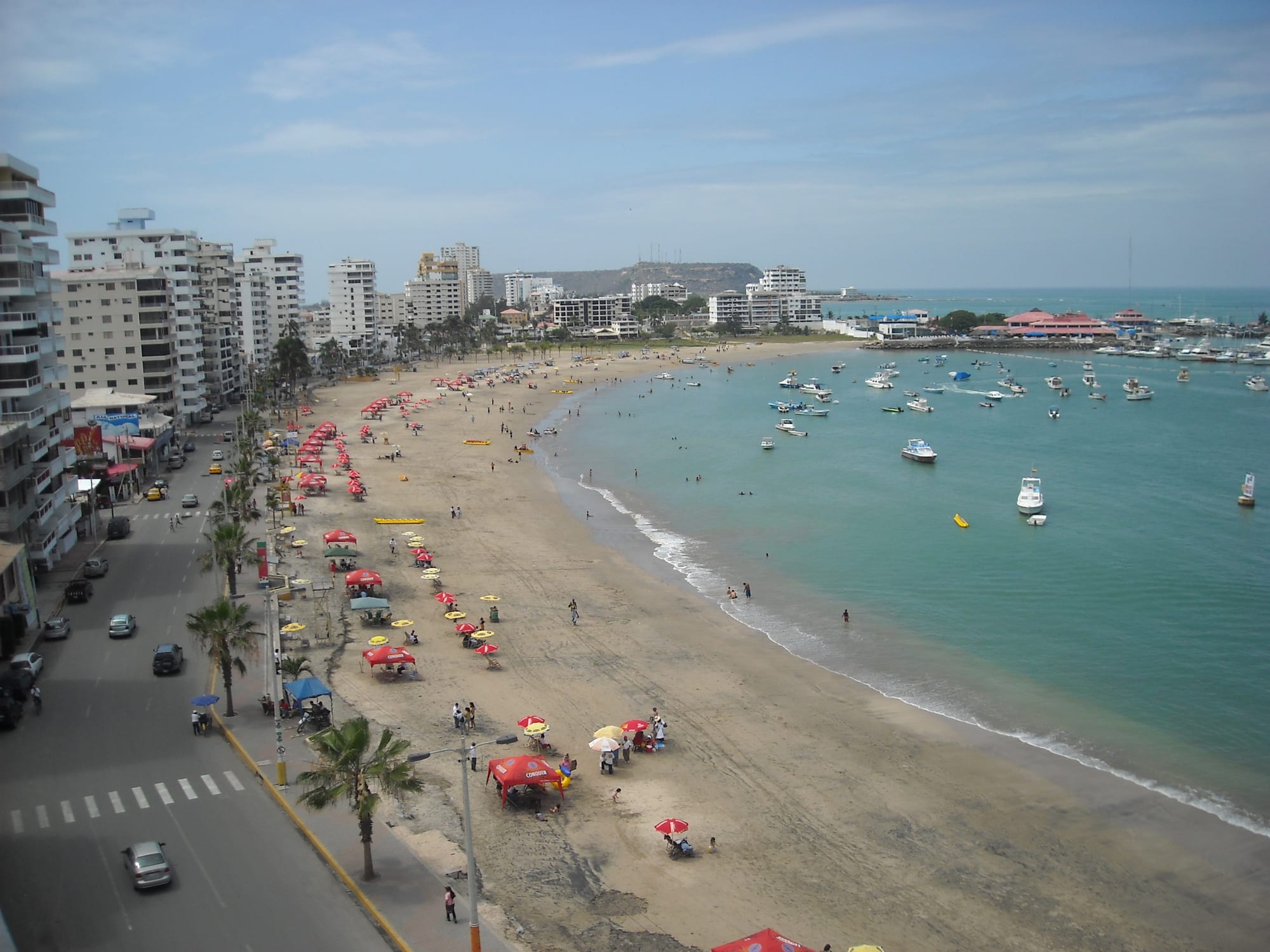
The seafront is flat and made for walking, from Chipipe and the yacht club past the main beach towards San Lorenzo. Punta Carnero, La Chocolatera and the neighbouring towns need a taxi or bus. The sun is strong, so walks are best early or late in the day.
🛡️ Safety
Ecuador's security has deteriorated sharply since about 2019, with a surge in organised crime, gang violence, and prison unrest, especially in Guayaquil, Esmeraldas, Manta, and the northern border with Colombia. The coast is the part of the country most affected, and UK government advice warns against all but essential travel to most of the coastal provinces, Santa Elena among them. The beach towns are calmer but not crime-free, and strong currents make some beaches dangerous — bathing is prohibited at Mar Bravo.
Swim at calm beaches such as Chipipe and only where locals do, keep valuables out of sight, use registered taxis, travel between towns by day and follow curfews and local news. Check current official travel advice before travelling.
🌦️ Climate
A hot desert climate tempered by the cold Humboldt current, which keeps temperatures down for most of the year. The average is about 25°C, rain is scarce, and the land around the town is dry enough for salt flats. Humidity makes the heat feel stronger than it is.
- Summer
- December–May, the hot season: March is the warmest month, averaging about 28°C, with occasional rain
- Winter
- June–November: grey and cooler, with drizzle; September is the coolest month, averaging about 22°C
🤝 Local Customs
Salinas is where Guayaquil goes on holiday, and it has the relaxed, sociable manner of the coast: families on the beach all day, loud music and late nights in season. Beachwear belongs on the sand and the malecón. Football loyalties are split between the Guayaquil clubs Barcelona and Emelec.
Bring identification to enter La Chocolatera, which lies inside a military base, and follow the signs there; ask before photographing fishermen at work.
💳 Common Payment Methods
Ecuador uses the US dollar. Bring small, clean notes: breaking a USD 20 can be hard and damaged bills are refused. Cards are accepted in hotels, many restaurants and the shopping centres, but cash is needed for buses, street food and beach vendors.