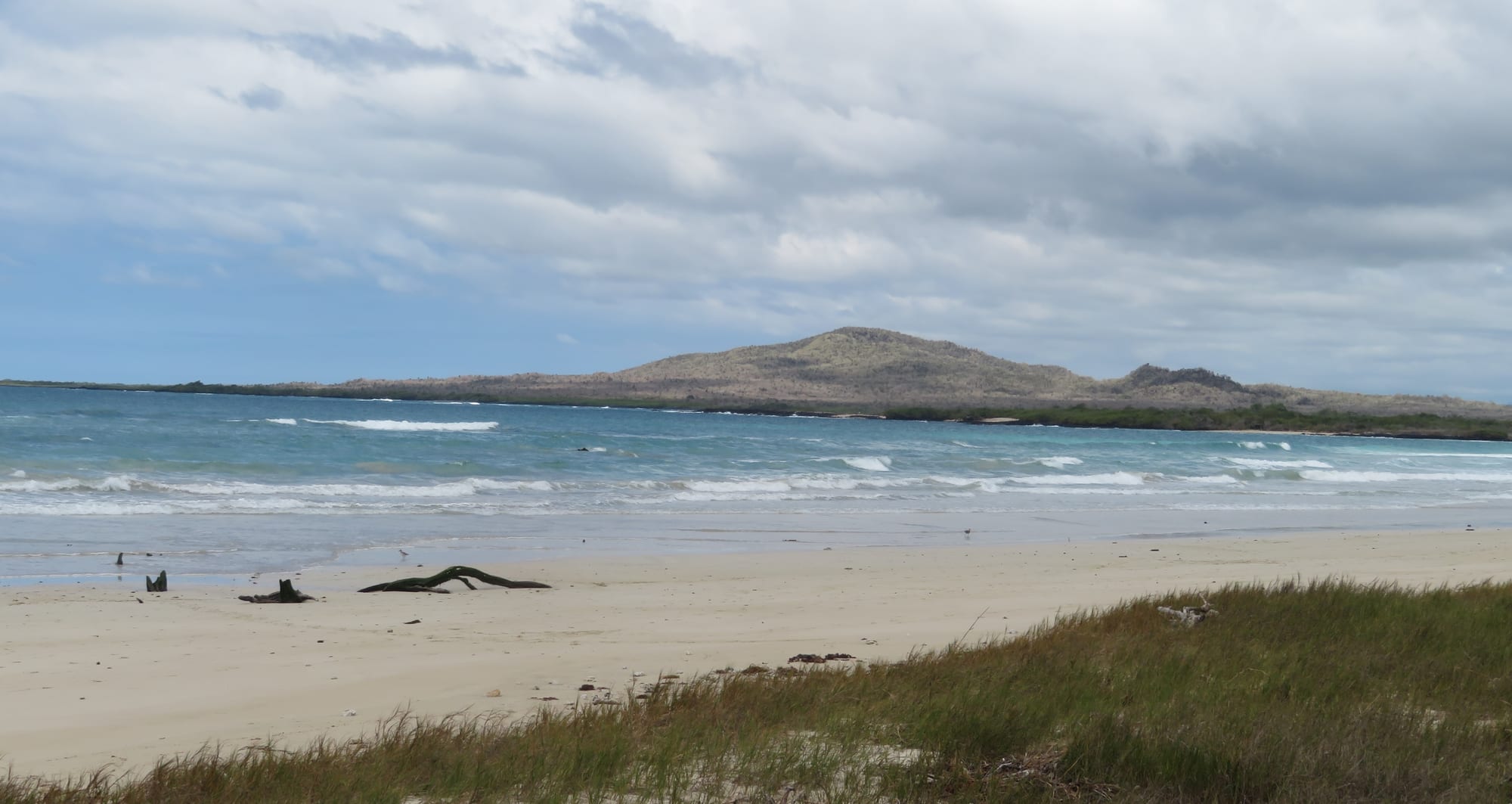
A wide pale sand beach with grass in the foreground, breaking surf and a low volcanic hill across the water

The Galápagos Islands, Ecuador

Puerto Villamil

The beach at Puerto Villamil on the south coast of Isabela Island. (Torbenbrinker / Wikimedia Commons · CC BY-SA 4.0)

A small port village with unpaved sandy streets on the south-eastern tip of Isabela, the largest of the Galápagos Islands. Founded in the 1890s and later the site of a penal colony, it lives from farming, fishing and a growing number of visitors, who come for its long beach, flamingo lagoons, tortoise breeding centre and the huge Sierra Negra volcano behind it.

Neighbourhoods

  • The village centre
    • First-time visitors
    • Local life

    A few blocks of sandy streets around the main square, with the Cristo Salvador church, the municipal market, shops, bakeries and small restaurants. The whole village can be explored on foot in about an hour.

    Open in Maps
  • The beachfront
    • Beaches
    • Nightlife

    The long sandy beach along the south side of the village, lined with guesthouses and a few beach bars where locals and travellers meet in the evening. The nightlife stays quiet.

    Open in Maps
  • The harbour
    • Snorkelling
    • Close to boats

    The dock, where the speedboats from Santa Cruz arrive, taxis wait and water taxis leave for Las Tintoreras. A boardwalk leads from the docks to the natural pool of Concha de Perla.

    Open in Maps
  • The lagoons to the west
    • Wildlife
    • Walks

    West of the village, saltwater lagoons and mangroves frequented by flamingos and other wading birds, crossed by a boardwalk of about 1.2 km to the giant tortoise breeding centre. The road to the Wall of Tears continues beyond.

    Open in Maps

Things to do

In and around the village

  • Flamingo lagoonspark

    Saltwater lagoons in and near the village that hold most of the Galápagos flamingo population, seen in town or in larger numbers along the boardwalk to the breeding centre.

    Open in Maps
  • Giant Tortoise Breeding Centreattraction

    The centre at the end of the lagoon boardwalk where giant tortoises from Isabela are bred and raised before release, with eggs, hatchlings and adults to see on a guided visit.

    Open in Maps
  • Cristo Salvador churchlandmark

    The village church, known for murals that show the landscape and animals of Isabela.

    Open in Maps

Snorkelling and the shore

  • Concha de Perlabeach

    A sheltered natural pool reached by a boardwalk from the docks, good for snorkelling, where sea lions often swim alongside people.

    Open in Maps
  • Las Tintorerasattraction

    A small islet just south of the bay, reached by water taxi, where whitetip reef sharks rest in a lava channel at high tide; the snorkelling nearby has rays and sea turtles.

    Open in Maps
  • Los Túnelesattraction

    A coast of eroded lava arches, channels and pools about 45 minutes by boat from the village, where boobies nest and turtles, rays, sharks and sometimes penguins can be seen on guided snorkelling trips.

    Open in Maps

Short trips on Isabela

  • Wall of Tearslandmark

    A wall of lava rock about 5 km west of the village, built by prisoners as forced labour, one of the few remains of the penal colony of 1946–1959; the path out passes lagoons, beaches, iguanas, sea lions and tortoises.

    Open in Maps
  • Sierra Negratrail

    A large shield volcano rising to 1,124 m behind the village, one of the most active in the islands, last erupting in 2018; guided hikes follow the rim of its vast caldera to fresh lava fields and the cones of Volcán Chico.

    Open in Maps

Eat and drink

Long-standing places and food districts in Puerto Villamil. Hours, ratings and directions come from your maps app, always current.

Puerto Villamil classics

  • Set mealsrestaurant

    Most restaurants in the village serve simple set meals of rice, beans and a piece of meat, and several bakeries sell bread and pastries.

    Open in Maps
  • Island seafoodrestaurant

    Ceviche of fish, shrimp or octopus, grilled fresh catch and fish in coconut sauce, as across the islands.

    Open in Maps

Markets and bars

  • Mercado Municipalmarket

    The village market, the best place for fresh fruit and vegetables.

    Open in Maps
  • Beach barsneighborhood

    A few bars on the beachfront, popular with locals and travellers for a beer at sunset.

    Open in Maps

Experience Puerto Villamil

History

In the 1890s Antonio Gil, after a failed attempt to colonise Floreana, turned to Isabela and founded Puerto Villamil on the coast and Santo Tomás in the highlands above it. The settlers lived from farming and fishing, and the village grew slowly over the following decades.

In 1946 the government sent 94 prisoners to Isabela and established a penal colony west of the village. Its inmates were forced to build a wall of lava blocks, now known as the Wall of Tears, and the colony lasted until 1959; it was closed after a rebellion by the prisoners. The ruins of the colony and the wall remain, and the national park, created the same year, now surrounds the village.

Growth came late. The village's roads, under 1.5 km in 1960, reached about 19 km by 2009, an airport north-east of the centre was completed in 2003, and some of the lagoons around the village were filled in as it spread. Government efforts to move the community from fishing to tourism have been fiercely debated: in 2000 sea cucumber fishermen seized baby tortoises in protest against fishing limits.

Culture & Customs

Puerto Villamil keeps the feel of a small frontier village, with unpaved streets, a main square and a church, Cristo Salvador, whose murals show the landscape and animals of the island. Most families have long lived from farming in the highlands around Santo Tomás and from fishing, and tourism is newer; the debates over fishing limits and tourism are part of local life.

Being the westernmost town in the Galápagos gives it an outward-looking side. Private yachts crossing the Pacific to the Marquesas often stop in the harbour, and the beach bars bring locals and travellers together in the evening. The nightlife is otherwise quiet.

Nature sets the village's character. Marine iguanas crowd the beaches on the trail west of town, sea lions swim in the pool by the docks, flamingos feed in the lagoons at the edge of town, and the volcanoes of Isabela, still active, fill the view inland. Residents are used to living inside a national park, with all its rules and restrictions.

Daily Life

Around 2,200 people live in Puerto Villamil, the largest settlement on Isabela and home to more than 88 per cent of the island's population; it is the third-largest settlement in the archipelago. The village has ten neighbourhoods, and a survey in 2009 counted 837 buildings, most of them houses, a fifth of which also served as businesses.

The economy is mainly based on agriculture and fishing, with tourism growing: guesthouses, restaurants, tour agencies and boat operators now employ many residents. Most of the island beyond the village is national park, and the land for people is small.

Fresh water is the hardest problem. The village pumps its supply from two shallow aquifers to the north, two private desalination plants add to it, and bottled water comes from the mainland. About four-fifths of homes are connected to piped water but fewer than half to the sewer system, and one study blamed contaminated water for around 70 per cent of illnesses in the village. Introduced kikuyu grass threatens to turn the flamingo lagoons into marsh.

Food

Puerto Villamil eats simply. Most restaurants serve set meals of rice, beans and a piece of meat, and several bakeries supply bread and pastries for the village and its visitors. Seafood comes from the local fishing fleet, and dishes common across the islands — ceviche of fish, shrimp or octopus, grilled catch and fish in coconut sauce — are the ones to look for.

Fresh produce comes from the farms of the Isabela highlands around Santo Tomás and from the mainland by cargo ship, and the Mercado Municipal is the best place to find fruit and vegetables. Prices are higher than on the mainland because so much has to be shipped in.

Fresh fruit juices and batidos, fruit milkshakes, are sold in the cafés, and the beach bars are where locals and travellers gather for a beer in the evening. Tap water is not safe to drink; bottled water is the norm.

Planning tools

Budget

Puerto Villamil is among the cheapest bases in the islands, with simple guesthouses and inexpensive set meals, but costs rise with the guided trips that most sights need — Los Túneles by boat, the Sierra Negra hike and diving. The national-park entry fee for foreign adults rose to USD 200 on 1 August 2024, a transit control card is bought before flying, and Isabela charges foreigners its own small arrival fee at the dock.

Daily Budget Midrange
USD 200–500 (hotel and daily boat tours); cruises from about USD 350 per day upwards
Daily Budget Shoestring
USD 80–130 (guesthouse, set meals, free beaches and the Wall of Tears walk, excluding flights and park fee)

Bring plenty of cash: the village has a single cash machine, and very few places accept cards.

Best Time to Visit

Any month is good. The hot season, from about December to June, brings warm, mostly sunny days and calmer seas; from June to November the cooler garúa season brings cool winds, drizzle and rougher crossings, but more active marine life. Sierra Negra's crater views depend on clear weather, which is never guaranteed in the highlands.

Suggested Number of Days

Two or three days cover the village, the lagoons and the nearby snorkelling sites. Four or five leave room for both the volcano hike and a boat trip, and for days lost to weather or sea conditions. Most visitors combine Isabela with Santa Cruz.

First Visit
2–3 days
With Surroundings
4–5 days

Transportation

The village is small enough to cross on foot, and its streets are mostly unpaved sand. Taxis meet the speedboats and cover the village for a small fare, and bicycles can be rented for the road to the Wall of Tears. Water taxis run from the dock to Las Tintoreras, and agencies in the village arrange transport for the volcano hikes and boat trips.

Rent a bicycle with wide tyres for the Wall of Tears road, which is sandy in places.

Airport & Station Connections

Public speedboats run twice daily from Puerto Ayora on Santa Cruz, a crossing of about two hours that is often bumpy; bags are checked before boarding for biosecurity. Small planes fly to the village's airport, completed in 2003 north-east of the centre, from San Cristóbal and Baltra.

Walkability

Good for a small place: the centre, the beach, the harbour and the lagoon boardwalk are all within walking distance, and the Wall of Tears is a long but popular walk of a few hours there and back. Streets are sandy and the sun is strong; there is little shade on the paths outside the village.

Safety

The islands are far calmer than mainland Ecuador, with little violent crime, although petty theft occurs in the towns and drug-trafficking routes pass through the surrounding ocean. The risks here are natural: heat and sun on the long Sierra Negra hike, currents at snorkelling sites, rough speedboat crossings and drinking water, which is often contaminated.

Use reef-safe sunscreen and cover up, snorkel with a guide or buddy, keep a distance from wildlife and follow biosecurity checks on arrival. Carry plenty of water and a hat on hikes, and drink only bottled water. Check current official travel advice before travelling.

Climate

Mild for the equator, with an average temperature of about 23°C and high humidity all year. March, the warmest month, averages about 25°C and September, the coolest, about 21°C; the cooler season brings garúa drizzle. The highlands of Sierra Negra are wetter and cooler than the coast.

Summer
December–June, the hot season: humid, mostly sunny with occasional showers; March averages about 25°C
Winter
June–November, the cool season: misty garúa drizzle; September averages about 21°C

Local Customs

Puerto Villamil is a small, close-knit community of farming and fishing families, relaxed and informal, where life slows down in the heat of the day. Visits to most sites outside the village require a licensed guide, and some, such as the tortoise breeding centre, are guided visits only. Snorkelling is not allowed in the shark lagoon at Las Tintoreras.

Never touch or feed sea lions, iguanas or tortoises, keep to marked paths, and ask at the park office in the village before camping or hiking without a guide.

Common Payment Methods

Ecuador uses the US dollar. Puerto Villamil has only one cash machine, run by a savings cooperative, and very few places accept credit cards, so it is essential to arrive with enough cash for the whole stay, in small notes.