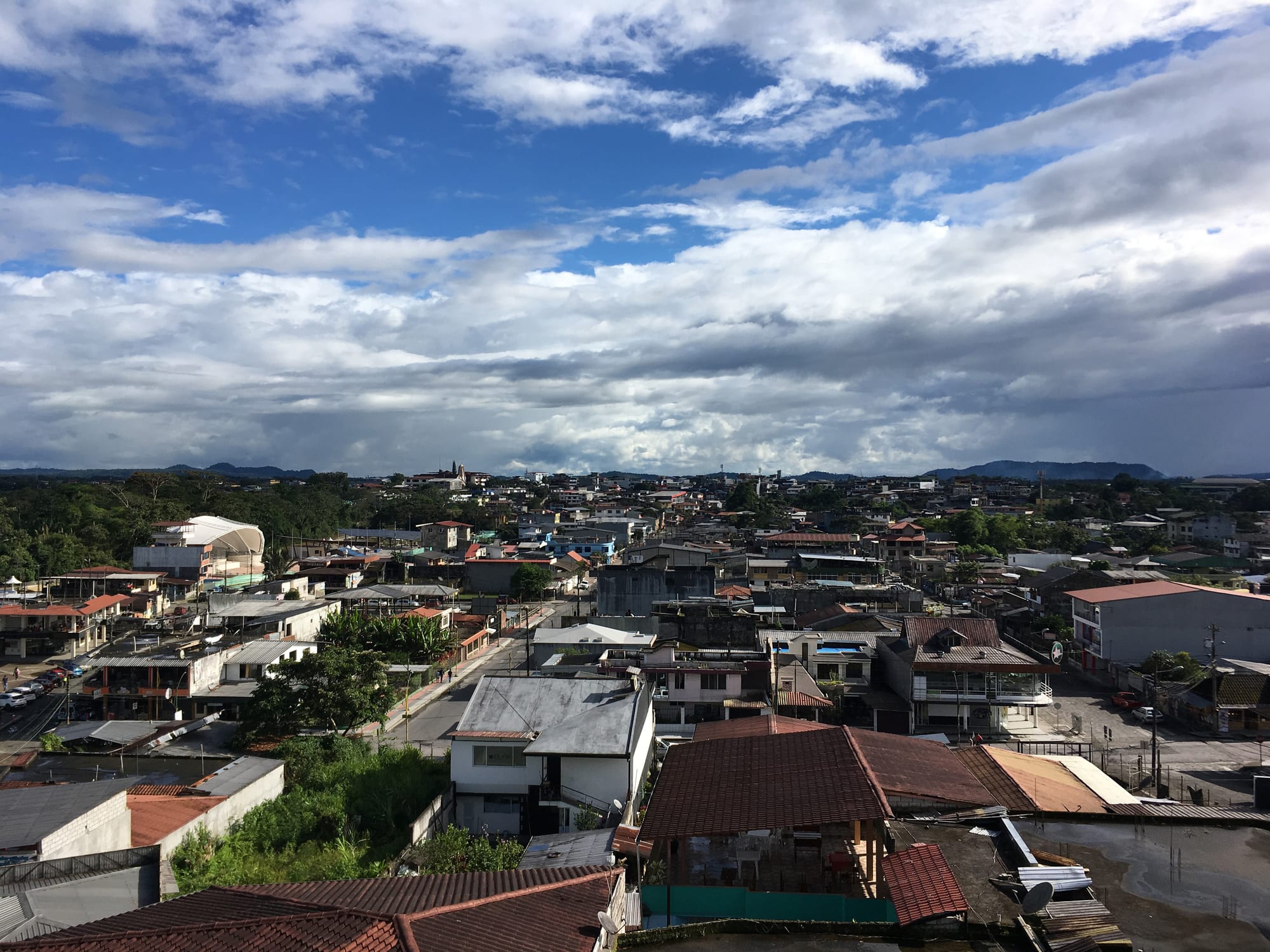
Low rooftops and streets of a small town stretching to forested hills under a sky of heavy white clouds

The Amazon, Ecuador

Puyo

Puyo seen from the mirador above the Paseo Turístico, with the forested foothills beyond. (Kaldari / Wikimedia Commons · CC0)

The capital of Pastaza province, standing at about 950 metres on the Puyo River where the eastern Andes drop into the Amazon. Founded by a Dominican missionary and Indigenous men from Canelos in 1899, it grew into the commercial centre of the central Oriente and is now a meeting point for seven Indigenous nationalities and a base for forest and community visits.

Neighbourhoods

  • The centre
    • First-time visitors
    • Close to public transport

    The streets around the cathedral and the Parque Central 12 de Mayo, from which the town grew outwards. Shops, banks, the main markets and the stops for intercantonal buses are all close, and most of the sights are within walking distance.

    Open in Maps
  • The Puyo riverside
    • Nature
    • Walks

    The eastern edge of town along the Puyo River, followed by the Malecón Boayacu Puyu. A mirador at its north-eastern end looks over the town and, on clear days, to the Sangay and Altar volcanoes, and the riverside trail and the Omaere park begin below it.

    Open in Maps
  • Barrio Obrero
    • Nightlife
    • Best for food

    The district where the town's discotecas and bars stand close together and fill with university students at weekends, playing everything from salsa to electronic music. Its restaurants are known for the local dish, ceviche volquetero.

    Open in Maps
  • Around the bus terminal
    • Budget travellers
    • Amazonian food

    The area of the Terminal Terrestre on the main highway, with cheap hostels for travellers passing through and a row of eateries serving almost exclusively Amazonian dishes. The municipal water park stands behind the terminal.

    Open in Maps

Things to do

Parks and riverside walks

  • Omaere Ethnobotanical Parkpark

    A forest park on the north-eastern edge of town beside the Puyo River, where local guides explain the medicinal and cultural uses of native plants, in English or Spanish.

    Open in Maps
  • Paseo Turístico del río Puyotrail

    A riverside trail of about 2.5 km along the Puyo and Pambay rivers, crossing two suspension bridges and wooden footbridges through forest with bromeliads, orchids and palms; the river here is a popular swimming spot.

    Open in Maps
  • Malecón Boayacu Puyu and the miradorviewpoint

    The riverside promenade on the east of town, with a viewpoint over Puyo that on clear days reaches the Sangay and Altar volcanoes, and a monument to the women of the seven nationalities.

    Open in Maps
  • Parque Botánico Las Orquídeaspark

    A botanical garden of nearly 7 hectares off the Macas road, started in 1980, with about 300 species of orchid, heliconias, bromeliads and regenerated forest.

    Open in Maps

Town and Indigenous culture

  • Cathedral and Parque Central 12 de Mayolandmark

    The cathedral and the central square from which the town grew, with a monument to the heroes of the 1995 Cenepa War with Peru.

    Open in Maps
  • Centro Indígena Ñucanchi Allpaattraction

    A centre run by members of several Amazonian nationalities — Kichwa, Shuar, Waorani, Sápara, Achuar, Shiwiar and Andoa — selling crafts and traditional food, with dances and shamanic healing sessions.

    Open in Maps
  • Parque Acuático Morete Puyuattraction

    The municipal water park behind the bus terminal, built in 2004, with a wave pool, tall water slides and sports courts.

    Open in Maps

Short trips from the town

  • Shell and the Río Amazonas Airporttransit hub

    The small airfield at Shell, a few kilometres west of Puyo, founded by Royal Dutch Shell in 1937 and later the base of missionary aviation; light aircraft fly from here to airstrips in remote Amazonian communities.

    Open in Maps
  • Pailón del Diabloattraction

    One of the most famous waterfalls in Ecuador, near Río Verde on the road up the Pastaza gorge towards Baños, now the country's largest waterfall.

    Open in Maps

Seasonal events

  • Puyo CarnivalFebruary or March, the days before Lent

    Carnival is celebrated with small neighbourhood parties, and water fights are sometimes part of it.

  • Day of the Ecuadorian Amazon12 February

    One of the town's major holidays, dedicated to the Amazonian east of Ecuador.

Eat and drink

Long-standing places and food districts in Puyo. Hours, ratings and directions come from your maps app, always current.

Puyo classics

  • Ceviche volqueterorestaurant

    The town's own dish, a local style of ceviche served in the restaurants of Barrio Obrero and at the foot of the riverside mirador.

    Open in Maps
  • Maitorestaurant

    Fish — tilapia, carachama or cachama — wrapped in leaves and cooked over coals, the classic Amazonian dish, sold with chontacuros along the main highway near the bus terminal.

    Open in Maps

Food districts and markets

  • Mercado Mariscal and Mercado de los Plátanosmarket

    The central markets, selling fresh produce, with cheap set-lunch counters on the second floor; Sunday brings the freshest produce.

    Open in Maps
  • Barrio Obreroneighborhood

    The district of bars and restaurants that fills with students at weekends, and the place most associated with ceviche volquetero.

    Open in Maps

Experience Puyo

History

During the colonial period, the route between Baños and the mission of Canelos crossed this stretch of foothill forest, and travellers, missionaries and traders rested here. The present town was founded on 12 May 1899 by the Dominican missionary Álvaro Valladares and nine Indigenous men from Canelos, who were looking for a resting place on that route. They built three large huts, set up a wooden cross, celebrated Mass and dedicated the place to Our Lady of the Rosary of Pompeii, still part of the town's full name. For its first years it was an Indigenous village, used by mestizo traders as a stop between Baños and Canelos.

The Pastaza canton was created in 1911, and Puyo later became its seat. The town grew quickly until the Ambato earthquake of 1949 reduced it to rubble. It recovered fast: improvements to the Baños–Puyo road brought settlers from Tungurahua and Chimborazo, and for a time Puyo was the largest and most prosperous town in the Ecuadorian Amazon, until the oil boom built up Nueva Loja further north. In 1959 it became the capital of the new province of Pastaza.

Today it remains the commercial and administrative centre of Pastaza, at the end of the road that links the coast and the central highlands with the Amazon. It was the fastest-growing city in Ecuador in 2006, and in recent decades it has turned increasingly to tourism.

Culture & Customs

Puyo is seen as a cultural centre for the whole Ecuadorian Amazon, because Pastaza's forests are home to seven Indigenous nationalities: the Amazonian Kichwa, Andoa, Sápara, Waorani, Achuar, Shiwiar and Shuar. The Ñucanchi Allpa centre brings several of them together to sell crafts, cook and dance, and a monument on the malecón honours the women of all seven. Many visitors come for community-based tourism run by the communities themselves.

The town keeps many customs and traditions of its own, in its festivals, food, crafts, painting and Amazonian mythology. Carnival before Lent is the big celebration, with neighbourhood parties and water fights, and the Day of the Ecuadorian Amazon on 12 February and the chonta-palm festival are also important. Crafts sold in the town include pieces made of balsa wood, and melcochas, chewy sweets made from sugarcane, are a local treat.

Football is the main sport. Clubs such as Pastaza Sporting Club play at the Estadio Víctor Hugo Georgis, which holds about 4,000 spectators and also hosts concerts. The Universidad Estatal Amazónica, founded in 2002, is based in the town, which has a growing nightlife.

Daily Life

About 33,000 people lived in the city at the 2022 census, making it the third-largest city of the Ecuadorian Amazon after Nueva Loja and Coca, and more than 60,000 live in the wider urban area. As the provincial capital it holds the government offices of Pastaza and many banks and businesses.

The economy is based on trade, tourism and farming. Timber and agriculture, including fish farming and poultry, are the main productive industries, and most people earn their living in formal and informal commerce and small businesses. Small aircraft leave daily from the nearby airfield at Shell for airstrips in the forest, the link between the town and many of Pastaza's remote communities.

The day starts early with the markets — the Mariscal and the Mercado de los Plátanos, where set lunches are served upstairs — and is punctuated by downpours, which arrive almost daily. Schools follow the highland calendar, from September to July. The town keeps spreading southwards into new barrios with gravel streets, and at weekends university students fill the bars of Barrio Obrero.

Food

Puyo's cooking mixes Amazonian traditions with the food brought by settlers from other regions. The town's own dish is ceviche volquetero, served in the restaurants of Barrio Obrero and beside the riverside mirador. Set lunches of soup and a main course are the everyday meal, and the cheapest are served on the upper floors of the central markets.

Along the main highway near the bus terminal, eateries serve almost exclusively Amazonian dishes. Maito is the most famous: fish such as tilapia, carachama or cachama wrapped in leaves and cooked over the fire. Chontacuros, the larvae of the palm weevil, are grilled on skewers, and seco de guanta is a stew made with the forest rodent called guanta. River fish are central to the diet, and the paiche, one of the largest freshwater fish in the world, stands out among them.

The drinks are part of daily hospitality in the Amazon: chicha de yuca, made from cassava and in its traditional form chewed before fermenting; chicha de chonta, from the fruit of the peach palm; and guayusa, a caffeinated leaf brewed like tea. Melcochas, sugarcane sweets, are sold in the town.

Planning tools

Budget

Puyo is one of the cheapest bases in Ecuador, with hostels near the bus terminal, set lunches in the markets and local buses. The extra costs are guided trips: community tourism visits, rafting and other adventure activities, and above all flights by light aircraft to remote communities or a stay at a forest lodge.

Daily Budget Midrange
USD 100–350 (per person per day on an all-inclusive forest lodge or community stay)
Daily Budget Shoestring
USD 25–45 (hostel, almuerzos, local buses, a park entry or two)

Book community visits through established operators or the communities' own projects, and confirm what transport, guiding and meals are included.

Best Time to Visit

There is no dry season, and heavy rain is possible on any day. June to October is slightly cooler and a little less wet, while November to May is warmer and rainier, with February the month with most rainy days. Ecuadorian holiday periods fill the foothill towns.

Suggested Number of Days

One or two days cover the town and its riverside parks. Three to five allow time for community visits, waterfalls along the Baños road or a stay deeper in the forest; trips by light aircraft to remote communities need extra days, as weather can delay flights.

First Visit
1–2 days
With Surroundings
3–5 days

Transportation

Puyo has a small urban bus network run by three cooperatives on nine routes, and taxis are cheap; most of the sights are within walking distance of the centre. Intercantonal buses leave from near the Mercado Mariscal for nearby towns, and the Terminal Terrestre serves Quito, Ambato, Baños, Tena, Macas and other cities.

For less frequent long-distance connections, take one of the hourly buses to Ambato and change there.

Airport & Station Connections

Puyo is the end of the Transversal Central road from Ambato. Buses from Quito's Quitumbe terminal take about five hours, and the road from Baños down the Pastaza gorge takes about an hour and a half by bus. The small Río Amazonas Airport at Shell, a few kilometres west, mainly serves light aircraft flying to Amazonian communities, not the major cities.

Walkability

The centre is compact and most attractions, including the riverside walks and the Omaere park, can be reached on foot. Paved streets give way to gravel in the newer barrios to the south. Frequent heavy showers make an umbrella or rain jacket essential, and riverside trails are muddy after rain.

Safety

Ecuador's security has deteriorated sharply since about 2019, with a surge in organised crime, gang violence, and prison unrest, especially in Guayaquil, Esmeraldas, Manta, and the northern border with Colombia. The foothill towns such as Puyo are generally calm. The main risks are natural: rivers rise fast after rain, malaria and dengue occur in parts of the lowlands, and unregulated ayahuasca ceremonies carry risks of their own.

Raft and travel to communities only with certified operators, get a yellow fever vaccination and use repellent, and avoid unregulated ayahuasca ceremonies. Check current official travel advice before travelling.

Climate

A wet equatorial climate, kept milder than the lowland Amazon by the altitude. The average temperature is about 21°C, daytime temperatures usually range between 18 and 24°C, and short but heavy rain falls almost daily, with more than 4,400 mm a year. The name comes from the Kichwa word for mist, and the sky is often overcast.

Summer
November–May, the warmer and wetter season: averages near 21–22°C, with heavy rain
Winter
June–October, slightly cooler and less wet: July averages about 20°C

Local Customs

Puyo is a mix of settlers from the central highlands and the seven Indigenous nationalities of Pastaza — Kichwa, Andoa, Sápara, Waorani, Achuar, Shiwiar and Shuar. Community visits are best made with local guides, who explain the rules of each community. Dress is casual and light, but rain gear is always needed.

Ask before photographing people, especially in Indigenous communities and at the Ñucanchi Allpa centre, and buy crafts directly from their makers where possible.

Common Payment Methods

Ecuador uses the US dollar. Cards work in larger hotels and shops in the centre, but buses, taxis, markets and set-lunch places expect cash, and communities reached by air or river have no cash machines. Carry small, clean notes, as damaged bills are refused.