💰 Budget
Santa Ana is cheaper than San Salvador and the beach towns, and the US dollar is the currency. Local buses, pupusas and comedor meals cost very little; the main costs are hotels, private airport transfers and guided trips to the volcano and the lake.
- Daily Budget Midrange
- USD 70–130 (hotel, restaurant meals, taxis, a guided volcano trip)
- Daily Budget Shoestring
- USD 30–50 (guesthouse, comedor meals, local buses)
Carry small notes for local buses and markets; many smaller shops close for lunch and on Sundays.
📅 Best Time to Visit
November to April, the dry season, has the clearest skies for the volcano. The rainy season from May to October is greener, with afternoon downpours, but good climbing weather is not uncommon. The Fiestas Julias fill the second half of July.
⏳ Suggested Number of Days
A day or two covers the city itself. Three or four days allow time for the volcano, the crater lake and the archaeological sites nearby, and the city is also a base for the Ruta de las Flores towns.
- First Visit
- 1–2 days
- With Surroundings
- 3–4 days
🚆 Transportation
Local buses called urbanos serve almost every part of the city and its colonias from early morning to evening, and taxis are easy to find. Buses are not allowed past Parque Libertad and usually stop a block or two away. Local buses run to Chalchuapa, the lake and Los Volcanes National Park.
Locals navigate by landmarks such as Parque Libertad and the markets rather than street numbers, so give these when asking directions.
🛬 Airport & Station Connections
Santa Ana is 64 km north-west of San Salvador; buses leave the capital's western terminal frequently. Private minibus transfers from El Salvador International Airport take two hours or more. International coaches between Guatemala City and San Salvador pass through the city.
🚶 Walkability
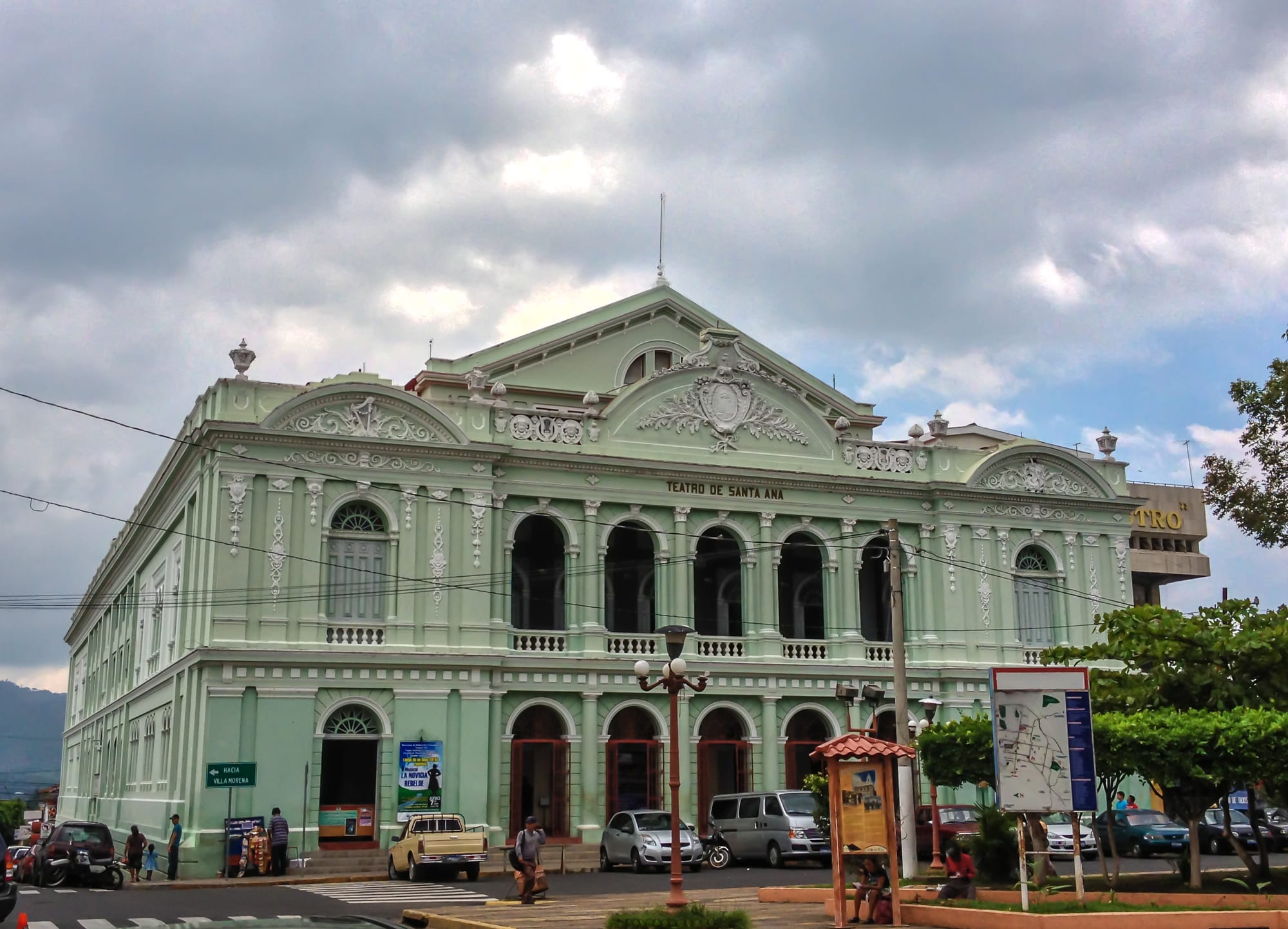
The historic centre is compact: the cathedral, theatre, city hall and churches are within a few minutes' walk of Parque Libertad. The newer districts on the outskirts are spread out and built for cars and buses.
🛡️ Safety
El Salvador was for years one of the most violent countries in the world, dominated by the MS-13 and Barrio 18 gangs. Since a "state of exception" declared in March 2022 and extended 55 times by September 2026, which suspended some civil liberties and led to more than 90,000 arrests, homicide rates have fallen dramatically, and tourist areas are much safer than a decade ago. In Santa Ana, petty theft in the crowded market streets is the main concern, and some parts of town are considered unsafe by locals.
Keep valuables close in the market area, use taxis after dark, climb the volcano only with the official guided group, and do not photograph police or military. Check current official travel advice before travelling.
🌦️ Climate
A tropical savanna climate, warm all year, with a mean annual temperature of about 24 °C. The dry season runs from November to April and the rains from May to October. The volcano summit is chilly.
- Summer
- very hot at times, when maximum temperatures can pass 35 °C
- Winter
- the dry months are sunny, with typical lows around 17 °C
🤝 Local Customs
Santa Ana is a largely Catholic city and the seat of a diocese. Greetings matter — a 'buenos días' on entering a shop or office — and neat dress is expected in churches. Many smaller shops close for a lunch break around midday.
Dress modestly inside the cathedral and churches, ask before photographing people, never photograph police or soldiers, and leave a small tip in sit-down restaurants.
💳 Common Payment Methods
The currency is the US dollar. Bitcoin was made legal tender in 2021 but lost that status in February 2025, and acceptance is limited. Cards work in shopping centres, hotels and larger restaurants; cash in small notes is needed for buses, markets and pupuserías. ATMs are found in the centre and at the shopping centres.