History
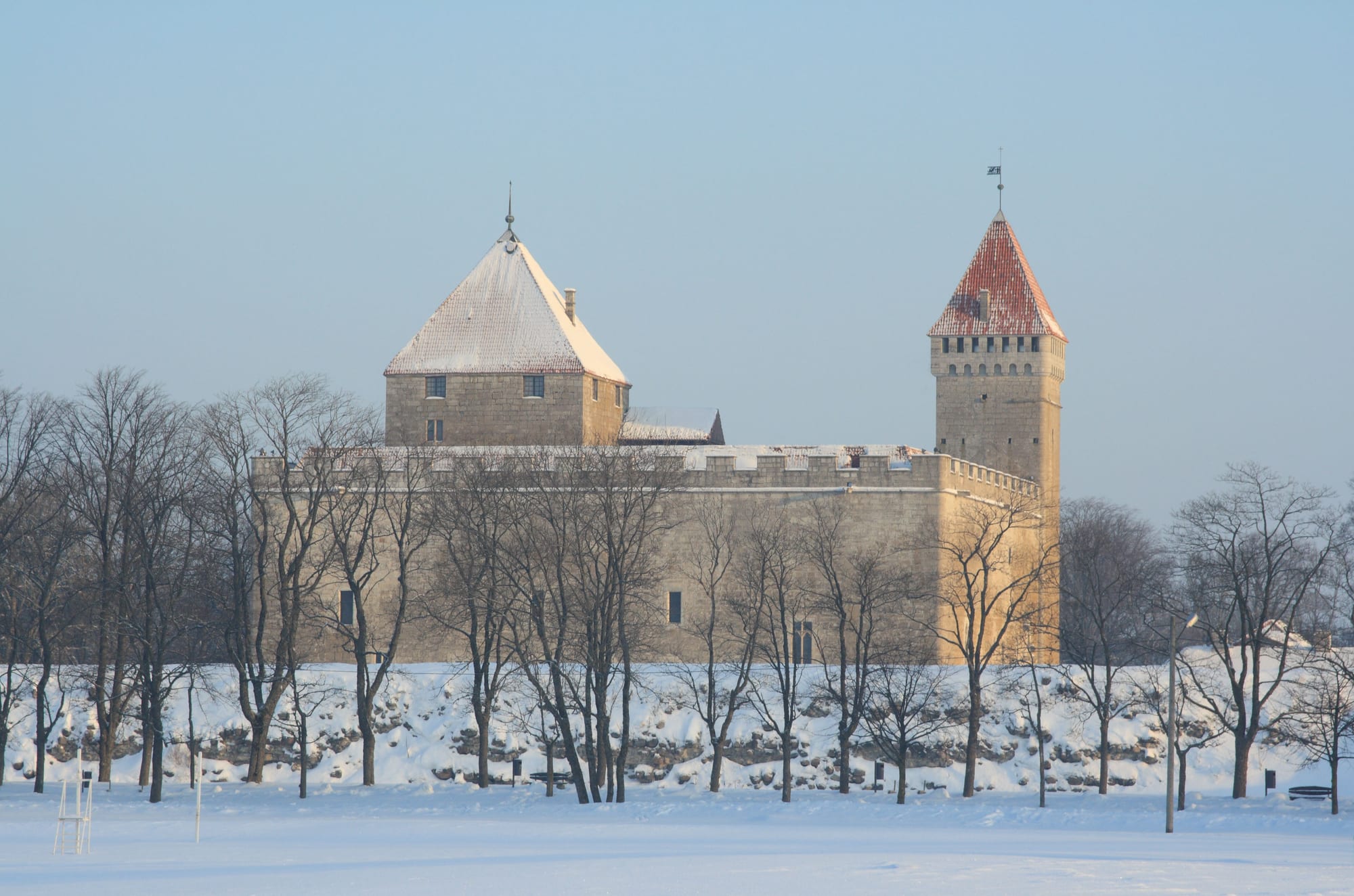
Crusaders of the Sword Brethren conquered Saaremaa, then known as Ösel, in 1227, and its western and southern parts became part of the Bishopric of Ösel-Wiek the following year. The bishop's castle at Kuressaare is first documented in the 1380s, and a town grew up around it under the German name Arensburg, from the Latin arx aquilae, the eagle's castle, which still appears on the town's coat of arms. In 1559 the bishop sold his lands to the King of Denmark, whose brother Magnus won the town its civic charter in 1563, and the island became Danish in 1572.
Under the Treaty of Brömsebro Saaremaa passed to Sweden in 1645, and the Swedes built the town hall, the weigh house and the harbour storehouse and strengthened the fortress. During the Great Northern War plague struck and Russian troops burned the town in 1710; Russia annexed the island in 1721. In the 19th century curative mud found near the town turned it into a spa resort, with its first mud spa built in 1840 and sanatoriums and boarding houses following.
German forces occupied the island in 1917, and Kuressaare became the capital of Saare County in independent Estonia. In 1941 Soviet forces executed at least 90 civilians in the castle yard. From 1944 the whole island was a closed border zone, and from 1952 to 1988 the town was renamed Kingissepa. Since 1991 it has become a resort again, with new spas built and its historic buildings restored.