💰 Budget
Pärnu is moderately priced for most of the year, but July and August are a different matter, when spa hotels and beach apartments are at their dearest. Outside summer the spa hotels offer good-value packages, and the beach, parks and jetty cost nothing at any time.
- Daily Budget Midrange
- USD 100–200 (spa or mid-range hotel, restaurant dinners, spa visits, taxis)
- Daily Budget Shoestring
- USD 50–80 (hostel or guesthouse, café lunches, buses)
Book well ahead for July and midsummer; a winter or spring spa break is the cheapest way to see the resort.
📅 Best Time to Visit
June to August is the beach season, with festivals, concerts, open-air terraces and the largest crowds, peaking at midsummer and in July. May and September are quieter and milder. Winter is cold and windy by the sea, but the spas, indoor pools and saunas stay open all year.
⏳ Suggested Number of Days
One or two days are enough for the old town and the beach, longer for a spa stay or a summer holiday. Three or four allow trips to the bogs inland and the islands of the Gulf of Riga, which depend on ferries, flights or a car.
- First Visit
- 1–2 days
- With Surroundings
- 3–4 days
🚆 Transportation
The old town and the beach are close enough to walk between, and many visitors cycle. City buses cover the whole town and its suburbs on more than two dozen routes, with tickets sold through a mobile app; taxis are ordered by phone or app. A car is the easiest way to reach Soomaa and the coast beyond the city.
Check the water level before walking out along the jetty, which is sometimes submerged.
🛬 Airport & Station Connections
Pärnu lies on the main road between Tallinn, 128 km to the north, and Riga. Buses from Tallinn run about hourly and take about two hours, and the city is a stop on the Tallinn–Riga coach route, about two and a half hours from Riga. The small Pärnu Airport, about 4 km north-west of the centre, has few scheduled flights, and there has been no passenger train to Tallinn since 2018.
🚶 Walkability
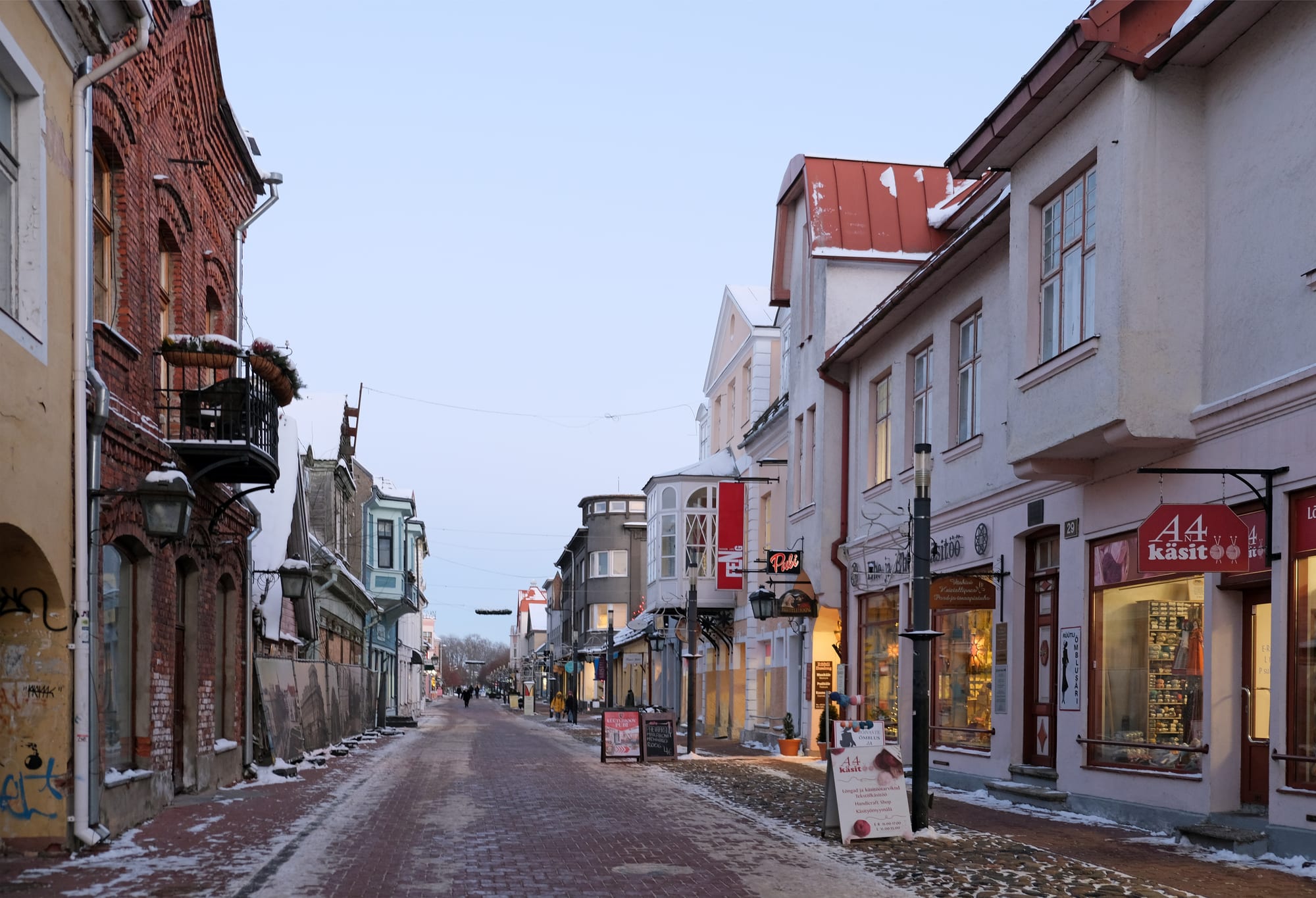
Very walkable and flat. The compact old town and its pedestrian section of Rüütli Street lead to the beach park and the sea in a short walk, and the beach promenade runs along the shore. Paths through the parks make pleasant routes, and pavements can be icy in winter.
🛡️ Safety
Estonia is a safe country with low levels of violent crime. Pärnu is a calm town; the main concerns are summer crowds and late nights around the beach and the bars, cold water outside the warmest weeks, and ice in winter.
Swim where others do and watch for changing weather on the bay, keep off sea ice, and watch belongings on busy summer nights. Check current official travel advice before travelling.
🌦️ Climate
A humid continental climate shaped by the sea. Spring on the coast is cooler than inland and autumn considerably milder, and the long beach with its gently sloping seabed has made Pärnu Estonia's most important resort town.
- Summer
- June–August; July, the warmest month, averages about 18°C across Estonia, with long light evenings
- Winter
- December–February; February, the coldest month, averages from about −1°C on the islands to −5°C inland
🤝 Local Customs
Pärnu has been a resort for nearly two centuries and is well used to visitors, above all Estonians, Finns and Swedes. Spa and sauna etiquette follows each establishment's rules. Tipping became common only after independence and is not always expected; about 10 per cent in restaurants is usual.
Follow the posted rules in spas and saunas, which differ from one establishment to the next.
💳 Common Payment Methods
The currency is the euro. Cards and contactless payment are accepted almost everywhere, and cash is rarely needed; a few coins can help with parking machines.