History
The south was the land of the ancient Ugandi and Sakala peoples, whose hill forts at Otepää, Tartu and Viljandi fell to German crusaders in the early 13th century. Tartu, first mentioned in 1030 when a Kyivan prince built a fort there, became the seat of a bishop and a Hanseatic town trading with Pskov and Novgorod; Pärnu, on the western coast, was a Hanseatic port. Saaremaa, with its own bishopric of Ösel-Wiek, joined the great Estonian rising of 1343 and resisted the German knights longer than the mainland.
The Livonian War of the 16th century ended the bishops' rule in Tartu and left Viljandi in ruins. Saaremaa passed to Denmark and then, in 1645, to Sweden, and in 1632 King Gustav II Adolf founded the university in Tartu that shaped the whole region. Russia had taken everything by 1710, and Baltic-German landlords ran the manors of the south until 1919.
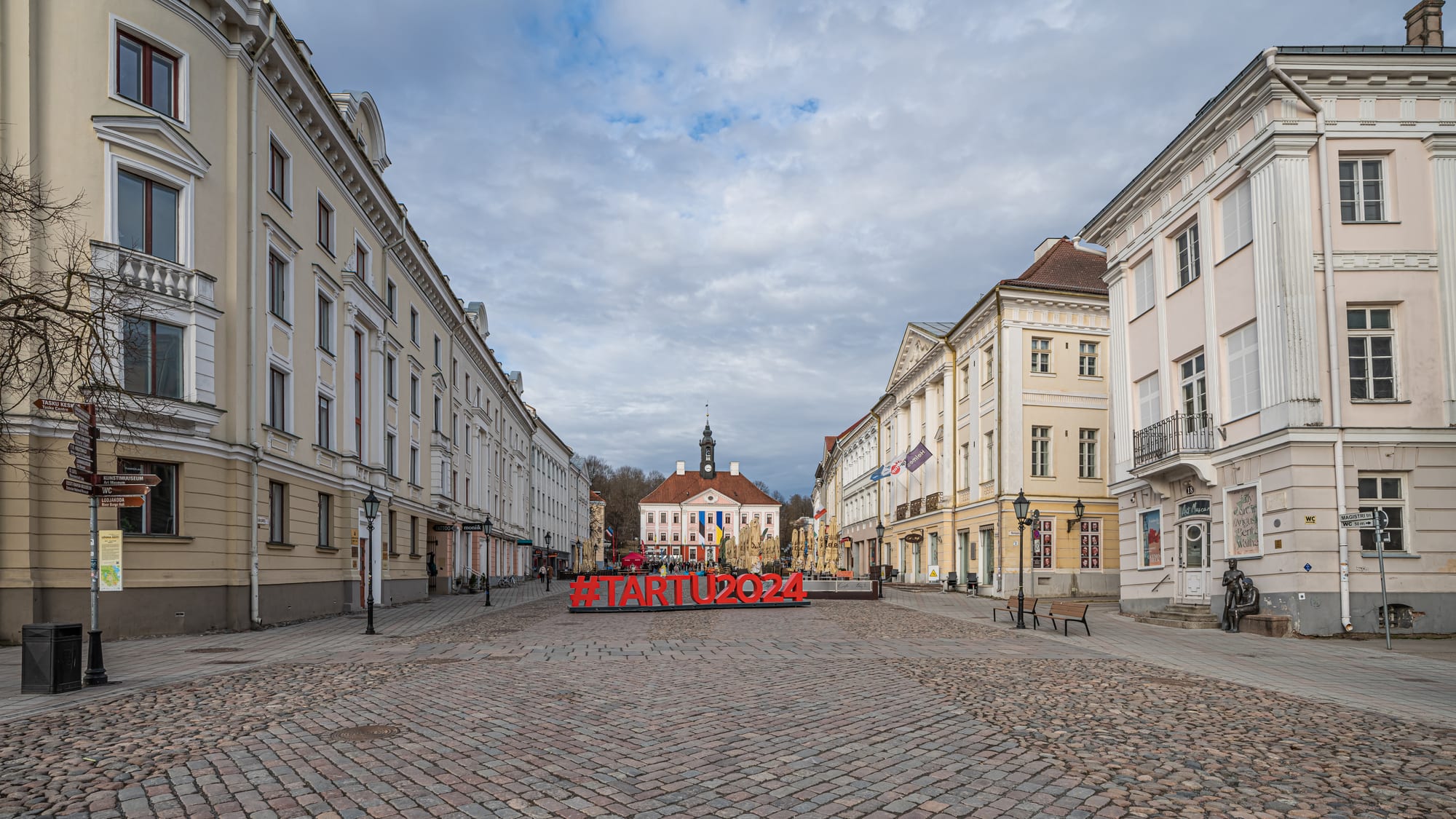
Tartu was the cradle of the 19th-century national awakening: the first Estonian song festival was held there in 1869, and the Vanemuine society founded the first Estonian-language theatre. Independence was first proclaimed in Pärnu on 23 February 1918, and the Treaty of Tartu of 1920 won Soviet Russia's recognition. Under Soviet rule Saaremaa was a closed border zone and Tartu housed a large military airfield at Raadi. After 1991 the Seto lands were split by the new border, leaving their old centre of Pechory in Russia. Tartu was European Capital of Culture in 2024.