💰 Budget
Addis Ababa has the widest range of prices in Ethiopia. Local food, minibuses and guesthouses are very cheap; international hotels, imported goods and restaurants aimed at diplomats and business travellers are not, and some are priced in hard currency. Museum entry is modest. A hired car with a driver is the largest single cost for most visitors.
- Daily Budget Midrange
- USD 70–150 (mid-range hotel, restaurant meals, taxis or a car with a driver, museum entry)
- Daily Budget Shoestring
- USD 25–45 (guesthouse, local eateries, minibuses and the light rail)
Prices in birr have moved quickly since the currency was floated in 2024, so agree hotel, guide and driver rates in writing before arriving, and carry cash for anything outside the larger hotels.
📅 Best Time to Visit
October to February is the settled season: dry, sunny days, cool nights and clear views from the Entoto ridge. Late September brings Meskel and Enkutatash, and January brings Timkat. The main rains fall from June to September, when afternoons are grey and streets flood quickly; February and March bring a shorter rainy spell.
⏳ Suggested Number of Days
Two or three days covers the main museums, churches and markets at a reasonable pace, since traffic makes crossing the city slow. Four or five allows the crater lakes and prehistoric sites within reach of the capital, or a rest stop either side of a domestic flight.
- First Visit
- 2–3 days
- With Surroundings
- 4–5 days
🚆 Transportation
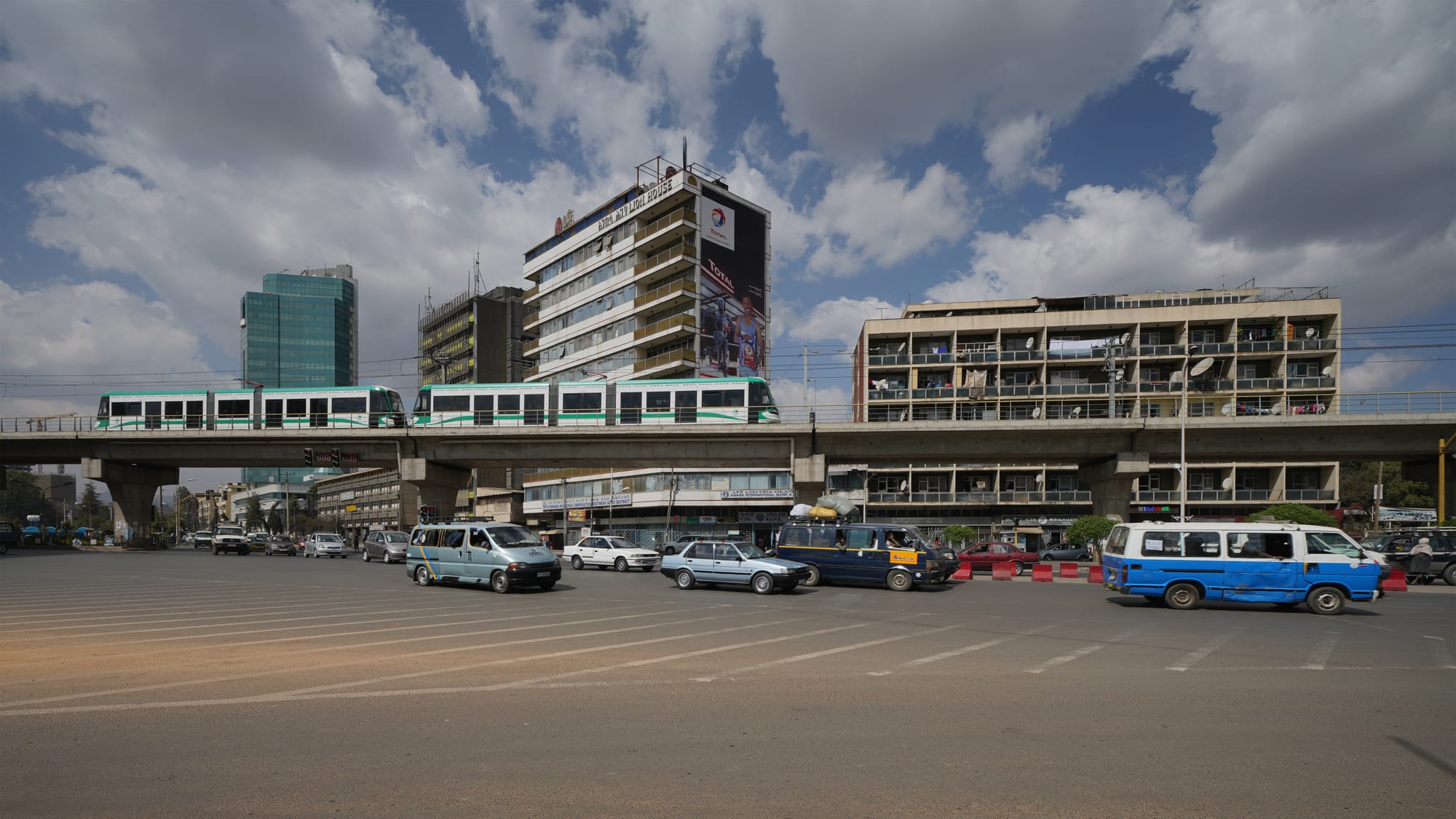
Blue-and-white minibuses run fixed routes and are the cheapest way around, though destinations are called out in Amharic. The light rail has two lines crossing the city and is useful along the main north–south and east–west corridors, though a shortage of working trains has thinned services. Metered and shared taxis, app-based ride-hailing and hotel cars fill the gaps. Traffic is heavy and road works frequent.
Agree a fare before getting into a taxi that has no meter, and allow far longer than the distance suggests at peak times.
🛬 Airport & Station Connections
Bole International Airport, about 6 kilometres south-east of the centre, is the main hub of Ethiopian Airlines, with long-haul flights from Europe, Asia and the Americas and a dense domestic network. Long-distance buses link the capital with every region, and the electric railway to Djibouti has its passenger terminal at Furi-Lebu on the southern outskirts.
🚶 Walkability
Central districts such as the Piazza, Arat Kilo and Kazanchis can be walked, and the altitude of about 2,355 metres makes even gentle slopes feel steep for the first few days. Pavements are uneven or missing in places, construction frequently blocks the way, and the distances between districts are long, so most people combine walking with minibuses or taxis.
🛡️ Safety
Addis Ababa is generally manageable for visitors, and the main problems are pickpocketing, bag snatching and scams, particularly in crowded places such as the Merkato, at bus stations and around the Piazza at night. Parts of the wider Oromia region have seen an armed insurgency and roads can close without warning, so overland travel out of the city needs checking in advance.
Check current advisories closely and route around conflict-affected regions, travel the Danakil and remote parks only with a licensed operator and escort, and avoid political demonstrations. Check current official travel advice before travelling.
🌦️ Climate
A highland climate at about 2,355 metres, mild all year despite the tropical latitude, with warm days, cool nights and a sharp difference between sun and shade. The year divides into a dry season and the main rains rather than into hot and cold months.
- Summer
- the main rains, June to September — days around 15–22°C with heavy afternoon downpours and grey skies
- Winter
- the dry season, October to February — sunny days around 20–25°C and nights that can fall close to 5°C
🤝 Local Customs
Greetings are unhurried, with a handshake and often a light touch of the right shoulder between friends. The right hand is used for eating from the shared injera platter, and offering a guest the first morsel, gursha, is a mark of affection. Modest dress is expected at churches and mosques, and shoes are removed before entering a church. Ethiopia keeps its own calendar and a 12-hour clock counted from dawn, so appointment times are worth confirming.
Ask before photographing people, police or government buildings, tip small amounts for service, and accept at least one cup at a coffee ceremony — leaving before the third round is considered rude.
💳 Common Payment Methods
The currency is the Ethiopian birr. Cash is used for almost everything, and cards are accepted mainly at larger hotels, airline offices and a few supermarkets. ATMs are common in the centre but can be out of service or out of notes. Clean, recent US dollar notes are the best currency to bring and are changed at banks and hotels.