💰 Budget
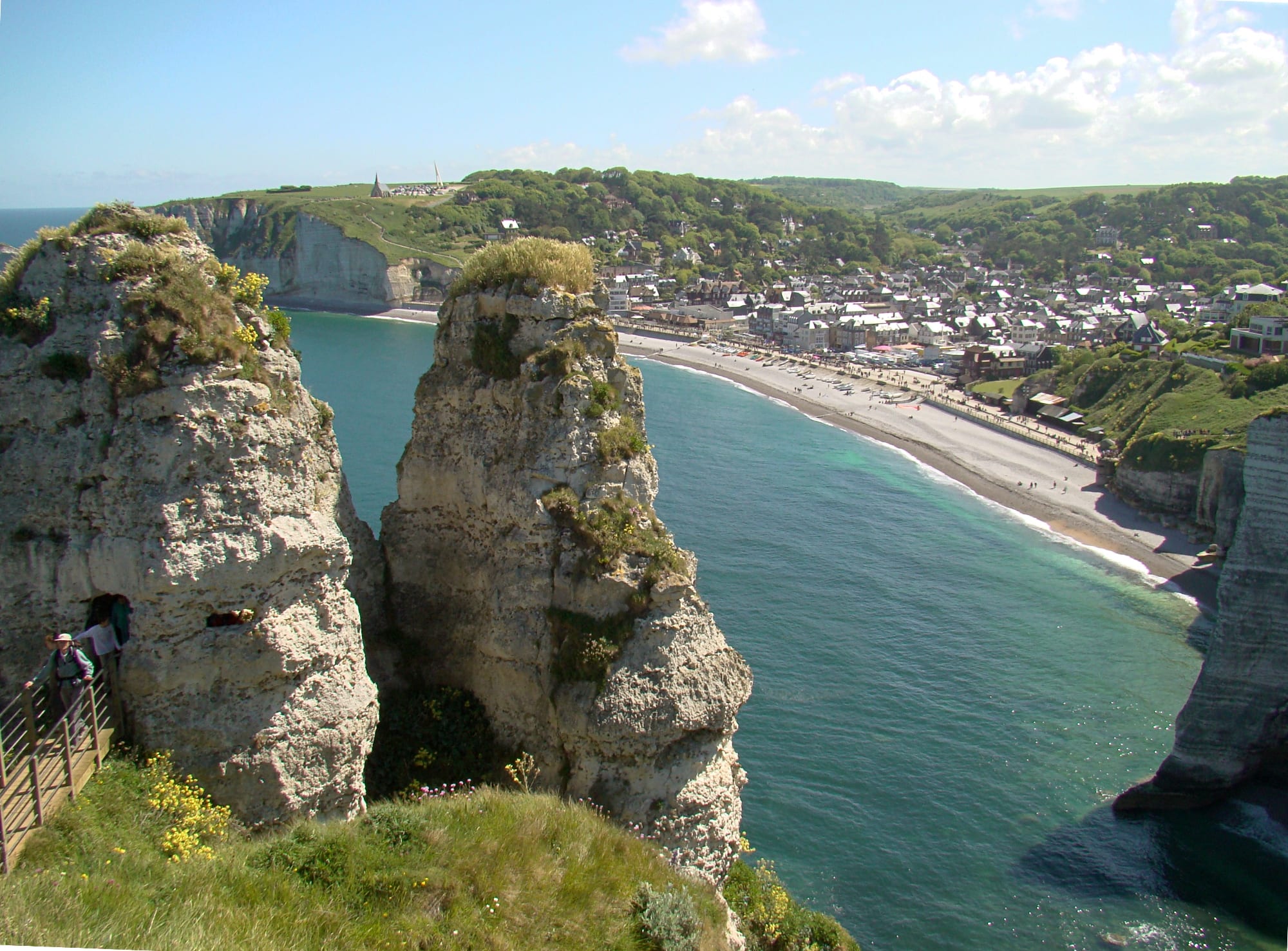
Étretat charges resort prices: it is one of the most visited places in Normandy, has only 14 hotels and about twenty guest houses, and fills on summer weekends. Parking is a real cost, and in 2015 it provided more than a third of the town's income. Staying in Le Havre or Fécamp and visiting for the day keeps the bill down.
- Daily Budget Midrange
- USD 160–300 (hotel or chambre d'hôte, seafood dinners, the gardens and the Lupin museum, a hire car)
- Daily Budget Shoestring
- USD 80–120 (campsite or simple guest room, bakery and crêperie meals, regional buses)
The clifftop walks, the beach and the views of the arches cost nothing; weekdays outside July and August are noticeably quieter and cheaper.
📅 Best Time to Visit
May, June and September give long days, milder crowds and good light on the cliffs. July and August are the busiest months, when the town and its car parks fill. In winter the town is quiet and the sea and skies are dramatic — the season in which Monet did much of his painting here — but the cliff paths can be muddy and windswept.
⏳ Suggested Number of Days
Many visitors come for a single long day, but a night allows the cliffs to be walked at quieter hours. Adding the neighbouring coast and towns calls for three or four days. Tides and weather decide how much of the shore can be explored.
- First Visit
- 1–2 days
- With Surroundings
- 3–4 days
🚆 Transportation
The town is compact and easily covered on foot; the cliffs are climbed by steps and paths from each end of the beach. Parking in the centre is limited, and there is a car park in a field on the edge of town, about fifteen minutes' walk from the tourist office. Buses run a few times a day to Le Havre and Fécamp, both on the rail network.
Arrive early on summer weekends, when the roads into town and the car parks fill by late morning.
🛬 Airport & Station Connections
Étretat has no railway station. The usual approach is by train to Le Havre, about 26 km to the south-west, served by regional trains from Paris, then a bus of about 45 minutes through the countryside, or a taxi. Fécamp is the other rail-and-bus gateway. Many visitors arrive by car along the coast roads.
🚶 Walkability
Everything in the lower town is a few minutes' walk apart, and the promenade links the two cliffs. The climbs onto the Falaise d'Aval and the Falaise d'Amont are steep but short, with steps in places; the longer clifftop paths are uneven, exposed to wind and often muddy after rain, so good shoes are needed.
🛡️ Safety
France is a safe country overall, with violent crime against visitors uncommon. In Étretat the real dangers are natural: the chalk cliffs crumble without warning, both at the edge and onto the beach below, and walkers on the shore are cut off by the rising tide beneath them. Thefts from parked cars happen at busy car parks.
Check the tide tables before walking on the beach under the cliffs, stay behind the fences and away from the edge on the clifftops, and leave nothing visible in a parked car. Check current official travel advice before travelling.
🌦️ Climate
Oceanic: mild, damp and changeable, with wind off the Channel and rain possible in any season. The town's average annual temperature is about 11°C, and summers are rarely hot.
- Summer
- mild, with sunny spells and showers — in nearby Le Havre the temperature passes 25°C on only about 11 days a year
- Winter
- cool, damp and windy — in nearby Le Havre it falls below 0°C on about 25 days a year
🤝 Local Customs
A greeting of 'bonjour' on entering a shop or café is expected, and an attempt at French is appreciated. Service is included in restaurant bills, so tipping is modest — rounding up or leaving a little for good service. The village is small and residential beyond the seafront: respect private gardens and villas along the valley streets.
Dress is casual; keep swimwear for the beach. The war graves around the parish church call for quiet behaviour.
💳 Common Payment Methods
The currency is the euro. Cards and contactless payment are accepted in almost all restaurants, shops and car parks; a little cash is useful for market stalls and small purchases. There are cash machines in the town centre.