💰 Budget
Grenoble is a working and student city, cheaper than the Alpine resorts and Lyon for rooms and meals. Lunchtime set menus and the markets keep food costs down. The cable car to the Bastille and trips to the ski areas are the main extras.
- Daily Budget Midrange
- USD 150–260 (mid-range hotel, restaurant dinners, museums, the cable car)
- Daily Budget Shoestring
- USD 70–110 (hostel or budget hotel, market food and set lunches, trams)
Walking up to the Bastille by the paths and stairways is free, and the cable car can be kept for the way down.
📅 Best Time to Visit
Late spring to early autumn for walking in the three massifs around the city; summers are hot in the valley, regularly passing 30°C. December to April suits skiing in the nearby resorts. Winters in the city are cold, with frosty nights, and sometimes grey.
⏳ Suggested Number of Days
Two days are enough for a first look at the city at an easy pace. Four or five give time for the surrounding massifs and the countryside, in winter or summer; the season and the weather change the number most.
- First Visit
- 2 days
- With Surroundings
- 4–5 days
🚆 Transportation
The TAG network runs five tram lines and a large bus network across the city and suburbs; trams run until about 1 am. The city is flat and bicycle-friendly, and most streets have a 30 km/h speed limit. The Bastille cable car is the quick way up the hill.
Tickets must be validated at the tram stop platform or on entering the bus.
🛬 Airport & Station Connections
The Gare de Grenoble has TGV services to Paris-Gare de Lyon in about three hours, usually calling at Lyon Saint-Exupéry Airport, and regional trains to Lyon, Valence and Geneva. Grenoble Alpes-Isère Airport is 40 km north-west; airport buses run most often to Lyon Saint-Exupéry. Motorways lead to Lyon, Valence and Chambéry.
🚶 Walkability
The centre is flat, compact and largely pedestrianised, and the trams fill the gaps. The only climbs are to the Bastille and on the Saint-Laurent side, where long stairways and paths wind up the hill.
🛡️ Safety
France is a safe country overall, with violent crime against visitors uncommon. Grenoble has had a rise in drug-related crime in the 2020s, with shootings between rival gangs concentrated in a few areas such as the Saint-Bruno district. Pickpocketing can occur on trams and in busy areas.
Keep bags closed on trams, avoid the Saint-Bruno and Cours Berriat area late at night, and check the weather before walking in the mountains. Check current official travel advice before travelling.
🌦️ Climate
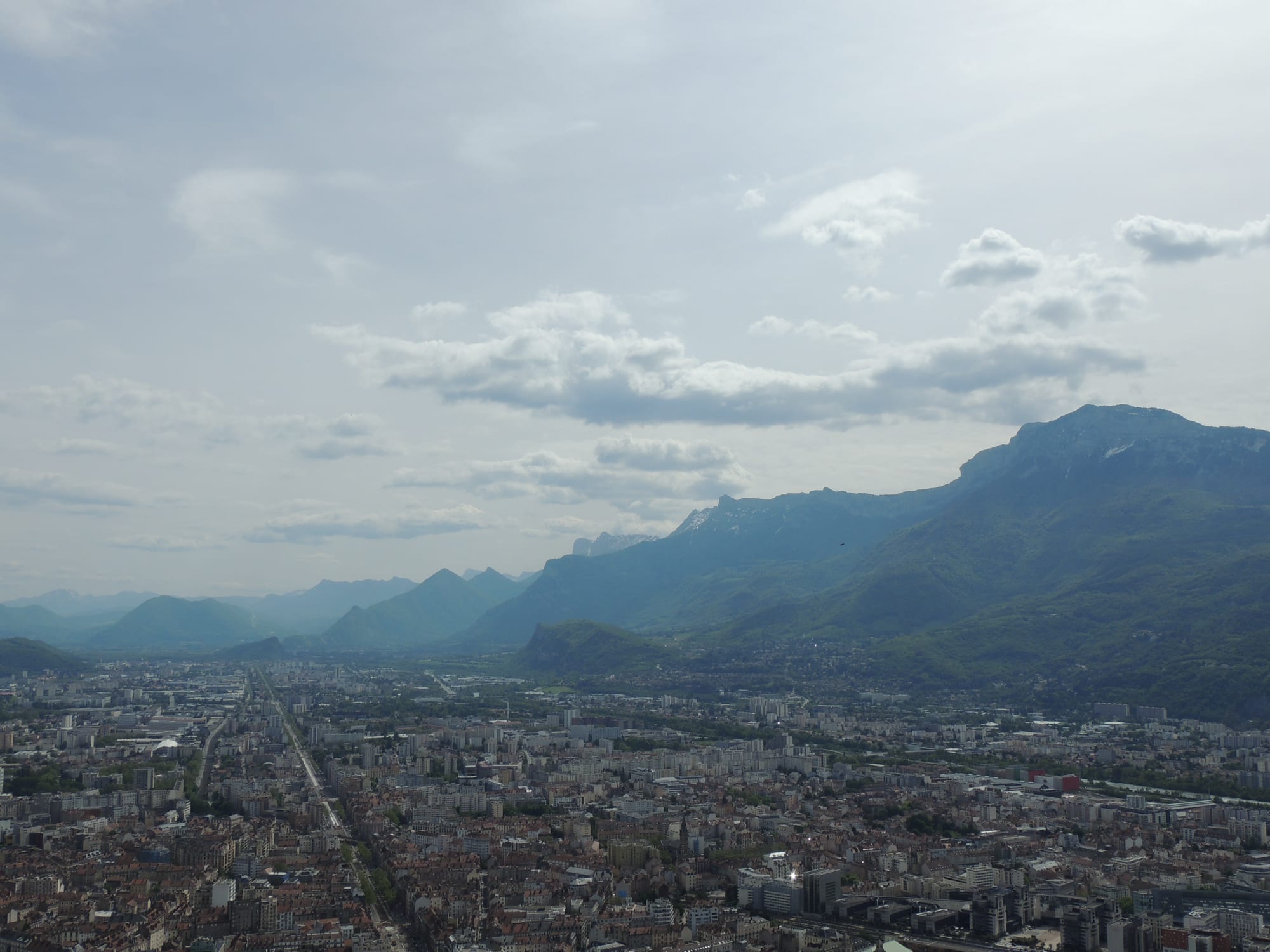
A humid subtropical climate in the city, with no dry season, shaped by its position in a deep basin between mountains. Summers are warm to hot and winters cold, with colder winter nights than anywhere else in lowland France.
- Summer
- warm to hot — temperatures above 30°C are common, with occasional storms
- Winter
- cold — frosts are common and some snow falls, though it rarely lasts in the city; the record low is −27.1°C
🤝 Local Customs
Greet shopkeepers and waiters with 'bonjour', and keep to French meal times. Service is included, so tipping is a matter of rounding up. The city is young, international and outdoor-minded, with many residents hiking, climbing, cycling or skiing at weekends.
Dress modestly in the cathedral and churches, and keep to marked paths on the Bastille hill.
💳 Common Payment Methods
The currency is the euro. Cards and contactless payment are accepted almost everywhere; a little cash is useful at market stalls. ATMs are easy to find in the centre.