💰 Budget
Admission to the palace and the estate is the main cost of a visit, with extra charges on fountain-show days. Food and drink in the town are cheaper than in central Paris or inside the palace grounds, and the park itself is free to walk. Most visitors stay in Paris and come out by train; rooms in the town are fewer and fill up in summer.
- Daily Budget Midrange
- USD 200–360 (hotel in the town or in Paris, palace and Trianon tickets, café lunch and restaurant dinner)
- Daily Budget Shoestring
- USD 80–130 (day trip by RER from Paris, market picnic, palace or garden ticket)
A weekly Navigo Découverte pass covers the RER and suburban trains to Versailles, and a picnic in the park is allowed and popular.
📅 Best Time to Visit
Late spring and early autumn are best: the gardens are in full leaf, the fountain shows run at weekends and the crowds are smaller than in July and August. Summer brings the longest queues at the palace. Winter is quiet and cool, and the palace rooms are calmer, though the gardens are bare.
⏳ Suggested Number of Days
Most visitors come for one long day from Paris. Two days allow the whole estate and the town's own quarters without rushing; fountain days and summer queues both stretch a visit.
- First Visit
- 1 day
- With Surroundings
- 2 days
🚆 Transportation
The town is built on a rational grid and is easy to cross on foot. Three stations link it to Paris: Versailles-Château–Rive Gauche on RER C, the closest to the palace; Versailles-Chantiers, with RER C, suburban and some TGV services from Montparnasse; and Versailles-Rive Droite, on the line from Saint-Lazare. The palace park is large and takes time to cover on foot.
Check which RER C train to board: not every Versailles-bound train goes to Versailles-Château–Rive Gauche by the direct route.
🛬 Airport & Station Connections
Versailles is about 17 km west-south-west of central Paris. RER C trains from the left-bank stations in the city reach Versailles-Château–Rive Gauche, a short walk from the palace, in about 25 to 40 minutes; trains from Montparnasse and Saint-Lazare serve the town's other two stations. The Paris airports are reached through the city.
🚶 Walkability
The town centre is compact and flat, laid out on a grid, and the main sights, markets and stations lie within a walk of one another. The palace estate itself is huge: the walk from the palace to the Trianons and the hamlet is long, and the far end of the Grand Canal is further still.
🛡️ Safety
France is a safe country overall, with violent crime against visitors uncommon. Versailles is a prosperous, quiet town; the main concern is pickpocketing in the queues and crowds at the palace and on the RER C trains from Paris.
Keep bags closed and in front in the palace queues and on the train, and check for rail strikes before a day trip. Check current official travel advice before travelling.
🌦️ Climate
An oceanic climate, much like that of Paris. Summer days are usually warm and pleasant with a fair amount of sunshine; winters are cool and grey, with nights generally above freezing. Snow falls every year but rarely stays on the ground.
- Summer
- warm and pleasant — average temperatures between 15 and 25°C
- Winter
- cool and grey — night-time lows around 3°C, light frosts common, rarely below −5°C
🤝 Local Customs
Manners follow the French norm: a 'bonjour' before any request in a shop or café, the formal 'vous' with strangers and an unhurried pace at the table. Service is included in restaurant bills, so tipping is modest. Dress in the town's churches is expected to be respectful.
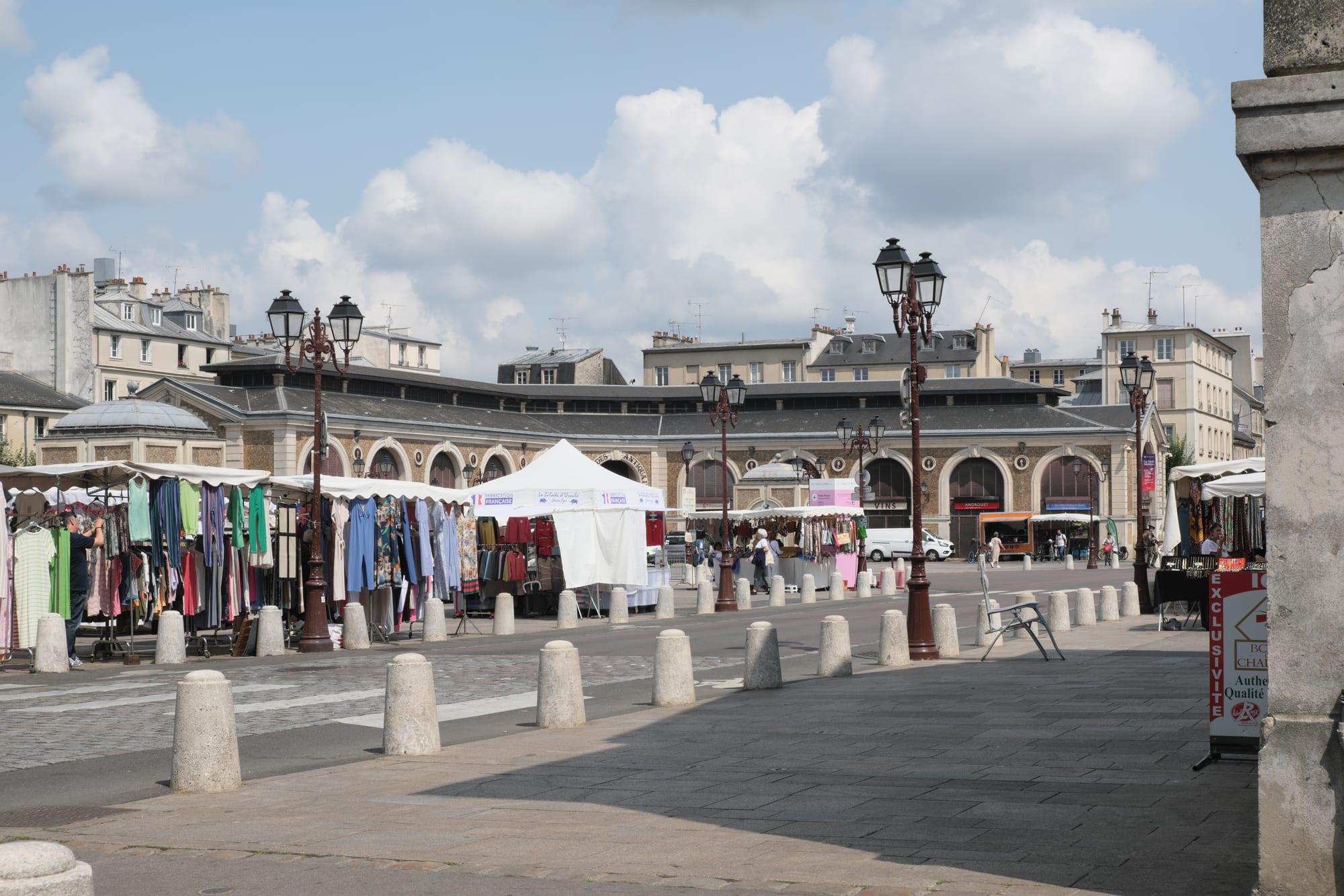
Speak quietly and cover shoulders in the cathedral and Notre-Dame during services; ask before photographing market traders and their stalls.
💳 Common Payment Methods
France uses the euro. Cards and contactless payment work in shops, restaurants, the palace and on the trains; a little cash is useful at the market stalls and small bakeries. ATMs are easy to find in the town centre.