💰 Budget
Most visitors come for the day, so the costs are transport, entry to the palace, tower and citadel, and a meal. Staying overnight in a guesthouse is usually good value outside summer weekends.
- Daily Budget Midrange
- USD 100–180 (guesthouse or small hotel, restaurant meals, castle and museum entries, a river boat)
- Daily Budget Shoestring
- USD 45–75 (guesthouse or a day trip by bus, simple meals, walking in the hills)
Combine a bus one way with a boat or the train-and-ferry route the other to see the Danube Bend from the river.
📅 Best Time to Visit
May to September, when the river boats run and the hills are green and good for walking. Summer weekends are the busiest. Autumn colour in the wooded hills is a quieter alternative; in winter some services shrink and the climb to the citadel can be icy.
⏳ Suggested Number of Days
One full day covers the palace, the tower and the citadel. Two or three days give time for walks in the hills and the other towns of the Danube Bend; reaching the citadel on foot takes longer than most visitors expect.
- First Visit
- 1 day
- With Surroundings
- 2–3 days
🚆 Transportation
The town is strung along the river and easy to walk, but the citadel is high above it. Regional Volánbusz buses run through the town, a hop-on/hop-off tourist bus links the citadel, bus stops and ferry piers on weekends, and taxis are available. A ferry crosses the Danube to Nagymaros.
On weekdays without the tourist bus, allow time and good shoes for the steep walk up to the citadel.
🛬 Airport & Station Connections
Direct buses run hourly from Budapest's Újpest-Városkapu. There is no station in the town: the nearest is Nagymaros-Visegrád on the opposite bank, reached by train from Budapest-Nyugati and then the ferry across the river. From May to September boats link Visegrád with other Danube Bend towns. Budapest's Ferenc Liszt International Airport is the nearest airport.
🚶 Walkability
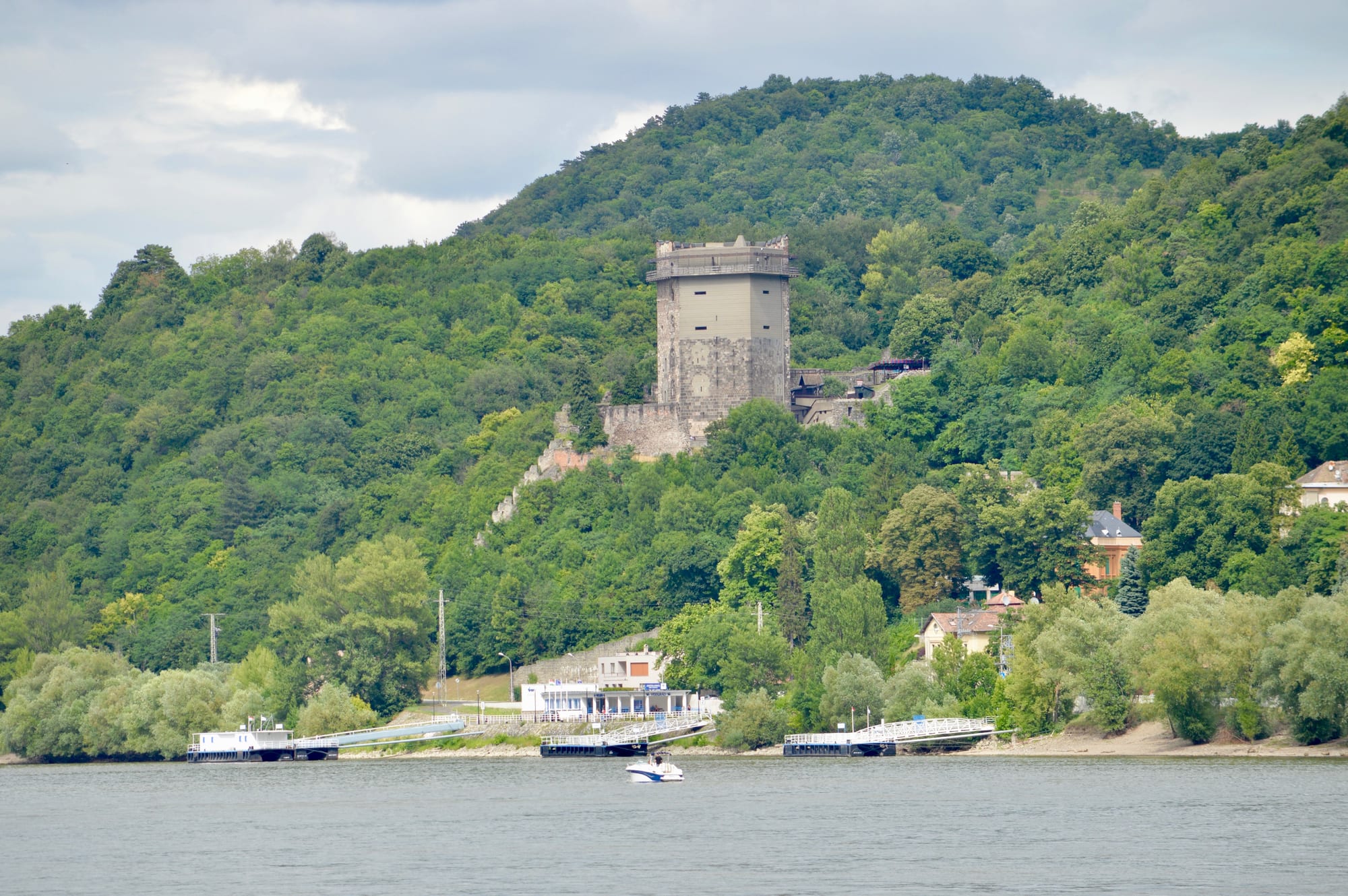
The riverside town centre is small and flat, and the palace, church and ferry are a few minutes apart. Everything else is uphill: the Solomon Tower is a short climb, while the citadel and the Nagyvillám area are a proper hike through woodland.
🛡️ Safety
Hungary is a safe country with low levels of violent crime. Visegrád is a quiet village-sized town; the hazards are natural ones — steep, uneven paths on Castle Hill and in the hills, and traffic on the main road along the river.
Stay on marked trails and wear sturdy shoes on the steep paths. Check current official travel advice before travelling.
🌦️ Climate
Close to that of the capital to the south: a climate between humid temperate and humid continental, with warm to hot summers and chilly winters in which snow is fairly frequent.
- Summer
- warm — in nearby Budapest July, the warmest month, averages close to 21°C
- Winter
- cold — in nearby Budapest January averages about -1.6°C
🤝 Local Customs
Tips are customary in restaurants and cafés. Visegrád is a small community, and visitors walking in the protected hills are expected to stay on paths and take their litter with them.
Check the bill for a service charge of about 10 per cent before adding a tip.
💳 Common Payment Methods
The currency is the Hungarian forint (HUF). Cards are accepted at the main sights and most restaurants, but ferries, small kiosks and some guesthouses may prefer cash, so carrying some forints is wise.