💰 Budget
Costs run a shade below Reykjavík. Akureyri has a range of rooms, with hostels and guesthouses, and several supermarkets. Town buses are free, and the town pool costs far less than the big spa lagoons. Whale-watching trips and a hire car for Mývatn are the main extra costs; the Vaðlaheiði tunnel east of town is a toll road paid online.
- Daily Budget Midrange
- USD 280–480 (guesthouse or hotel, one restaurant meal a day, a whale-watching trip or a day with a hire car)
- Daily Budget Shoestring
- USD 120–200 (hostel or campsite, supermarket food, free town buses)
Use Akureyri as a base: Mývatn, Goðafoss and Húsavík can all be reached as day trips when their own beds are full or expensive.
📅 Best Time to Visit
June to August brings the longest days, the warmest weather, the botanical garden in flower and the most whale-watching trips. September adds autumn colour and the first northern lights, and winter brings skiing at Hlíðarfjall.
⏳ Suggested Number of Days
Two days cover the town at an easy pace. Allow four or five to include the lakes, waterfalls and islands within reach, and more in winter, when the passes can close and daylight is short.
- First Visit
- 2 days
- With Surroundings
- 4–5 days
🚆 Transportation
The centre is compact and walkable, and the local buses are free — the fares were dropped in 2008. A hire car is the easiest way to explore Eyjafjörður and the Mývatn area; long-distance Strætó buses run along the Ring Road. The Vaðlaheiðargöng tunnel, opened in 2018, shortens the road to Mývatn by 16 kilometres and is Iceland's only toll road. City centre parking has been charged since 2023.
In winter check road.is for Öxnadalsheiði, the pass towards Skagafjörður and Reykjavík, which can close in storms.
🛬 Airport & Station Connections
Akureyri Airport is three kilometres south of the centre, with several flights a day from Reykjavík, onward flights to Grímsey and the north-east, and seasonal international services. By road Reykjavík is 390 kilometres away on the Ring Road, which is paved and open year-round. Most long-distance buses stop at the airport and at Hof, and cruise ships call in summer.
🚶 Walkability
The centre, Innbær and the harbour are easy on foot along the flat shore, though the streets get hilly away from the waterline. Snow lies from late October to April, so winter walking calls for good soles.
🛡️ Safety
Iceland has almost no violent crime and is one of the safest countries in the world. Akureyri shares that very low crime rate; the risks are winter roads and passes, snow and ice on steep streets, avalanche terrain on the mountains for skiers off the marked runs, and cold water on boat trips.
Keep to the marked runs at Hlíðarfjall unless with a guide, carry warm layers on whale-watching boats, and never drive past a closed-road barrier. Check current official travel advice before travelling.
🌦️ Climate
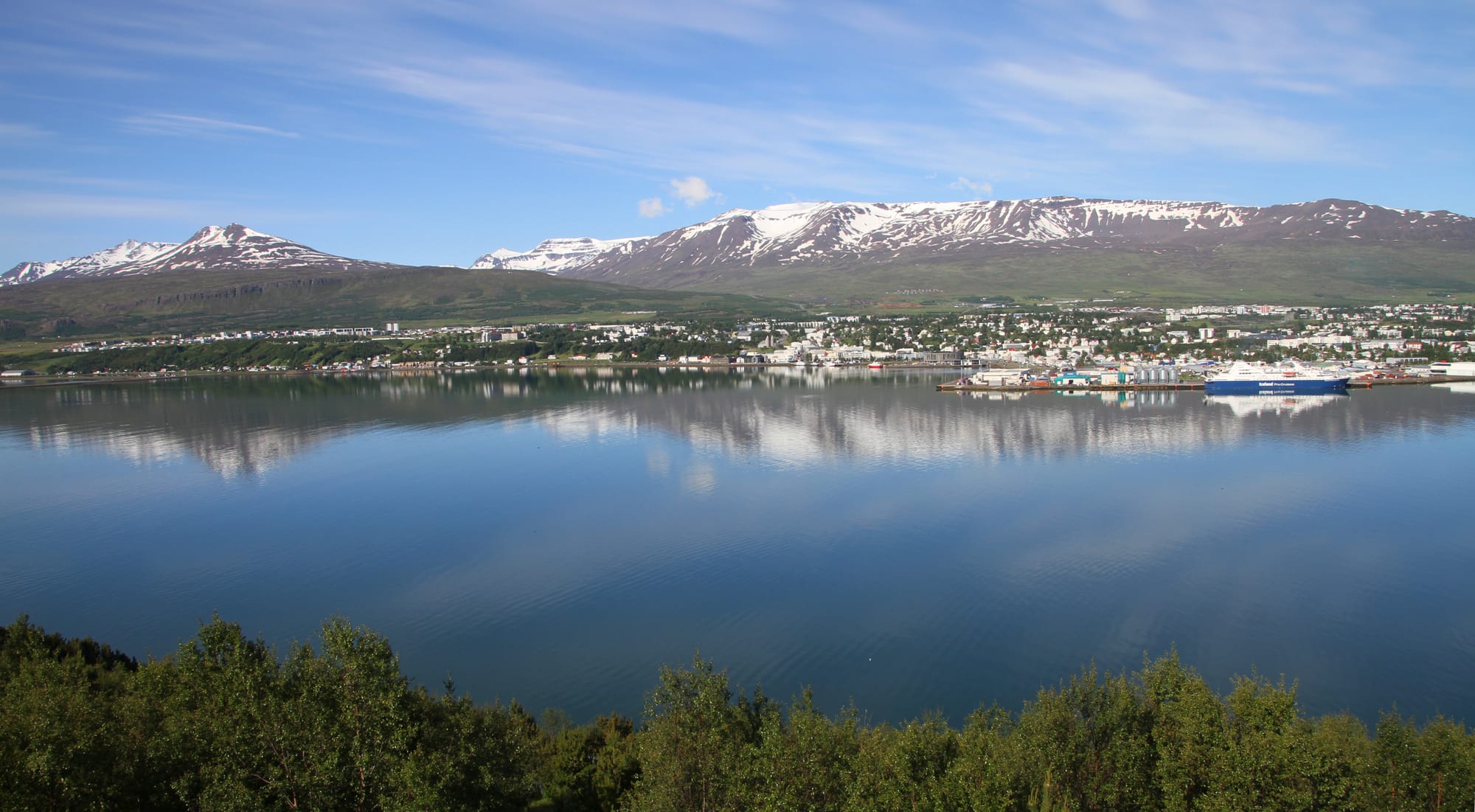
Set at the head of a long fjord among high mountains, Akureyri has a climate more inland than coastal, with warmer summers and colder winters than most of Iceland; the mountains shield it from strong winds, and it is much drier than the south. It is a cloudy town, with barely any sunshine from November to February. Snow cover forms in late October and melts in April.
- Summer
- mild — July is the warmest month, often cool, though a day or two above 24°C can occur
- Winter
- cold but not severe — January is the coldest month, and Iceland's northern lowland coast averages around −1°C in winter
🤝 Local Customs
Tipping is not practised in Iceland. Akureyri is nicknamed the Capital of North Iceland, and many local speakers keep the 'hard' consonants of northern Icelandic. Folk culture is stronger here than in Reykjavík, the town divides along football lines between KA and Þór, and the pool is the social centre.
Alcohol is sold in the state Vínbúðin shops and in licensed bars and restaurants; the buying age is 20. Keep to paths and leave nature as found.
💳 Common Payment Methods
The currency is the Icelandic króna (ISK). Cards, including contactless, are used for everything — parking, buses, cafés — and cash is almost never needed. A card with a PIN is useful for unattended fuel pumps.