💰 Budget
Bandung is cheaper than Jakarta and about average for a large Javanese city. Food is inexpensive, hotels are plentiful and competitive, and the main additional costs are entry fees at the crater sites, transport up to the hills, and the shopping that draws many domestic visitors. Prices rise at weekends and in school holidays.
- Daily Budget Midrange
- USD 50–110 (comfortable hotel, restaurants, executive-class trains, a driver or jeep for the volcanoes)
- Daily Budget Shoestring
- USD 20–35 (guesthouse, warung meals, city buses and ride-hailing motorcycles)
Visit on weekdays if possible: weekend traffic from Jakarta fills the hotels and can double the time to the northern hills.
📅 Best Time to Visit
The drier months from about May to September give the clearest views of the surrounding volcanoes and the best conditions for the crater lakes. The wet season from November to March brings heavy afternoon rain and mist in the highlands, though mornings are often fine. Weekends and school holidays are crowded all year.
⏳ Suggested Number of Days
Two days suit the city itself, which is compact at its centre. Three or four allow the craters and hill country to the north and south, where journeys are slow. Traffic decides the pace more than distance.
- First Visit
- 2 days
- With Surroundings
- 3–4 days
🚆 Transportation
Ride-hailing cars and motorcycle taxis are the usual way to move around and are inexpensive. Angkot minibuses run fixed routes and are cheap but hard to use without local knowledge, and there are some city buses. Trips to the craters are made by hired car with a driver or by tour, and traffic on the roads to Lembang and the north is heavy at weekends.
Set out early for the volcanoes, since cloud closes in by late morning and the return traffic builds through the afternoon.
🛬 Airport & Station Connections
Most arrivals are from Jakarta. The high-speed railway opened in 2023 and reaches the Bandung area in well under an hour from Halim, arriving at a station outside the city with a connecting shuttle train; conventional trains run to Bandung's central station in about three hours, and there are frequent buses and shared cars. Air links are in flux: commercial flights moved in 2023 from Bandung's own Husein Sastranegara Airport to the larger Kertajati Airport in Majalengka Regency, east of the city, and since 2026 Husein Sastranegara has been taking scheduled jet services again. Jakarta's airports are a toll-road drive away.
🚶 Walkability
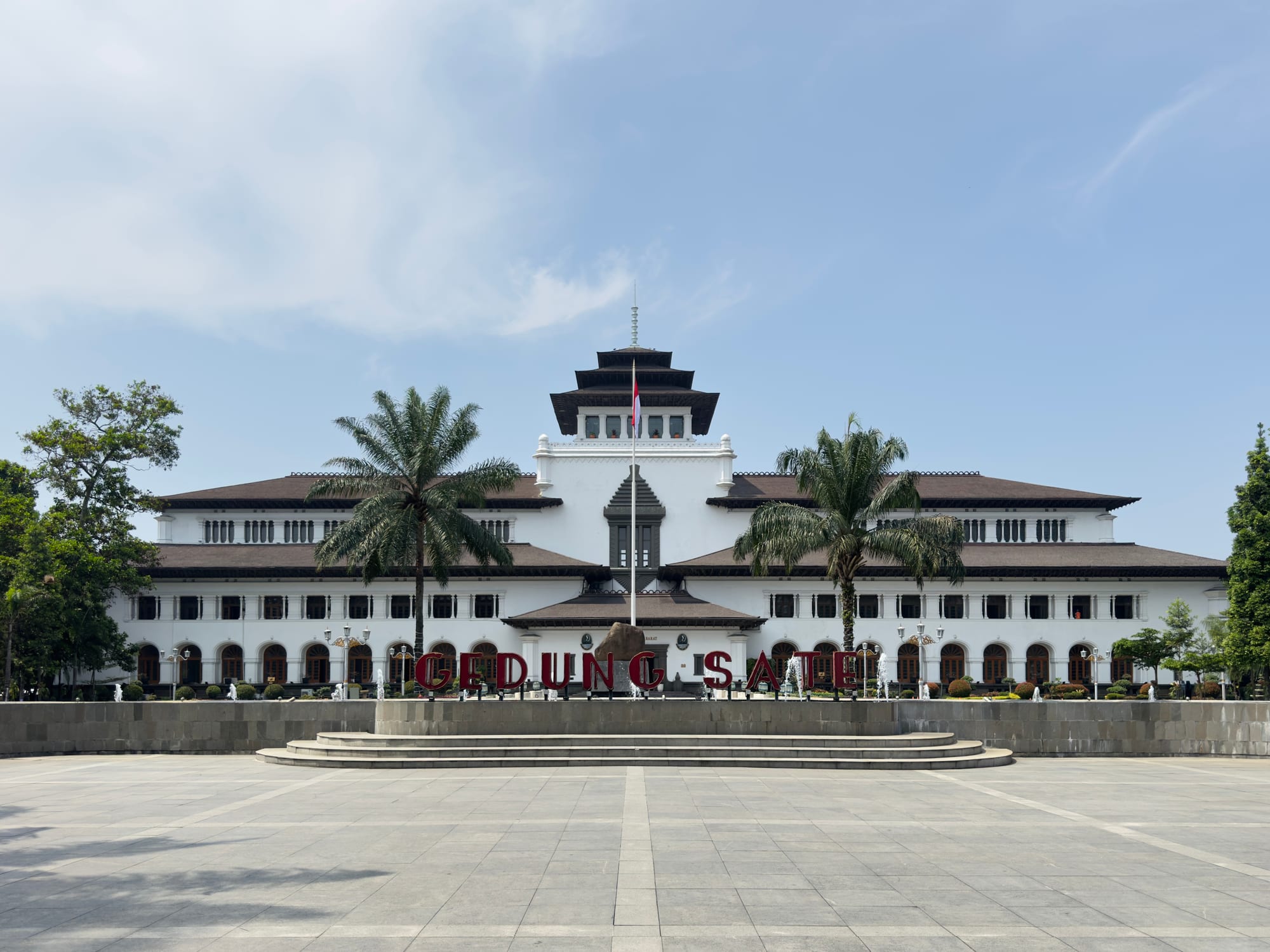
The historic centre around Braga, the square and Gedung Merdeka is pleasant on foot, and the government quarter has wide pavements. Elsewhere walking is harder: pavements are narrow or occupied, crossings are awkward, and distances between districts are long. The climate helps, being milder than the lowlands, and rain comes mostly in the afternoon.
🛡️ Safety
Bandung is a generally safe city, with petty theft in markets and on crowded streets the usual concern. Traffic is the main hazard, and the mountain roads are winding and busy at weekends. The volcanoes around the city are active: Tangkuban Perahu has been closed to visitors during periods of unrest, and crater areas hold pockets of toxic gas. Landslides and flash floods follow heavy rain in the hills.
Follow the marked areas and warnings at crater sites, leave promptly if staff say so, take care on mountain roads, and note that drug offences carry severe penalties, including death. Check current official travel advice before travelling.
🌦️ Climate
Bandung's altitude makes it noticeably cooler than Jakarta, with warm days and mild nights all year and fresher air in the hills above the city. Rain follows the Javanese pattern: a wet season from about November to March and a drier one from May to September.
- Summer
- the dry season, May–September: about 18–28°C, sunny mornings and cool evenings, with cold nights on the crater rims
- Winter
- the wet season, November–March: about 19–27°C, with heavy afternoon rain and frequent mist in the highlands
🤝 Local Customs
Bandung is Sundanese, and the Sundanese language is used at home and in the street alongside Indonesian; greetings and polite forms matter. Islam is the majority faith and observance is visible, with prayer times structuring the day, though the city is relaxed by Indonesian standards. Dress modestly, particularly at mosques, where covered arms and legs and a headscarf for women are needed. Shoes come off indoors, and the right hand is used for giving and eating. Tipping is not expected.
Ask before photographing people, dress modestly and eat discreetly in public during Ramadan daylight hours, and bargain politely in markets and factory outlets.
💳 Common Payment Methods
The currency is the Indonesian rupiah. Cards work in hotels, malls and larger restaurants, and QRIS code payment is accepted almost everywhere, including at small stalls. Cash is still needed for angkot fares, market stalls, parking and crater entry fees. ATMs are common in the city and scarcer in the hills.