💰 Budget
Rooms and food are cheap, and the single significant expense is trekking: guided walks are priced per person per day and include the national park permit, guides and food carried in. Transport in and out — a shared minibus, a private car from Medan or the airport — is the other real cost. There is little else to spend money on.
- Daily Budget Midrange
- USD 45–95 (better guesthouse or eco-lodge room, restaurant meals, a guided jungle trek, a private car for transfers)
- Daily Budget Shoestring
- USD 15–30 (simple riverside room, guesthouse meals, shared minibus transport)
Agree the length, route, group size and what is included for any trek before starting, and carry enough cash, as there is no reliable bank machine in the village.
📅 Best Time to Visit
The drier months from about February to August give firmer trails and clearer river water, and are the usual trekking season. Rain can fall in any month, and the wettest period from September to December makes paths slippery and raises the river. Indonesian school holidays and the week after Eid al-Fitr are the busiest times.
⏳ Suggested Number of Days
Two or three days covers the village and a trek of one or two days into the forest. Longer stays suit anyone wanting a multi-day walk, a visit further along the park boundary, or simply time by the river. Getting here and away takes the better part of a day each way.
- First Visit
- 2–3 days
- With Surroundings
- 4–5 days
🚆 Transportation
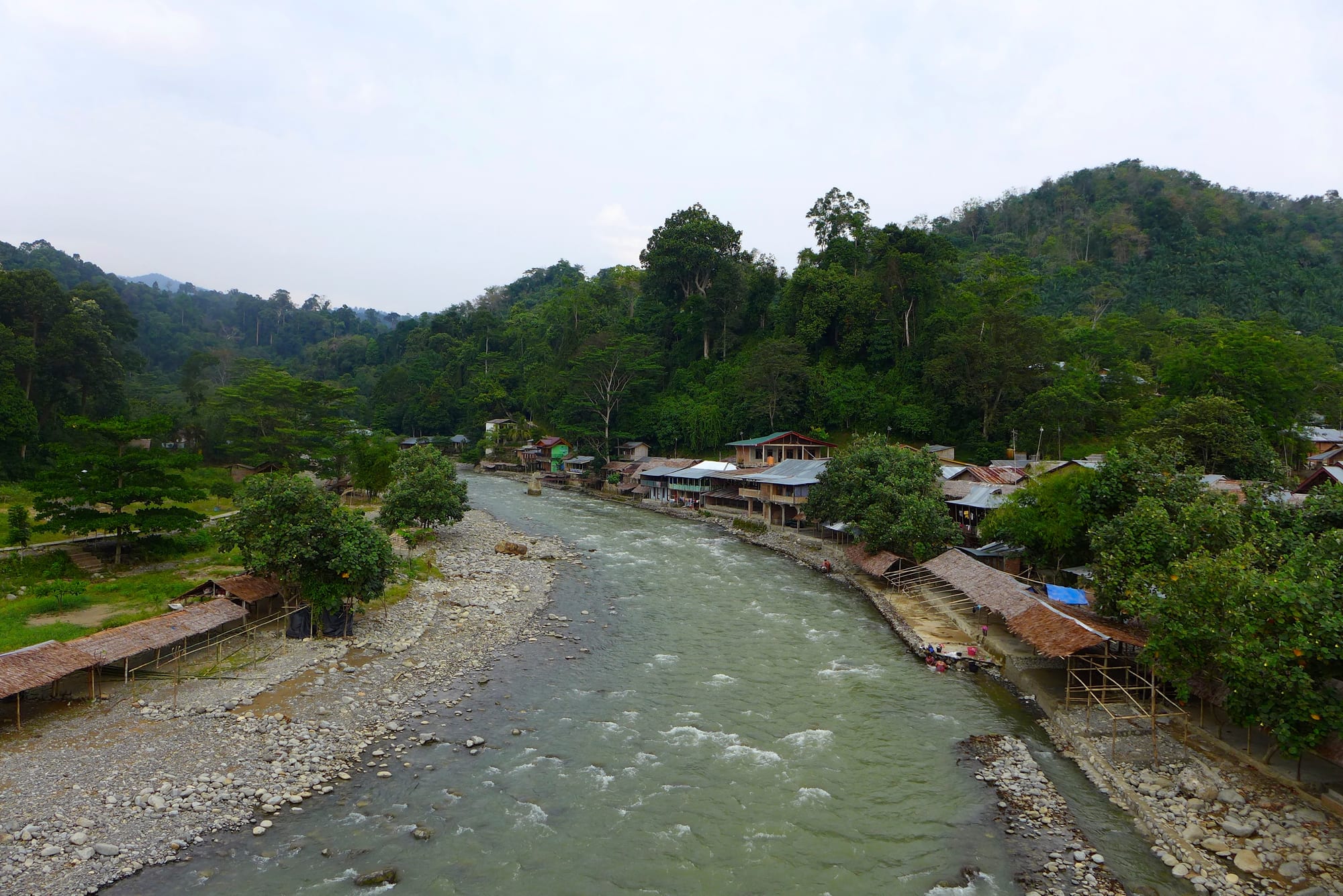
There is no transport inside the village: it is a footpath along the river, with steps, bridges and no through road. Vehicles stop at the lower end, where minibuses and hired cars arrive from Medan and Binjai. Guesthouses arrange cars and motorcycle taxis for onward journeys, and everything in the forest is done on foot with a guide.
Pack a small bag for treks and leave the rest at the guesthouse, since bags have to be carried along the riverside path.
🛬 Airport & Station Connections
Bukit Lawang is about 86 kilometres north-west of Medan by road, which takes several hours in a private car and longer by public minibus from Medan's Pinang Baris terminal via Binjai and Bahorok. Most visitors book a car through a guesthouse, often directly from Kualanamu airport, which adds an hour or so. The last stretch is narrow and winds through plantations.
🚶 Walkability
The village is walked end to end and nothing else is possible: the riverside path runs for a couple of kilometres past the guesthouses, crossing on footbridges and climbing steps in places. It is uneven, slippery after rain and poorly lit at night, so a torch is useful. Forest trails beyond the village are steep, muddy and demanding.
🛡️ Safety
The main hazards are natural. The Bahorok River rises very fast in heavy rain, and a flash flood destroyed much of the village in 2003 with heavy loss of life. Trails are steep and slippery, leeches and biting insects are common, and the orangutans here include former captive animals that can approach people and occasionally grab or bite. Crime against visitors is rare.
Trek only with licensed guides and a national park permit, keep a safe distance from orangutans and never feed or touch them, and move to high ground if the river rises or heavy rain sets in upstream. Wear a helmet and only ride a scooter if experienced, avoid cheap cocktails and home-brewed spirits, dress modestly outside Bali and beach resorts, and heed volcano exclusion zones and tsunami warnings. Check current official travel advice before travelling.
🌦️ Climate
Hot, humid equatorial forest climate with rain in every month. Days reach about 30–32°C in the village and feel cooler under the canopy, while nights fall to around 22–23°C. Humidity is high all year and afternoon thunderstorms are common.
- Summer
- the drier months, February to August: hot and bright mornings, around 31–33°C, with storms mostly late in the day
- Winter
- the wetter months, September to January: frequent heavy rain, a swollen river and muddy trails, about 29–31°C by day
🤝 Local Customs
The village is mostly Muslim and conservative by the standards of a tourist place, so swimwear belongs in the river and not in the lanes, and shoulders and knees should be covered away from the water. Guides and guesthouse staff are addressed by name and greeted properly; the right hand is used for giving and eating. Alcohol is available in some guesthouses but is not part of village life.
Ask before photographing people, keep noise down at night in a village where houses and guesthouses share the same bank, and carry out what is carried into the forest.
💳 Common Payment Methods
The currency is the Indonesian rupiah, and this is a cash place. Guesthouses, guides and warung mostly want notes, though some now accept QRIS code payments. There is no dependable bank machine, so money should be drawn in Medan or Binjai before arriving, with enough for trekking fees and the journey out.