💰 Budget
Medan is inexpensive, and eating well costs very little: street stalls, Chinese-Indonesian restaurants and Indian kitchens are all cheap. Hotels are aimed mainly at business and domestic travellers and are good value. The larger costs are transport — a car with driver for trips to Lake Toba, Berastagi or Bukit Lawang, and airport transfers.
- Daily Budget Midrange
- USD 45–95 (mid-range hotel, restaurant meals, a car and driver for part of the day)
- Daily Budget Shoestring
- USD 15–30 (guesthouse or hostel bed, street food, city buses and app-based motorcycle taxis)
Agree the price of any car and driver for onward trips before setting out, and expect to pay more for a vehicle that waits.
📅 Best Time to Visit
Medan is hot and humid all year, so the season matters less here than for the trips people make from it. February to July is generally the drier stretch in North Sumatra and suits the highlands and the jungle. Travel is difficult around Eid al-Fitr, when transport fills, and haze from agricultural fires can affect the region in dry years.
⏳ Suggested Number of Days
One or two days covers the city's own sights comfortably. Most visitors use Medan as a base or a staging post and give four to six days to the surrounding region, where journeys are long and roads slow.
- First Visit
- 1–2 days
- With Surroundings
- 4–6 days
🚆 Transportation
App-based cars and motorcycle taxis are the usual way to move around and cost very little. The city has bus rapid transit corridors and older minibuses, called angkot, on fixed routes, and becak mesin, motorised rickshaws, still work the side streets. Traffic is heavy and unruly for much of the day, and the railway station in the centre serves the airport line and longer-distance trains.
Use apps rather than hailing on the street to avoid fare arguments, and allow far longer than the distance suggests at peak times.
🛬 Airport & Station Connections
Kualanamu International Airport lies about 23 kilometres east of the centre in Deli Serdang, with domestic flights across Indonesia and regional services to Malaysia, Singapore and Thailand. A dedicated airport rail link runs to Medan's central station, with airport buses and taxis as alternatives. Belawan, the port to the north, has ferries to Penang in Malaysia, and long-distance buses and hired cars run south to Lake Toba and Bukittinggi.
🚶 Walkability
Walking is hard work here. The centre around Merdeka Square, Kesawan and the palace can be covered on foot, but pavements are broken or missing, crossings are few, the heat is heavy and the traffic is constant. Kampung Madras is compact and rewarding to walk. Between districts almost everyone rides, and early morning or evening is the only comfortable time to be out.
🛡️ Safety
Medan is generally safe for visitors, though it has a reputation within Indonesia for sharper street dealing than most cities. Bag-snatching from motorcycles, overcharging by unmetered taxis and becak, and pickpocketing in markets are the common problems. The traffic is the real danger, and air quality is poor on still days.
Wear a helmet and only ride a scooter if experienced, avoid cheap cocktails and home-brewed spirits, dress modestly outside Bali and beach resorts, and heed volcano exclusion zones and tsunami warnings. Check current official travel advice before travelling.
🌦️ Climate
Equatorial, hot and humid throughout the year, with little seasonal change in temperature and rain in every month. Days run to about 32–33°C and nights stay above 23°C; afternoon downpours are heavy but usually brief.
- Summer
- the drier months, February to July: hot and bright, 32–34°C by day, with shorter and less frequent storms
- Winter
- the wetter months, September to December: frequent heavy afternoon rain and localised flooding, still around 30–32°C
🤝 Local Customs
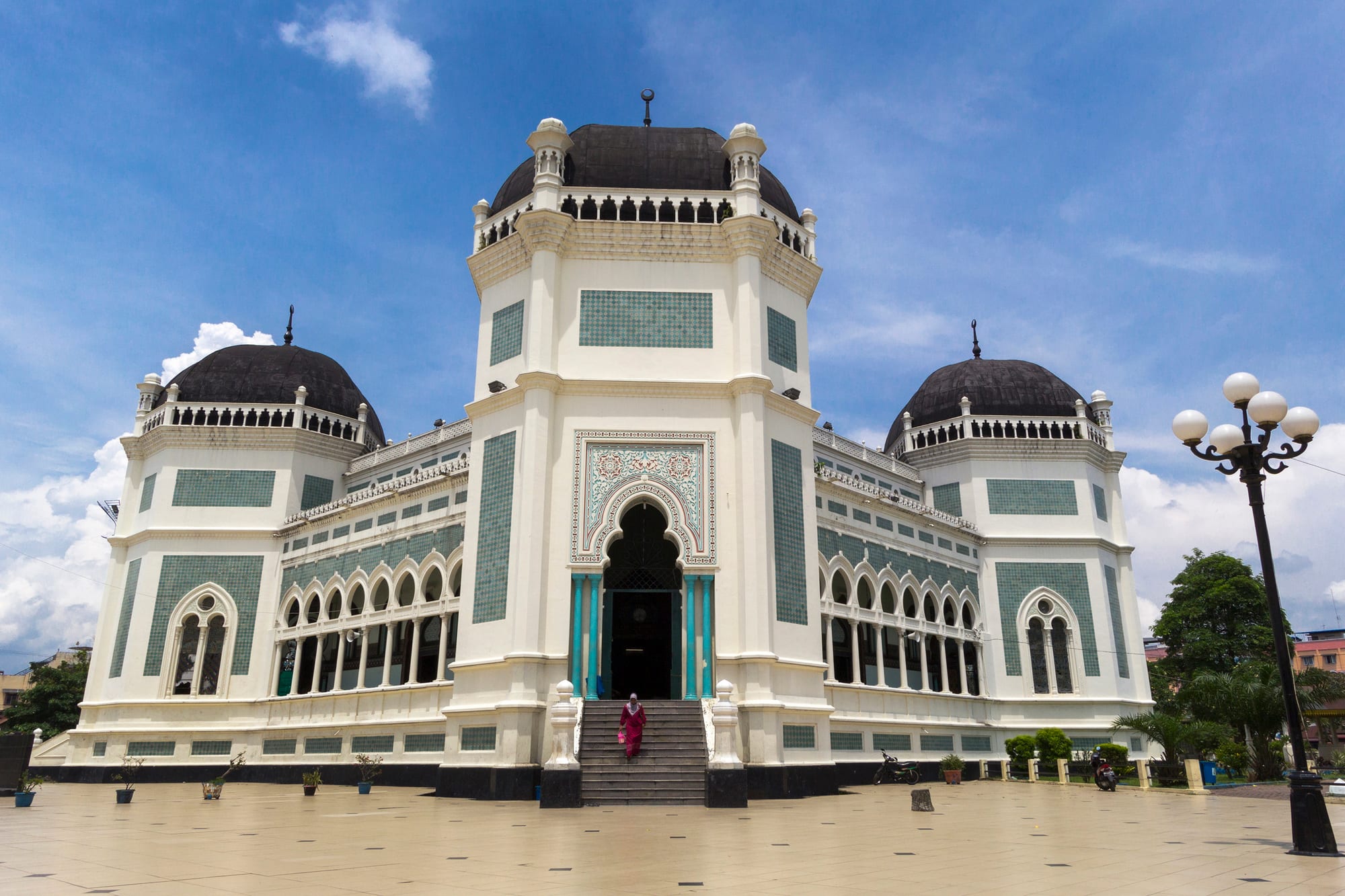
Medan is Muslim-majority but unusually mixed, with large Chinese, Tamil, Batak, Javanese and Malay communities, so mosques, churches and temples stand close together. Modest dress is expected, and shoulders and knees should be covered at the Great Mosque, where a covering is lent to women. Shoes come off at mosques, temples and homes, and the right hand is used for giving and eating. Bargaining is normal in markets and expected with becak drivers.
Ask before photographing people at prayer, avoid drinking alcohol in public, and take the hard sell in markets and from drivers in good humour.
💳 Common Payment Methods
The currency is the Indonesian rupiah. Cards work in hotels, malls and larger restaurants, and the QRIS code system is accepted very widely, including by street stalls. Cash is needed for markets, becak and small warung. ATMs are everywhere in the city, and it is sensible to draw money here before heading to smaller towns.