💰 Budget
Como is cheaper than the grandest lake resorts but busy and pricey in summer, when the lake's popularity as a film location and celebrity retreat draws international visitors. The walled centre and the lakefront are the most expensive places to stay. Ferries, the funicular and the lakefront walks make sightseeing affordable, and Milan is close enough for a day trip either way.
- Daily Budget Midrange
- USD 180–370 (mid-range hotel, restaurant dinners, museum tickets, lake ferries)
- Daily Budget Shoestring
- USD 85–140 (hostel or simple guesthouse, pizza and bakery lunches, buses and ferries)
Basing a lake trip in Como rather than the grandest resorts keeps costs down; the lakefront walks and gardens of Villa Olmo are free.
📅 Best Time to Visit
April to June and September to October, when the weather is mild and pleasant and the lake's gardens are at their best; spring is the rainiest season. Summer is hot and crowded, with thunderstorms and occasional hailstorms, and the hottest spells rarely last more than two weeks. Winter is quiet, and the lake keeps it milder than on the plain.
⏳ Suggested Number of Days
One or two days are enough for the city itself and the ride up to Brunate. Four or five days allow time to explore the lake's villas and villages by ferry and to cross into Switzerland; ferry timetables and the weather are what most often stretch a stay.
- First Visit
- 1–2 days
- With Surroundings
- 4–5 days
🚆 Transportation
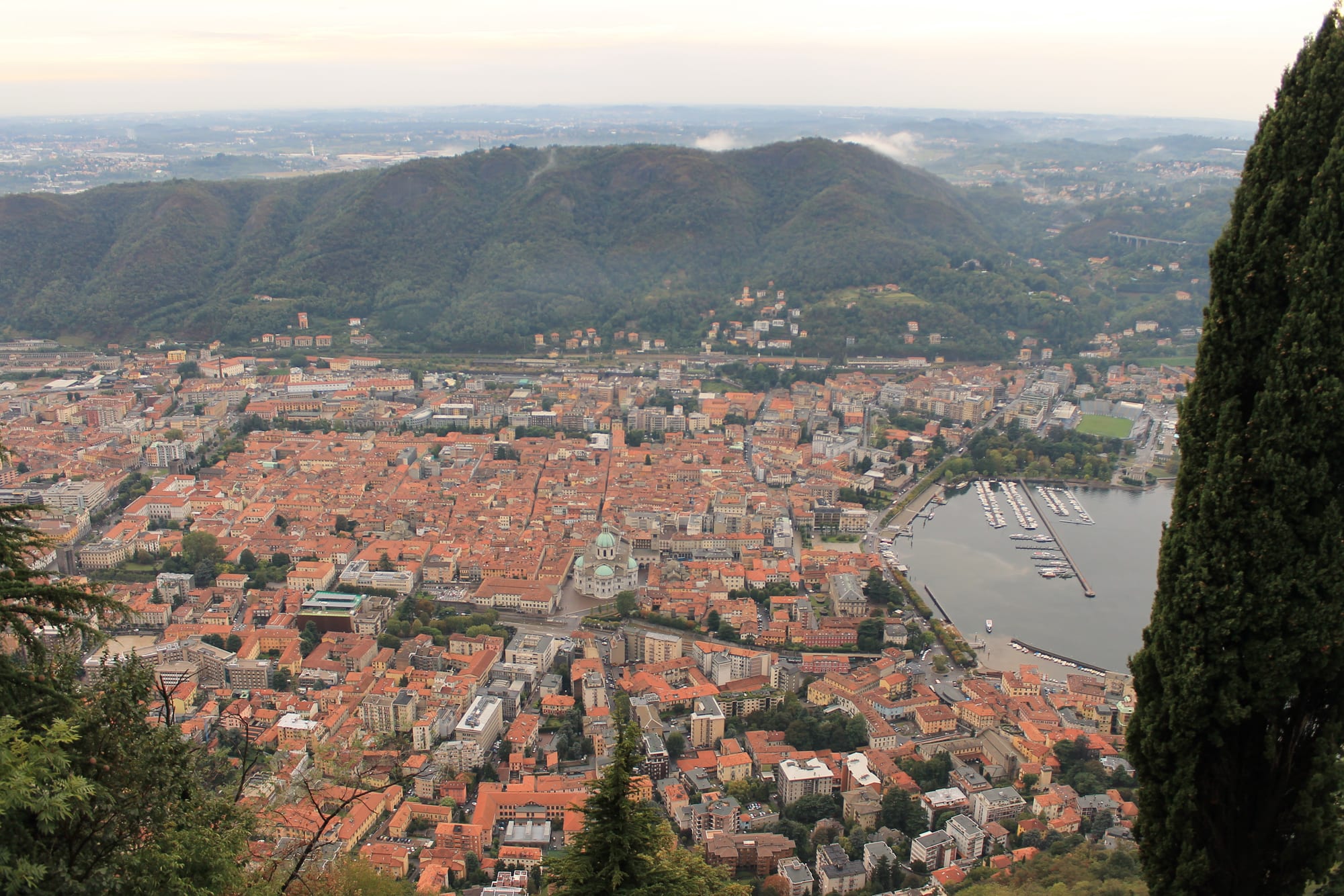
The walled centre is compact and best seen on foot. Eleven urban bus lines and extra-urban lines connect the city with the rest of the province, and the funicular climbs to Brunate. Boats and hydrofoils of Navigazione Laghi link Como with most of the villages on the lake. Five smaller railway stations serve the outer districts.
Ferries and hydrofoils are the easiest way to reach the lake villages, and buses run along both shores.
🛬 Airport & Station Connections
Trains from Milan arrive at two main stations: Como San Giovanni, on the main line between Milano Centrale and Zürich and Basel, served by EuroCity trains, and Como Nord Lago by the lakefront. From Milan Malpensa Airport the Malpensa Express and a change at Saronno reach Como in about 1 hour 15 minutes to 1 hour 40 minutes; Linate and Orio al Serio are the other nearby airports. The motorway from Milan continues to Switzerland.
🚶 Walkability
Very good. The walled centre is flat and largely traffic-free, and the lakefront promenade leads west to Villa Olmo and east to the Villa Geno fountain. Brunate is reached by funicular, and the walk on to the Faro Voltiano takes a little over half an hour. Paths into the surrounding hills start at the edge of town.
🛡️ Safety
Italy is generally safe, with low levels of violent crime against visitors. Como is a calm provincial city; the usual care with bags is enough, and the main nuisance is winter air pollution when cold air traps smog.
Keep an eye on bags on busy ferries and at the stations, and take care on narrow lakeside roads without pavements. Check current official travel advice before travelling.
🌦️ Climate
A humid subtropical climate tempered by the lake. Winters are milder than on the Po plain and free of the fog that covers nearby Brianza; spring and autumn are mild and pleasant, and summers can be hot and humid. Strong winds are rare, though foehn winds can blow suddenly.
- Summer
- hot and humid at times, with occasional peaks of 35–36°C, thunderstorms and the odd violent hailstorm
- Winter
- milder than on the plain thanks to the lake (in nearby Milan daily averages can fall below 0°C), with occasional frosts; average winter temperatures have risen since the start of the 21st century
🤝 Local Customs
Como's people, the Comaschi, are proud of a history of independence from Milan, and the city flag still carries the word LIBERTAS. Tips are not customary in Italy but are given for special service; restaurants usually add a cover charge, the coperto, which is not a tip, and tips cannot be added to a card bill. Many residents commute to work in Switzerland.
Keep quiet in the cathedral and churches during services, and respect private property along the lakeshore, where many villas and gardens are closed to the public.
💳 Common Payment Methods
The currency is the euro. Cards work widely; keep some cash for small bars, the funicular and ferry ticket counters. Switzerland, a short trip away, uses the Swiss franc. A per-night tourist tax may be collected by accommodation.