💰 Budget
Cortina is among the most expensive resorts in Italy, above all at Christmas, in late winter and in mid-August, when the town fills far beyond its resident population. Lift passes and cable cars add substantially to the cost. Late spring and autumn are cheaper, and campsites, mountain huts and simple guesthouses keep summer costs down, though campsites fill up in high summer.
- Daily Budget Midrange
- USD 250–450 (mid-range hotel, restaurant dinners, lift pass or cable cars, ski or bike hire)
- Daily Budget Shoestring
- USD 100–170 (campsite or simple guesthouse, bakery food and supermarket picnics, buses and walking)
Book well ahead for Christmas, February and August; outside the ski and summer seasons many lifts and businesses close.
📅 Best Time to Visit
December to March for skiing; late June to September for hiking, via ferratas, climbing and mountain biking, when the lifts run again. The busiest weeks are Christmas to early January and mid-August. Spring and autumn are quiet, wet and windy, and many lifts are closed.
⏳ Suggested Number of Days
Two or three days give a sense of the town and the nearest mountains. A ski holiday or a hiking stay usually runs to a week, and the passes and lakes beyond the valley need more time; bad weather can close lifts and high roads, so a spare day helps.
- First Visit
- 2–3 days
- With Surroundings
- 5–7 days
🚆 Transportation
The three ski areas — Faloria–Cristallo, Tofana–Socrepes and Cinque Torri–Lagazuoi — are linked by buses, lifts and pistes, and the Lagazuoi connects to the wider Dolomiti Superski network. Local buses serve the villages and the passes, but taxis are costly and a car is the most flexible way to reach the high roads. The line of the old Dolomites Railway, closed in 1964, is now used for cross-country skiing.
Mountain passes can close or require snow chains in winter; check conditions before driving.
🛬 Airport & Station Connections
There is no railway: the nearest station, Calalzo–Pieve di Cadore–Cortina, is about 35 kilometres south, linked to the town by the Cortina Link bus. The nearest airports are Treviso, about 138 kilometres away, and Venice Marco Polo, about 148 kilometres; the Cortina Express coach runs from Venice airport in roughly two and a half to three hours. A retro-styled sleeper train, the Espresso Cadore, returned to service in 2024.
🚶 Walkability
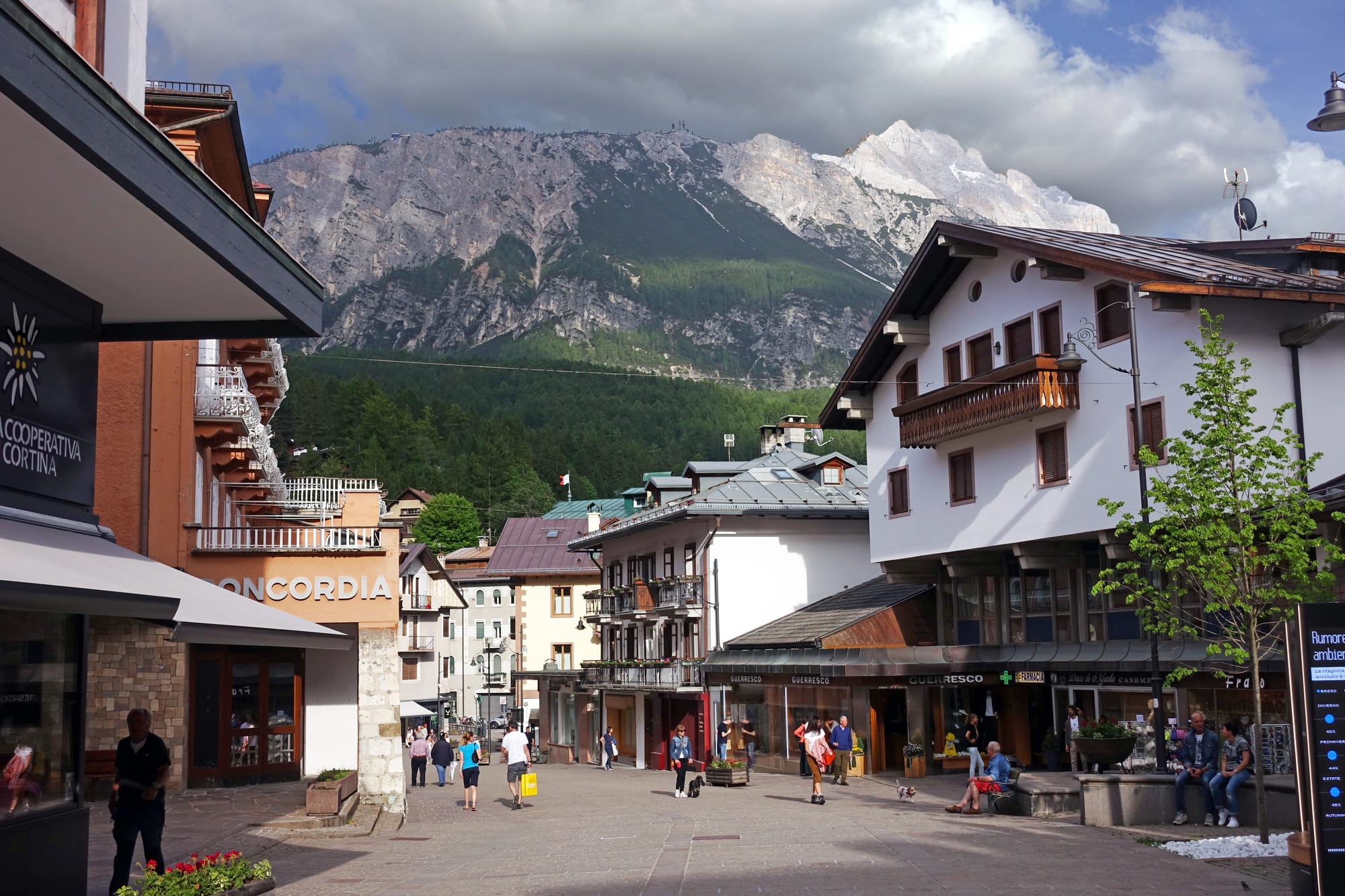
The centre is small and easy on foot: Piazza Angelo Dibona and Corso Italia are cobbled and closed to cars. Beyond them the villages spread along the valley and up the slopes, so walking between them means steady climbs, and the lifts and trailheads are better reached by bus. Pavements can be icy in winter.
🛡️ Safety
Italy is generally safe, with low levels of violent crime against visitors. Crime is rarely a concern in Cortina; the real hazards are the mountains themselves — sudden changes of weather, storms, exposed trails and via ferratas, and avalanches off-piste in winter.
Check the weather and avalanche bulletins before heading into the mountains, carry proper equipment for via ferratas, and keep to marked runs unless with a guide. Check current official travel advice before travelling.
🌦️ Climate
A cold alpine climate at about 1,224 metres, with short, mild summers and long, freezing winters. Some of Italy's lowest temperatures are recorded around the Cimabanche pass to the north in late December and early January. Annual rainfall is about 1,100 mm, heaviest in June and July and lightest in February; spring and autumn are damp, cold and windy.
- Summer
- mild and short — July averages about 15°C, and daytime temperatures can reach 25°C, with frequent afternoon rain
- Winter
- long and freezing — January averages about −2.5°C, with reliable snow on the slopes
🤝 Local Customs
Cortina is a Ladin town, and many residents speak Ampezzan Ladin as well as Italian; Habsburg memory remains visible in portraits of Franz Joseph and Charles I in bars and inns. Mountain manners apply on the trails: greet other walkers, leave gates and pastures as found, and give way to those climbing. The basilica is a working parish church.
Bills often include a cover charge (coperto); rounding up is a courtesy rather than an obligation. Dress modestly inside churches.
💳 Common Payment Methods
The currency is the euro. Cards and contactless payment are widely accepted in shops, restaurants and at lift ticket offices, and there are ATMs in the centre; mountain huts may prefer cash.