💰 Budget
Fukuoka is cheaper than Tokyo, Kyoto or Osaka. Business hotels around Hakata Station and Tenjin are plentiful, a bowl of ramen or a stall dinner costs little, and the parks, castle ruins and most shrines are free. Rates climb during Golden Week, the July festival and big baseball weekends, and the main extra costs are Shinkansen fares and day trips by train.
- Daily Budget Midrange
- USD 100–220 (business hotel, restaurants and izakaya, museum entry, trains to Dazaifu or Yanagawa)
- Daily Budget Shoestring
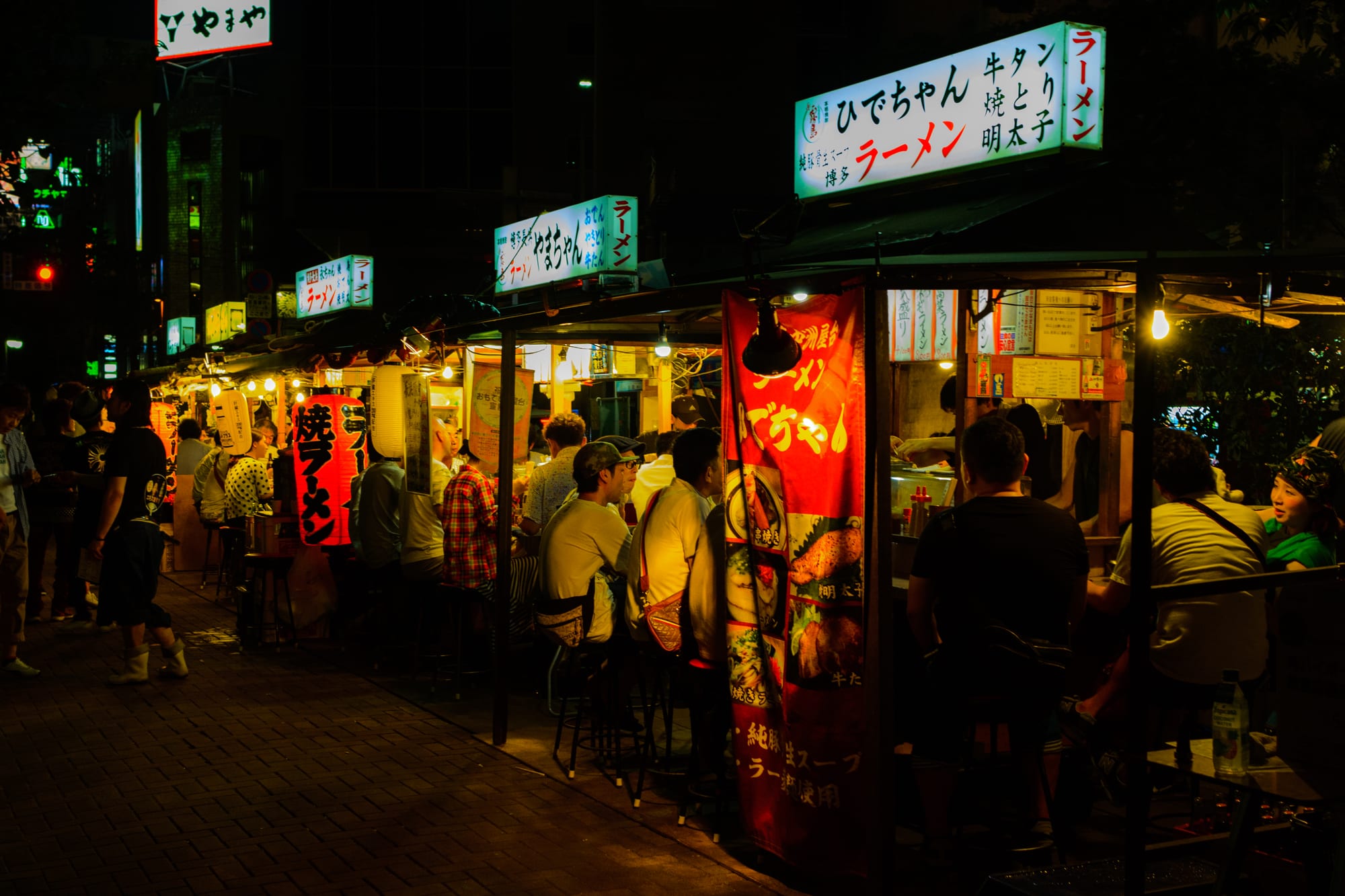
- USD 45–75 (hostel or budget business hotel, ramen and yatai meals, subway and city buses)
A one-day subway pass covers the three lines, and stall food, the castle grounds and Ohori Park keep costs down even on a short stay.
📅 Best Time to Visit
Spring and autumn are the most comfortable, with blossom around the castle in late March and mild, clear weather from October to November. May brings the Dontaku parade and July the Yamakasa festival, in heat and humidity. The rainy season falls in June and early July, and typhoons can cross in late summer. Winter is cool, grey and the season for hot pots.
⏳ Suggested Number of Days
Two days cover the central districts, the bay front and the temple quarter comfortably. Four or five allow day trips into the rest of northern Kyushu. Anyone who comes mainly to eat and to see a festival may want longer.
- First Visit
- 2 days
- With Surroundings
- 4–5 days
🚆 Transportation
Three subway lines cross the city: the Kuko line links the airport, Hakata Station, Tenjin and Ohori Park, the Hakozaki line runs north-east, and the Nanakuma line serves the southern districts and Tenjin. Buses are frequent and reach places the subway misses, with a flat fare in the central zone. Ferries cross Hakata Bay to the islands, and taxis are easy to find in Tenjin and Nakasu at night.
Rechargeable IC cards work on the subway, buses and most ferries; bus routes converge on the Tenjin and Hakata terminals, so it helps to know which of the two a service starts from.
🛬 Airport & Station Connections
Fukuoka Airport is unusually close to the centre — about ten minutes by subway from the business district — and has domestic flights plus routes across East Asia. The Kyushu Shinkansen and the San'yo Shinkansen meet at Hakata Station, which is about two and a half hours from Shin-Osaka and under two hours from Kagoshima. International ferries run from the port to Busan in South Korea, and long-distance buses serve the rest of Kyushu.
🚶 Walkability
The centre is flat and walkable, and Hakata Station to Tenjin takes about half an hour on foot across the river, past Canal City and Nakasu. Underground shopping arcades link many blocks in Tenjin and are useful in rain or heat. Momochi and the bay front are spread out and better reached by bus or subway, and the pavements are wide but busy with cyclists.
🛡️ Safety
Fukuoka is a safe city, and violent crime against visitors is very rare. The usual caution applies in the nightlife blocks of Nakasu and Tenjin, where touts approach passers-by and a few bars are known for unclear charges. Natural hazards matter more: heavy rain in the June and July rainy season, typhoons in late summer and autumn, and occasional earthquakes.
Avoid bars entered on a tout's invitation, keep bags in sight in crowded arcades, and follow local warnings during heavy rain or a typhoon. Check current official travel advice before travelling.
🌦️ Climate
A humid subtropical climate, milder in winter than most of Japan but wet. The rainy season runs from early June to mid-July, typhoons can pass in August and September, and the city occasionally sees light snow when cold air crosses the sea from the continent.
- Summer
- hot and humid, generally 28–34°C by day, with high humidity and heavy downpours
- Winter
- cool and grey, generally 3–11°C, with strong sea winds and rare snow
🤝 Local Customs
Tipping is not practised anywhere in Japan and can cause confusion. Shoes come off in homes, ryokan and some restaurants. At shrines, visitors rinse hands at the basin before approaching the hall. Fukuoka's reputation is for friendliness and plain speech, and a yatai counter is one of the few places in Japan where strangers readily talk to each other; the stalls seat only a handful of people, so lingering after eating is discouraged when others are waiting.
Avoid photographing the interiors of stalls and bars without asking, do not eat while walking in crowded arcades, and keep phone calls off trains and buses.
💳 Common Payment Methods
The currency is the Japanese yen. Cards and IC cards are accepted in department stores, hotels, chain restaurants and on transport, but many yatai, small izakaya, market stalls and shrines take cash only. Cash machines at convenience stores and post offices accept foreign cards, and it is normal to pay at the till rather than at the table.