💰 Budget
Kagoshima is cheap for a Japanese prefectural capital. Business hotels around the station and Tenmonkan are inexpensive, the ferry to the volcano costs very little, and izakaya meals are good value even with black pork. Costs rise with the Shinkansen from Fukuoka, a hire car for the peninsulas and the fast ferry to Yakushima.
- Daily Budget Midrange
- USD 110–210 (business hotel or hot-spring inn, black pork dinners with shochu, museum entry, a hire car or Shinkansen legs)
- Daily Budget Shoestring
- USD 50–80 (guest house or budget business hotel, ramen and market meals, trams and the ferry)
A one-day tram and bus pass covers the sightseeing loop buses to Sengan-en and Shiroyama; book the Yakushima ferry and island lodgings well ahead in summer.
📅 Best Time to Visit
March to May and October to November are the pleasantest, with blossom in spring, clear views of the volcano in autumn and comfortable walking on the peninsulas. June and early July are the rainy season, August is hot and humid, and typhoons can cross between July and October. Winter is mild and quiet.
⏳ Suggested Number of Days
Two days cover the city and a crossing to the volcano. Four or five allow the southern peninsula and its hot springs, or the mountains inland. Travellers going on to the islands should allow extra days, as ferries are weather-dependent.
- First Visit
- 2 days
- With Surroundings
- 4–5 days
🚆 Transportation
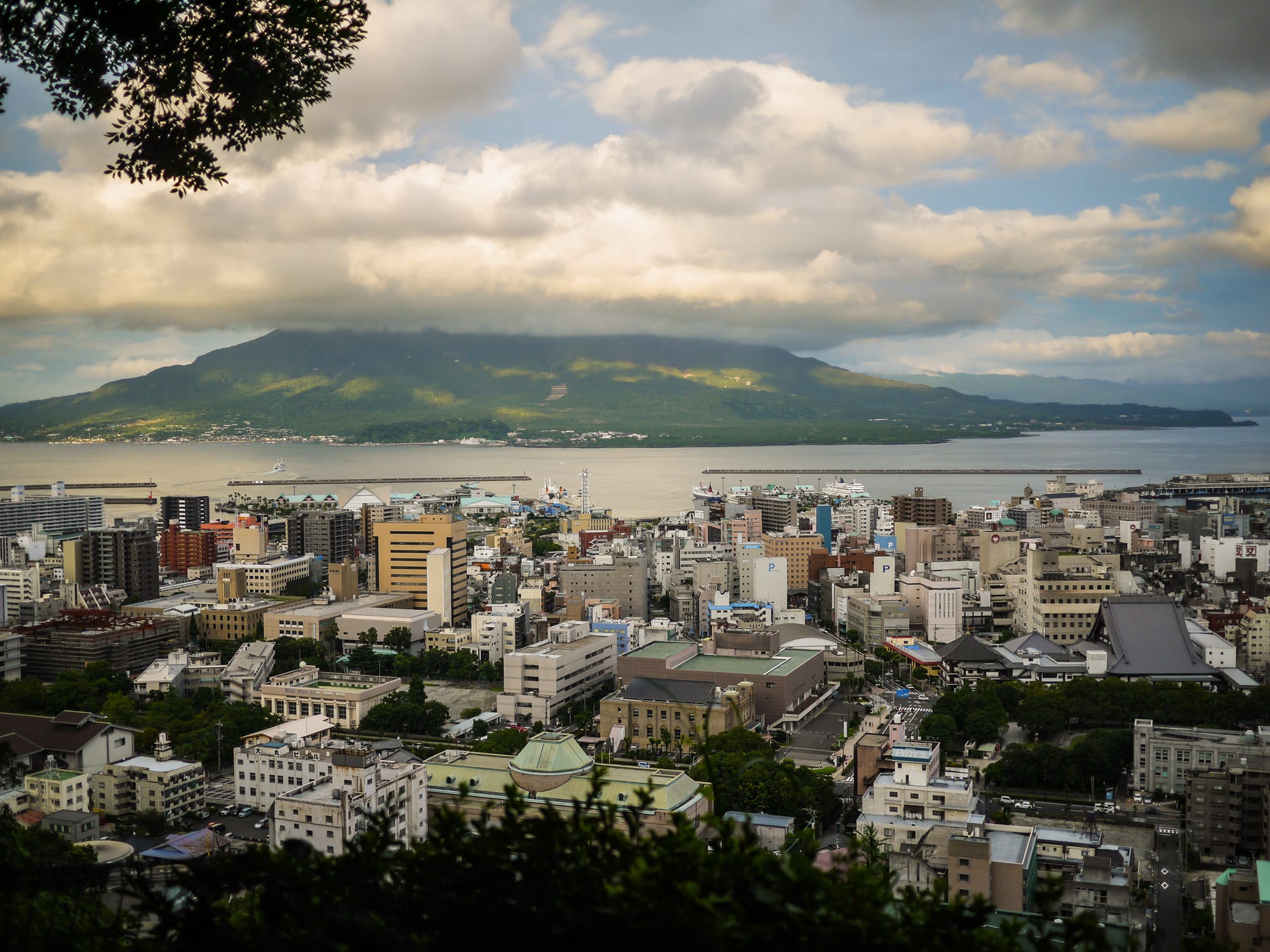
Two tram lines run from Kagoshima-Chūō Station through Tenmonkan and out to the suburbs, and are the easiest way across the centre. Sightseeing loop buses link the station, Shiroyama and Sengan-en. The Sakurajima ferry runs day and night from the pier near the aquarium, carrying cars as well as passengers, and buses circle the volcano on the far side. A hire car makes Ibusuki, Chiran and Kirishima much simpler.
Cars and bicycles left outside collect volcanic ash; yellow municipal ash bags are handed out for sweeping it up, and windscreen washers are worth checking before driving.
🛬 Airport & Station Connections
The Kyushu Shinkansen reaches Kagoshima-Chūō Station from Hakata in Fukuoka in about an hour and twenty minutes and from Kumamoto in under an hour. Kagoshima Airport is about thirty kilometres north-east at Kirishima, the second-busiest airport in Kyushu, with domestic flights and airport buses to the station. Ferries link the port with Yakushima, Tanegashima, the Amami islands and Okinawa.
🚶 Walkability
The flat strip between the station, Tenmonkan and the waterfront is easy on foot, and the arcades are covered against rain and sun. Sengan-en, the aquarium and Shiroyama's summit are further out and better reached by tram, loop bus or a steady uphill walk. Ash can make pavements gritty and slippery for a day or two after a larger eruption.
🛡️ Safety
Crime is low and the city is comfortable to walk at night. The hazards are natural: Sakurajima erupts regularly, with ashfall and occasional restrictions near the summit, while typhoons, heavy rain and the risk of landslides affect the whole region in late summer.
Follow the exclusion zone on Sakurajima, which forbids approaching the craters, keep to marked paths on the lava fields, and carry a mask and glasses on heavy ashfall days. Check current official travel advice before travelling.
🌦️ Climate
Humid subtropical, and among the warmest of Japan's mainland cities. The rainy season runs from late May into July, summer is long and sticky, typhoons arrive from July to October, and winter is mild with rare snow. Falling ash depends on the wind more than the season.
- Summer
- hot and humid, with daytime highs around 32–34°C and heavy afternoon showers
- Winter
- mild, with daytime highs around 12–14°C and cold snaps bringing brief snow
🤝 Local Customs
Standard Japanese etiquette applies: no tipping, quiet carriages, shoes removed in inns and some restaurants. Shochu is the drink of the region, usually mixed with hot water and poured for others rather than oneself, and refusing a first glass politely is normal. The local dialect, Kagoshima-ben, is famously hard for other Japanese to follow, and people enjoy explaining it.
Tattoos may bar entry to some hot-spring baths; ask before entering. At Sakurajima's shrines and memorials, keep off roped areas and do not remove lava stones.
💳 Common Payment Methods
The currency is the Japanese yen. Cards and IC cards are accepted at hotels, stations, the ferry and larger restaurants, but small izakaya, island shops and rural buses often take cash only. ATMs at convenience stores and post offices accept foreign cards.