💰 Budget
Most people come from Tokyo for the day, so the cost is often no more than the fare, entry to a temple or two and lunch. Staying overnight is cheaper than in the capital, with business hotels near the station, and the town is small enough to cover on foot. Sweet shops and street food keep eating costs low.
- Daily Budget Midrange
- USD 100–190 (station hotel, an eel or kaiseki lunch, temple and museum entry, taxis)
- Daily Budget Shoestring
- USD 45–80 (business hotel or guesthouse, noodles and street snacks, trains and walking)
The private railways from Tokyo sell day tickets combining the return fare with local buses and small discounts at sights, which suits a single-day visit.
📅 Best Time to Visit
Late March and early April for blossom along the river, and October and November for the festival, mild air and sweet potato season, are the best times. Summer is hot and humid on the inland plain, though the shrine's wind chimes and evening events make up for it. Winter is dry, cold and clear, and the old street is at its quietest on a weekday morning.
⏳ Suggested Number of Days
The old quarter suits an unhurried single day, which is how most visitors see it. Allow longer only when staying overnight to avoid the weekend crowds, or when combining the town with other places in Saitama.
- First Visit
- 1 day
- With Surroundings
- 2 days
🚆 Transportation
The town centre is walkable and the main sights lie within a square kilometre or so. A loop bus styled after a retro tram runs between the stations, the warehouse street and Kita-in, ordinary city buses cover the same ground, and rental bicycles are available near the stations. Taxis wait at the station ranks.
Three stations serve the town — Kawagoe, Kawagoeshi and Hon-Kawagoe — and Hon-Kawagoe is the closest to the old street, so check which line arrives where.
🛬 Airport & Station Connections
Trains from Tokyo take 30 to 60 minutes. Tobu services run from Ikebukuro to Kawagoe in about half an hour, Seibu trains from Seibu-Shinjuku to Hon-Kawagoe in a similar time, and JR lines link Shinjuku and Ikebukuro with Kawagoe station, with through services from the Yokohama direction. Haneda and Narita airports are reached by direct coach or by changing trains in Tokyo.
🚶 Walkability
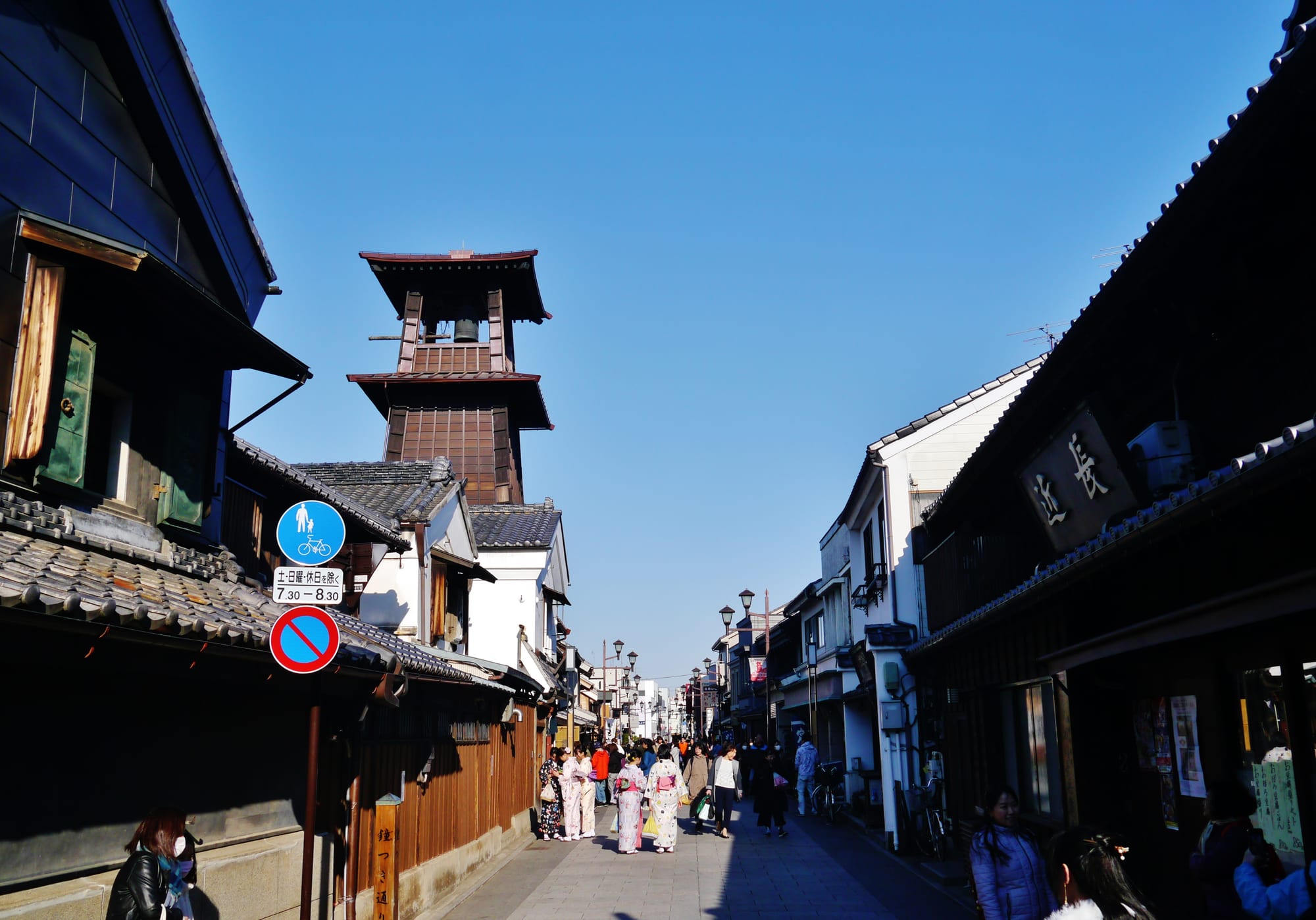
Kawagoe is walked rather than ridden. It is about a kilometre and a half from Kawagoe station to the bell tower, on flat ground through the covered shopping street, and the warehouse street, Candy Alley, the castle hall and Kita-in form a loop of a few kilometres. The main street carries traffic on a narrow road with thin pavements, so care is needed at busy times.
🛡️ Safety
Kawagoe is a safe, quiet provincial city with very low crime. The practical risks are traffic on the narrow old streets, summer heat on the inland plain, which regularly exceeds 35°C, and heavy crowds during the October festival.
Keep to the marked walking side of the warehouse street, carry water in summer, and expect restricted roads and packed trains on festival weekends. Check current official travel advice before travelling.
🌦️ Climate
An inland plain climate, hotter in summer and colder at night in winter than coastal Tokyo. The rainy season runs from June into July, typhoons can arrive in late summer, and winters are dry and sunny with little snow.
- Summer
- hot and humid — 30–35°C by day, with inland Saitama among the hottest places in Japan
- Winter
- cold and dry — days around 9°C, nights near or below freezing, with clear skies
🤝 Local Customs
Much of the old town is still lived in and worked in, so residents' doorways, gardens and shop interiors are not public space. Shoes come off at temple halls and in some tea rooms, tipping is not practised, and rented kimono, worn by many visitors, are treated as ordinary clothing rather than costume.
Ask before photographing shopkeepers or inside shops, keep to one side of the pavement on the narrow main street, and do not eat while walking in temple precincts.
💳 Common Payment Methods
The currency is the Japanese yen. Cards and IC cards are accepted at stations, hotels, department stores and larger restaurants, but many small sweet shops, food stalls, temples and older family businesses in the old town take cash only. Cash machines at convenience stores and the post office accept foreign cards.