💰 Budget
Accommodation dominates the cost. Most visitors stay in a ryokan with dinner and breakfast included, which sets the daily figure; simple inns and pensions are much cheaper, and prices rise in the ski season, at New Year and during the autumn colour. Bathing itself costs little, as the neighbourhood baths are free and the larger public ones inexpensive.
- Daily Budget Midrange
- USD 120–230 (ryokan with two meals, a larger public bath, souvenirs, a taxi or two)
- Daily Budget Shoestring
- USD 60–100 (guesthouse or pension, noodle meals and steamed buns, free public baths, buses)
Rates quoted by inns are usually per person with meals, not per room, and weekend and holiday nights cost noticeably more than weekdays.
📅 Best Time to Visit
The town works in every season. Winter, from December to March, brings deep snow, skiing and the pleasure of an outdoor bath in the cold, and is the busiest time along with the autumn colour of October. Summer is cool at this altitude, rarely uncomfortable, and carries the music festival; late spring is green, quiet and cheap.
⏳ Suggested Number of Days
One night is the usual length of stay, which allows an evening and a morning in the baths. Two or three suit skiers, walkers and anyone travelling on to the other hot-spring valleys of Gunma, which are slow to reach by bus.
- First Visit
- 1–2 days
- With Surroundings
- 2–3 days
🚆 Transportation
The centre is small enough to cross on foot in fifteen minutes. Local buses run from the bus terminal to Sainokawara, the ski slopes and, in season, the road towards the volcano, and taxis wait at the terminal. Many inns collect guests from the terminal. A car is useful for the wider region but not needed in the town itself.
Mountain roads around the volcano close in winter and during periods of volcanic alert, so check bus services before planning to travel beyond the town.
🛬 Airport & Station Connections
There is no railway in the town. The usual route from Tokyo is the Hokuriku Shinkansen to Karuizawa or a limited express to Naganohara-Kusatsuguchi station, then a bus of 25 to 80 minutes; direct express buses also run from Tokyo in about four hours. Drivers come over the mountain roads from Gunma or Nagano, which take longer in snow.
🚶 Walkability
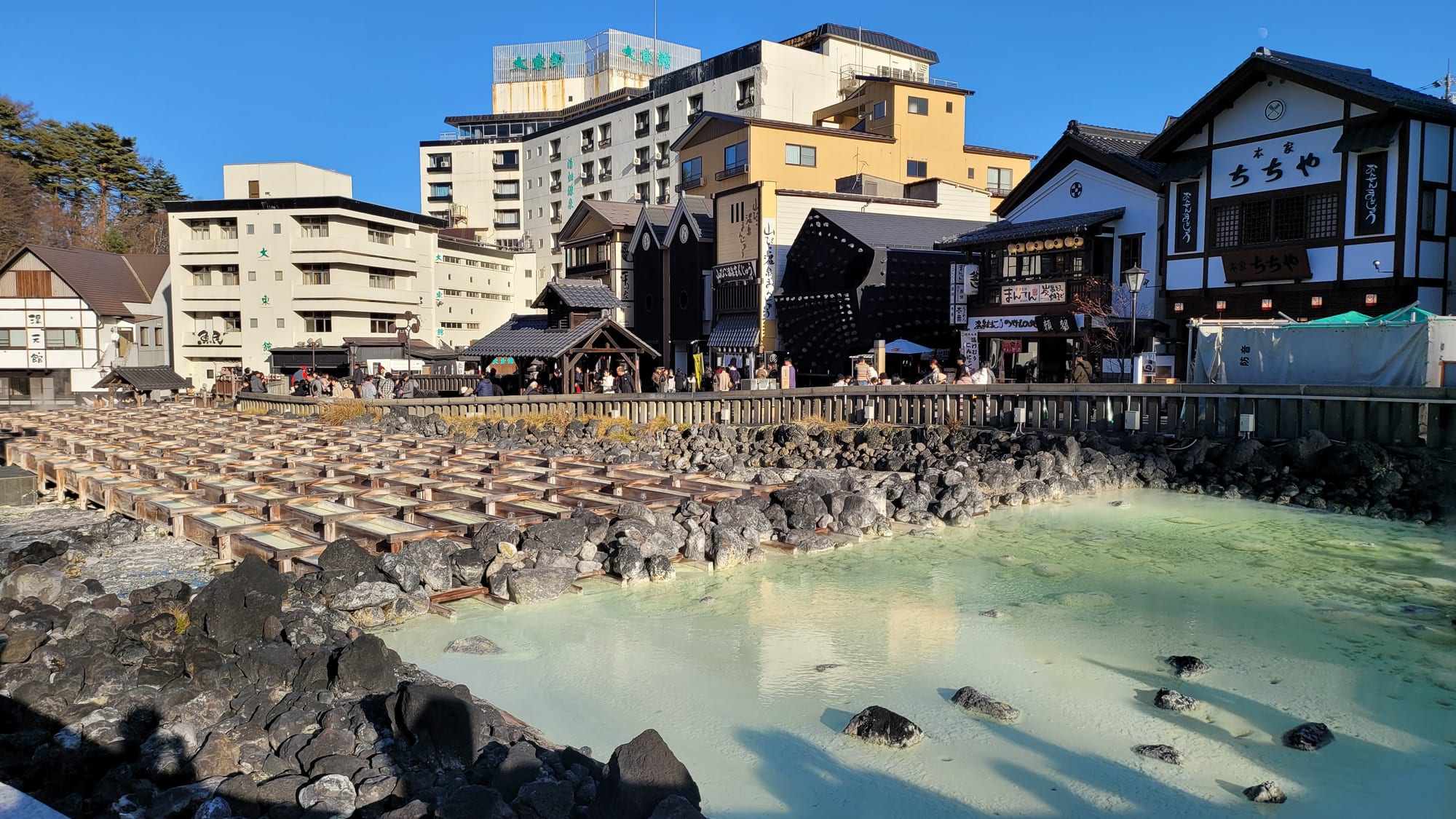
Kusatsu is a walking town. The hot water field, the bathhouses, the shops and most inns lie within a few hundred metres of each other, and Sainokawara is a pleasant kilometre further. The streets are steep in places and can be icy from December to March, when handrails and grit boxes appear along the slopes.
🛡️ Safety
Crime is negligible. The real hazards are natural and thermal: the spring water leaves the ground at well over 50°C and must be respected, volcanic gas can collect in hollows near steaming ground, and Kusatsu-Shirane is an active volcano subject to alert levels and closures. Winter streets are icy, and bathing after alcohol or in very hot acidic water can cause dizziness.
Follow volcanic alert and closure notices, keep to marked paths in the steaming valley, test the water before entering a bath and drink plenty afterwards. Check current official travel advice before travelling.
🌦️ Climate
A highland climate at about 1,200 metres, several degrees colder than the Kanto plain all year. Snow lies for months, summer nights are cool, and mist and rain are common in the mountains.
- Summer
- cool and comfortable — days usually 22–27°C, with cold evenings and frequent afternoon cloud
- Winter
- cold and snowy — days around 0°C, nights down to about -10°C, with heavy snow from December to March
🤝 Local Customs
Bathing rules are taken seriously: wash and rinse thoroughly at the taps before entering the water, no swimwear, small towels are kept out of the bath, and no photography in the bathing areas. The free neighbourhood baths belong to residents, so they are entered quietly and left clean. Many visitors walk between baths in yukata and wooden sandals lent by their inn.
Tattoos are tolerated at some baths and not at others, so ask at the inn; do not add cold water to a public bath, and never let soap reach the tub.
💳 Common Payment Methods
The currency is the Japanese yen. Inns, larger shops and the bus terminal take cards, and IC payment is common, but the small bathhouses, some stalls and family shops are cash only. Cash machines are at the convenience stores and the post office; it is worth arriving with cash.