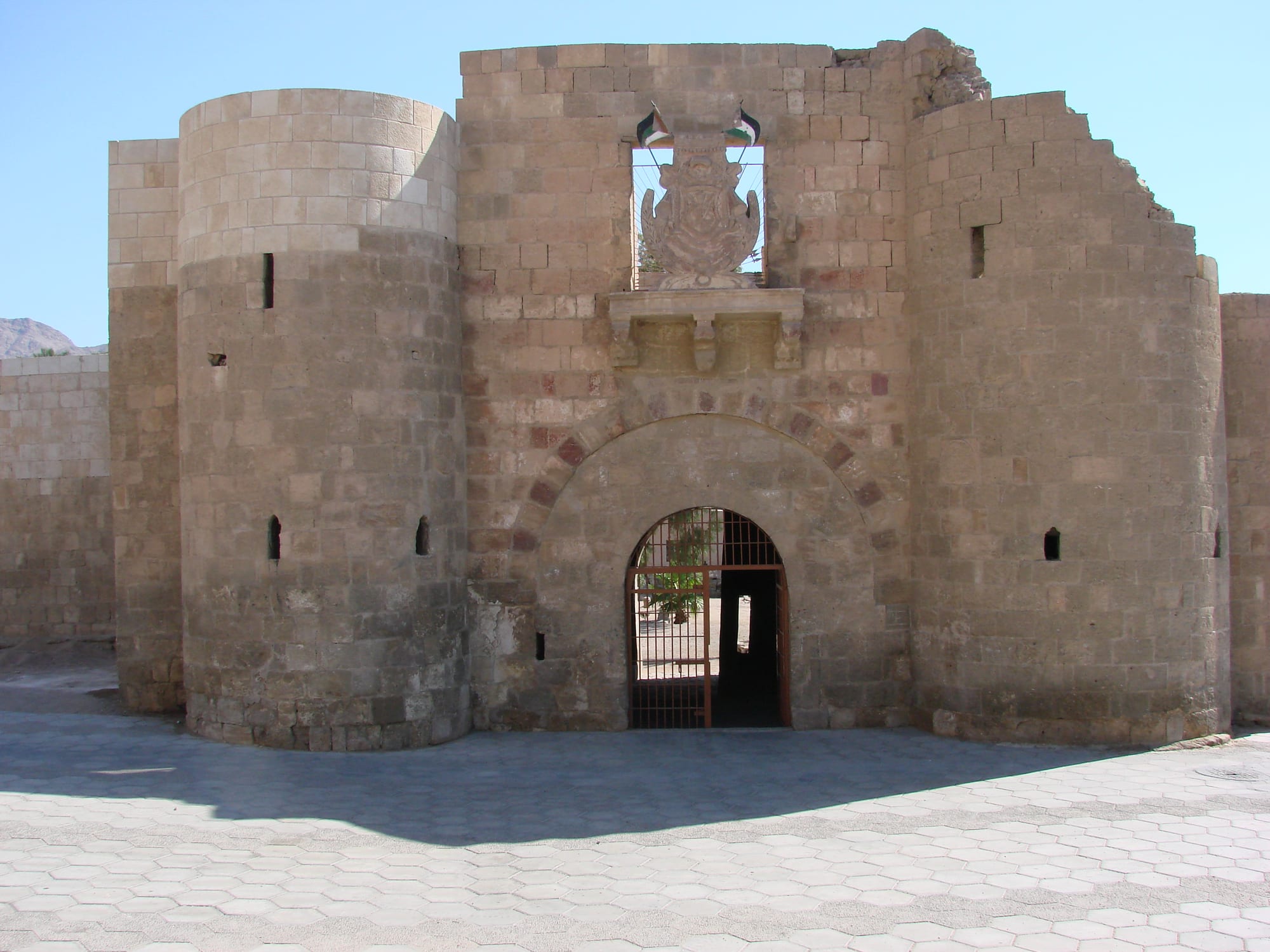
The pale stone front of a fort with round corner towers and an arched gateway beneath a carved crest, under a clear sky

Petra, Wadi Rum & the South, Jordan

Aqaba

The gateway of the Mamluk-era fort in Aqaba, on the Red Sea coast of Jordan. (watchsmart / Wikimedia Commons · CC BY 2.0)

Jordan's only seaport and its one coastal city, at the head of the Gulf of Aqaba on the Red Sea. A trading harbour since antiquity, taken from the Ottomans in the Arab Revolt of 1917, it is now a special economic zone with a container port, a resort strip along the coast and coral reefs close enough to the shore to be reached by wading in.

Neighbourhoods

  • Downtown and the old souk
    • First-time visitors
    • Best for food
    • Budget stays

    The dense grid of streets behind the fort and the flagpole, with the market, gold and clothing shops, juice stalls, hummus counters and most of the cheaper hotels. It runs down to the public beach and the corniche, and is the part of the city where residents rather than resort guests shop and eat.

    Open in Maps
  • The North Beach and corniche
    • Beaches
    • Hotels
    • Evening walks

    The curve of shore at the head of the gulf, lined with large hotels, gardens and a promenade where families picnic and walk late into the evening. The water is calm and shallow here, and the lights of three neighbouring countries are visible across the gulf at night.

    Open in Maps
  • The southern shore
    • Diving and snorkelling
    • Beaches
    • Quiet

    The coast road running south towards the Saudi border, with the marine park, dive centres, beach clubs and the Tala Bay resort area. The reefs lie close inshore along this stretch, and it is quieter and more spread out than the town.

    Open in Maps
  • The inland districts
    • Local life
    • Quiet and residential

    Residential quarters climbing away from the water towards the desert hills, with apartment blocks, schools, mosques and neighbourhood markets. Little of it is built for visitors, but it is where most of the city's workforce lives.

    Open in Maps

Things to do

Historic Aqaba

  • Aqaba Fortlandmark

    A Mamluk and Ottoman fortified caravanserai on the pilgrimage road to Mecca, in its present form mainly sixteenth-century, standing by the shore in the centre of town.

    Open in Maps
  • Aqaba Flagpolelandmark

    One of the tallest free-standing flagpoles in the world, flying the flag of the Arab Revolt beside the fort and visible across the gulf.

    Open in Maps
  • Aylaattraction

    The excavated remains of the early Islamic walled town founded in the seventh century, laid out beside the modern seafront.

    Open in Maps
  • Aqaba Churchattraction

    The mudbrick remains of a late third-century church, among the oldest known purpose-built churches anywhere, excavated near the shore.

    Open in Maps
  • Aqaba Archaeological Museummuseum

    Finds from Ayla and the surrounding region, housed in the former home of Sharif Hussein bin Ali beside the fort.

    Open in Maps

The sea and the shore

  • Aqaba Marine Reservepark

    A protected stretch of coast south of the city where fringing coral reefs lie within swimming distance of the beach.

    Open in Maps
  • Tell el-Kheleifehattraction

    An Iron Age mound near the shore at the head of the gulf, excavated in the 1930s and long linked with ancient trade through the port.

    Open in Maps
  • King Hussein International Airporttransit hub

    The city's airport a short drive north of the centre, taking flights from Amman and seasonal international services.

    Open in Maps

Short trips from the city

  • Wadi Rumpark

    The protected desert of red sand and sandstone massifs, about an hour inland by road and often visited as a day or overnight trip.

    Open in Maps
  • Petralandmark

    The rock-cut Nabataean capital, roughly two hours north by road.

    Open in Maps

Eat and drink

Long-standing places and food districts in Aqaba. Hours, ratings and directions come from your maps app, always current.

Aqaba classics

  • Seafood restaurants by the harbour and cornicheneighborhood

    Grilled fish and prawns chosen from the counter, and sayadieh — fish served on rice coloured and spiced with cumin and deeply fried onions — the dish most associated with the city.

    Open in Maps
  • The downtown soukmarket

    Spice and date stalls, bakeries, fruit and vegetable stands and small counters selling hummus, foul and falafel in the streets behind the fort.

    Open in Maps
  • Corniche cafés and juice stallsneighborhood

    Sweet tea, cardamom coffee, shisha and fresh juice along the waterfront, where the evening crowd gathers once the heat drops.

    Open in Maps

Experience Aqaba

History

The head of the gulf has been a port for as long as there has been trade between Arabia, Egypt and the Levant. A settlement at Tell el-Kheleifeh near the modern shoreline dates to the Iron Age, and under Rome the town of Aila was a garrison and customs post at the end of the road from Petra, linked north by the Via Traiana Nova. A mudbrick church excavated here, built in the late third century, is among the oldest known buildings put up specifically for Christian worship.

After the Muslim conquest a new walled town, Ayla, was founded beside the old one in the seventh century and prospered on the pilgrimage and trade routes for several centuries before earthquakes and raiding reduced it. The Crusaders held the coast briefly in the twelfth century, building a post on the island offshore, and the Mamluks later rebuilt the fort that still stands in the centre of town; an Ottoman garrison occupied it into the twentieth century.

Modern Aqaba begins with the Arab Revolt. Forces under Faisal and Auda abu Tayi, accompanied by T. E. Lawrence, attacked from the desert and took the town in July 1917, opening a supply route from the sea. After the creation of Transjordan the port became the country's only outlet to open water, and it grew sharply after the 1965 exchange of territory with Saudi Arabia that lengthened the coastline. Heavy industry, phosphate exports and a container terminal followed. In 2001 the city and its coast were made the Aqaba Special Economic Zone, since when hotels, marinas and resort development have reshaped the shore.

Culture & Customs

Aqaba is the most mixed and least formal of Jordan's cities. Its people include old Aqabawi families, Bedouin from the Howeitat and other southern tribes, Jordanians from Amman and the north who came for work in the port and the zone, Egyptian labourers, and a steady flow of Gulf and European visitors. The result is a port culture: less conservative than the highland towns, used to strangers, and organised around the sea and the shift patterns of the docks.

Evening is the social time of day. Families come down to the corniche and the public beaches after sunset with food and shisha, children play late, and the gardens along the water stay busy until well after dark — a rhythm that intensifies in summer, when the daytime heat rules out everything else. Fishing, boating and diving are ordinary parts of local life rather than only tourist activities.

Religion and custom still set limits. Ramadan changes the hours of the whole city, mosques mark the day, and dress in the souk and residential districts is modest even where beachwear is normal a kilometre away. The Arab Revolt is a live part of local identity: its flag flies from the great flagpole by the fort, and the house of Sharif Hussein bin Ali stands beside it. Hospitality follows the Jordanian pattern of tea and cardamom coffee offered immediately and often.

Daily Life

About 150,000 people live in Aqaba, making it the largest city in southern Jordan and the only one on the coast. The economy has three legs: the port, which handles most of the country's imports and its phosphate and potash exports; the special economic zone, with its lower taxes, free-zone businesses and construction; and tourism, which fills the hotels in winter and empties them when the region is unsettled. Government, the navy and the airport add further employment.

Housing spreads inland and north from the old centre, and much of the workforce commutes in from those districts or from further afield in the governorate. Rents and land prices near the water are high by Jordanian standards, and the contrast between the resort strip and the working-class quarters is one of the city's recurring subjects. Water, as everywhere in Jordan, is scarce and supplied on a rota, and desalination and pipeline projects are a standing political issue.

The day is shaped by heat for much of the year: shops open early, close through the afternoon and reopen into the night. Port and industrial work continues in shifts. Weekends bring Jordanians down from Amman for the beaches, and the city fills again during school holidays and Eid. Disruption to Red Sea shipping has made the port's traffic a matter of national attention.

Food

Aqaba is the one place in Jordan where the food is built on the sea. Sayadieh is the city's signature: fish, usually a firm white species, served on rice cooked with cumin and stock and darkened with slowly fried onions, with tahini sauce and lemon alongside. Whole fish grilled or fried and chosen from ice at the counter is the standard restaurant meal, often with prawns, calamari and a spread of mezze.

The rest of the table is Jordanian. Hummus, foul, falafel and fried eggs are breakfast; mansaf, lamb in a sauce of fermented dried yoghurt called jameed poured over rice and shrak bread, marks weddings and family occasions; maqluba, the upturned pot of rice, meat and fried vegetables, is the everyday feast dish. Galayet bandora, tomatoes cooked down with olive oil and chilli, and musakhan, sumac chicken on flatbread, appear widely.

Sweets and drinks follow the Levantine pattern: knafeh with its shredded pastry and syrup, ma'amoul biscuits filled with dates or nuts at feast times, and sugarcane and pomegranate juice from stalls downtown. Coffee is Arabic-style with cardamom; tea is black, sweet and flavoured with mint or sage. Because of the economic zone's lower duties, alcohol is cheaper and more visible here than elsewhere in the country, sold in shops as well as hotel bars.

Planning tools

Budget

Aqaba is a special economic zone with lower taxes, so shopping, cars and alcohol cost less here than elsewhere in Jordan. Beach access is the main variable: the public beaches are free, while hotel and club beaches and the dive centres charge. Room rates rise in winter, when Aqaba is at its most popular, and fall in the summer heat.

Daily Budget Midrange
USD 130–250 (mid-range or beach hotel, restaurant meals, dive trips or a boat, taxis)
Daily Budget Shoestring
USD 40–70 (budget hotel downtown, hummus and falafel, public beach, minibus)

Diving and snorkelling are usually priced per trip or per dive with equipment extra; the marine park's shore reefs are the cheapest way into the water.

Best Time to Visit

Aqaba works when the rest of the country does not. From November to March it is warm and sunny while the highlands are cold, which makes winter its busiest season with Jordanian and Gulf visitors. Spring and autumn are hot but comfortable. Midsummer regularly passes 40°C. The war that began in February 2026 has disrupted aviation and tourism across the region.

Suggested Number of Days

Two days cover the town and time in the water. Divers and anyone using the city as a base for trips inland need three to five. The season matters: in midsummer the usable hours are early morning and evening, which stretches a visit out.

First Visit
2 days
With Surroundings
3–5 days

Transportation

The city is small and flat, and taxis are cheap, plentiful and the normal way to move between downtown, the beaches and the southern coast road. Minibuses run along the main roads and to the inland towns, and coaches leave for Amman, Petra and Wadi Rum from stations near the centre. Boats and ferries cross the gulf from the port south of town.

Agree the fare or ask for the meter before setting off in a taxi, and arrange dive or desert transfers through the operator rather than on the day.

Airport & Station Connections

King Hussein International Airport lies about 10 kilometres north of the centre and takes domestic flights from Amman and seasonal international services. By road, the Desert Highway reaches Amman in roughly four hours, Wadi Rum in about an hour and Wadi Musa in about two, with JETT coaches and minibuses on all three routes. There are land crossings to neighbouring countries and a ferry link across the gulf. Aviation across the region has been disrupted by the war that began in February 2026, and shipping through the Red Sea, on which Aqaba's port depends, has been disrupted by the crisis at the Strait of Bab al-Mandab that began in September 2026.

Walkability

The downtown core, the fort, the flagpole, Ayla and the North Beach are all within a walk of one another on flat ground, and the corniche is a pleasant promenade in the evening. The southern coast, the marine park and the resort areas are strung along several kilometres of highway and need a taxi. Between late spring and early autumn walking anywhere in the middle of the day is unpleasant, and shade is limited away from the gardens.

Safety

Aqaba is a relaxed and well-policed city with a long habit of receiving visitors, and ordinary crime is low. The main risks are the sun and heat, strong glare on the water, boat and jetski traffic near swimming areas, and diving accidents among the inexperienced. Since 27 February 2026 the United States and Israel have been at war with Iran and its allies; missiles and drones have been launched at targets in Jordan, including a United States base near the Gulf of Aqaba, and Jordan has reported that its air defences, helped by allied forces, intercepted most of them and that those that were not fell on open or uninhabited ground.

Dive only with licensed operators, respect the marine park rules against touching or taking coral, and avoid photographing the port, military sites and border areas. Check current official travel advice before travelling.

Climate

Hot desert climate on a sheltered gulf, with sunshine almost all year, very low rainfall and warm sea temperatures even in midwinter. Winds funnel along the gulf and can make afternoons gusty.

Summer
very hot and dry, often above 40°C by day, with warm nights and sea temperatures in the high twenties
Winter
warm and sunny, typically 20–24°C by day and cooler after dark, with occasional rain

Local Customs

Aqaba is more relaxed than inland Jordan — swimwear is normal on hotel and club beaches and at the marine park — but on public beaches many local women swim clothed, and modest dress is expected in the souk and the residential streets. Alcohol is sold openly and cheaply here compared with the rest of the country, though public drunkenness is not accepted. Greetings are unhurried, and hospitality with tea or coffee is offered readily.

Tipping of around 10 per cent is usual in restaurants; ask before photographing people, and dress modestly away from the beaches.

Common Payment Methods

The currency is the Jordanian dinar, pegged to the US dollar. Hotels, dive centres and larger restaurants take cards, while the souk, taxis, small cafés and beach entry fees run on cash. Cash machines are common downtown and along the main coast road, and the duty-free status of the zone applies to goods rather than to services.