💰 Budget
Food, guesthouses and local transport in Morondava cost little. The spending goes on vehicles: a 4x4 with driver for the Avenue of the Baobabs, Kirindy or the long track north to the Tsingy, and the flight in if the road from the highlands is not attempted. Park fees and compulsory local guides are extra, and cash machines are limited.
- Daily Budget Midrange
- USD 80–210 (beach hotel, 4x4 with driver, park fees and guides, boat transfers)
- Daily Budget Shoestring
- USD 25–45 (guesthouse or bungalow, hotely meals, shared taxi)
Sharing a vehicle and driver between travellers is the single biggest saving; agree the price and what it covers before setting out.
📅 Best Time to Visit
The dry months, roughly April or May to October or November, when the tracks north and south of the town are usually passable and the light on the baobabs is at its clearest. The hot rainy months from December to March bring cyclone risk on this coast and can cut the unpaved routes for days at a time.
⏳ Suggested Number of Days
Two or three days suit the town, its beach and the baobabs. Allow four to six if the forests and the coast south of the town are included, and considerably more for the long overland trip north, which is measured in days rather than hours.
- First Visit
- 2–3 days
- With Surroundings
- 4–6 days
🚆 Transportation
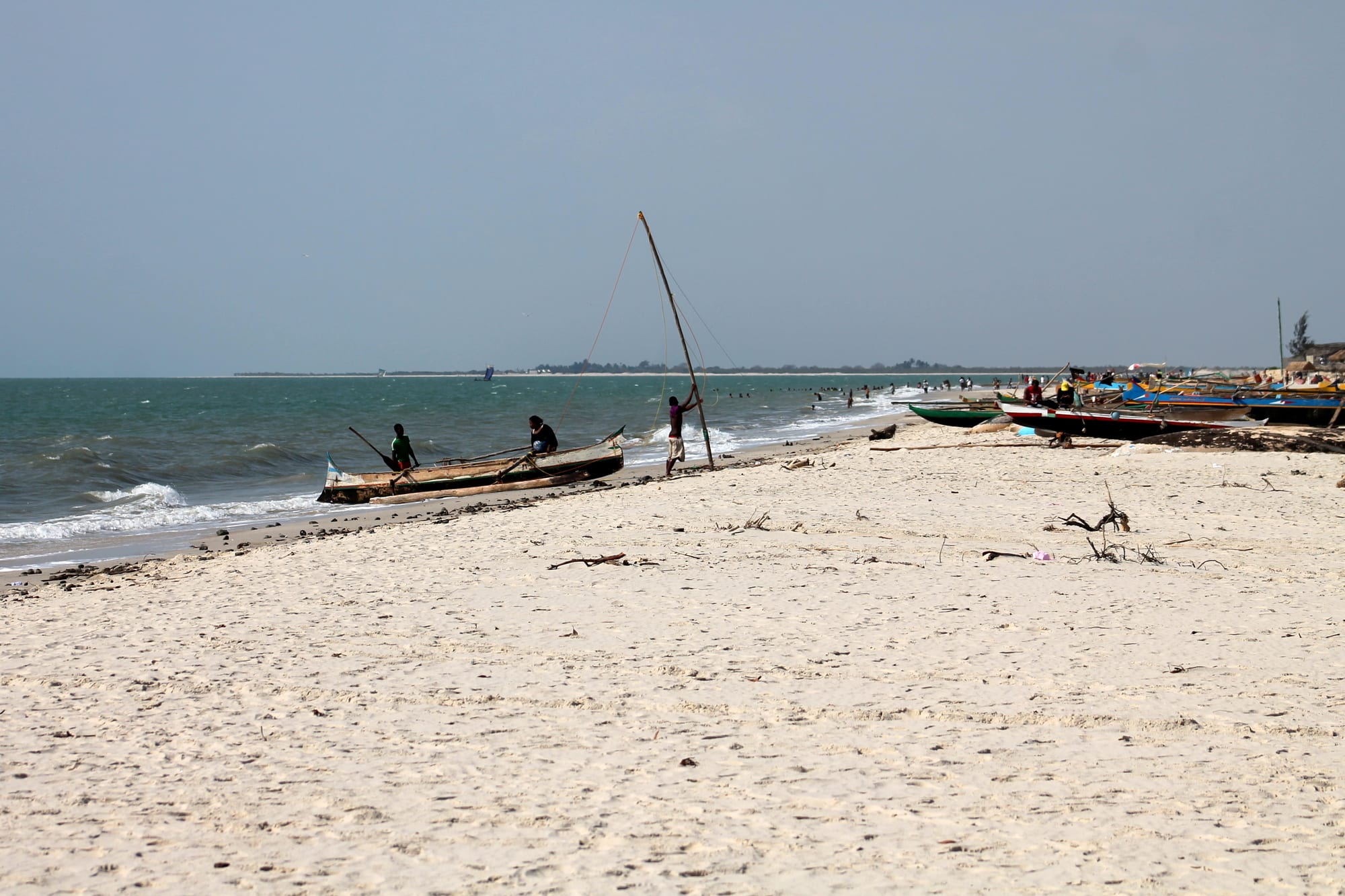
The town itself is covered on foot or by cyclo-pousse, the pedalled rickshaws that work the sandy streets, with bajaj auto-rickshaws and taxis for longer hops. Everything beyond is by hired 4x4 with driver or by taxi-brousse from the station in the centre. Pirogues cross the river mouth to Betania. Roads out of town are unpaved once the main road is left.
Travel between towns in daylight only, and treat any track north of the river as a full-day journey rather than a drive.
🛬 Airport & Station Connections
Morondava Airport sits on the edge of town, with flights to Antananarivo that are the usual way in. By road, the town is reached from Antsirabe in the highlands on the RN34 and RN35, about 640 kilometres from Antananarivo on a renovated road, some 12 hours by taxi-brousse. The unpaved RN8 north towards Belo-sur-Tsiribihina and the Tsingy de Bemaraha, about 150 kilometres away, takes around ten hours by 4x4.
🚶 Walkability
Flat, sandy and small. The spit at Nosy Kely can be walked end to end in well under an hour, and the centre is perhaps two kilometres away along one main road. There are few pavements, the sand is soft in places and the midday heat is heavy, so most walking is done early or late.
🛡️ Safety
Morondava is quiet by day, but the south has the most serious security problems in Madagascar for travellers, with dahalo cattle-raiding gangs active in rural areas and robbery reported on southern roads. Locally the practical risks are theft on the beach and after dark, strong currents and undertow off the open shore, malaria on this coast, and cyclones between December and March.
Travel only in daylight with a reputable driver or guide, avoid remote tracks without local advice, and carry plenty of water. Check current official travel advice before travelling.
🌦️ Climate
Hot and dry for most of the year, with a short, heavy rainy season. This is the tropical west coast, so the seasons are the reverse of the northern hemisphere: summer runs from December to February and is the wet, cyclone -prone half of the year, while the dry season from about May to October is warm, bright and comfortable.
- Summer
- hot and humid, around 28–34°C by day, with heavy rain mainly from December to March and a cyclone risk
- Winter
- warm and dry, roughly 24–29°C by day with pleasant nights, from about May to October
🤝 Local Customs
This is Sakalava country, where royal ancestors and fady — local taboos that differ from place to place — are taken seriously. Tombs and burial grounds are private religious places and should not be approached or photographed without an invitation and a local guide. Greetings are unhurried, and a little French goes a long way; Malagasy is what is spoken at home.
Ask before photographing people, boats or houses, dress modestly away from the beach, and follow a guide's instructions about which places and paths are forbidden.
💳 Common Payment Methods
The currency is the Malagasy ariary. Morondava has banks and cash machines, but they can run out and card acceptance is limited to some hotels, so ariary in cash is needed for markets, meals, guides and transport. Change money in Antananarivo or on arrival, and carry small notes.