💰 Budget
Blantyre has the widest spread of prices in Malawi, from cheap lodges and canteens near the markets to business hotels aimed at company visitors. Food, transport and drink are inexpensive; the room and a hired car are what move the daily total. Day trips to the mountains and the reserves add park fees and fuel.
- Daily Budget Midrange
- USD 80–250 (hotel or lodge, park fees, a boat safari, a hired car)
- Daily Budget Shoestring
- USD 20–40 (backpacker lodge or guesthouse, market food, minibuses)
Draw kwacha and fill the tank in the city before heading to the mountains or the Shire valley, and keep cash for guides, park gates and market stalls.
📅 Best Time to Visit
May to October is the dry season and the easiest time, with mild days in the highlands, clear views from the hills and good conditions in the reserves as animals gather at water. October and November are hot. The rains from December to March bring storms, mist on the mountains and a risk of flooding in the region.
⏳ Suggested Number of Days
One or two days covers the city itself, which is more a working commercial centre than a sightseeing capital. Four or five make sense for anyone using it as a base for the highlands and the wildlife reserves within reach. Travelling by minibus rather than car adds time.
- First Visit
- 1–2 days
- With Surroundings
- 4–5 days
🚆 Transportation
Minibuses are the backbone of city travel, running set routes between the city centre, Limbe, Chichiri and the townships from stages near the markets, leaving when full. Shared and private taxis wait at the hotels, malls and stages, and ride-hailing apps operate. Long-distance coaches to Lilongwe and the lake leave from the depots. A hired car, often with a driver, is usual for trips out to the mountains and the parks.
Agree taxi fares before setting off, avoid the minibus stages with luggage at night, and allow for heavy traffic on the Blantyre–Limbe corridor in the morning and late afternoon.
🛬 Airport & Station Connections
Chileka International Airport lies about 13 kilometres north-west of the centre, with domestic flights and a limited number of regional services; many international travellers arrive instead through Lilongwe. The M1 runs north to the capital in roughly four to five hours, Zomba is about an hour away and Mulanje a little further, and buses and minibuses run to Mozambique and to the lakeshore.
🚶 Walkability
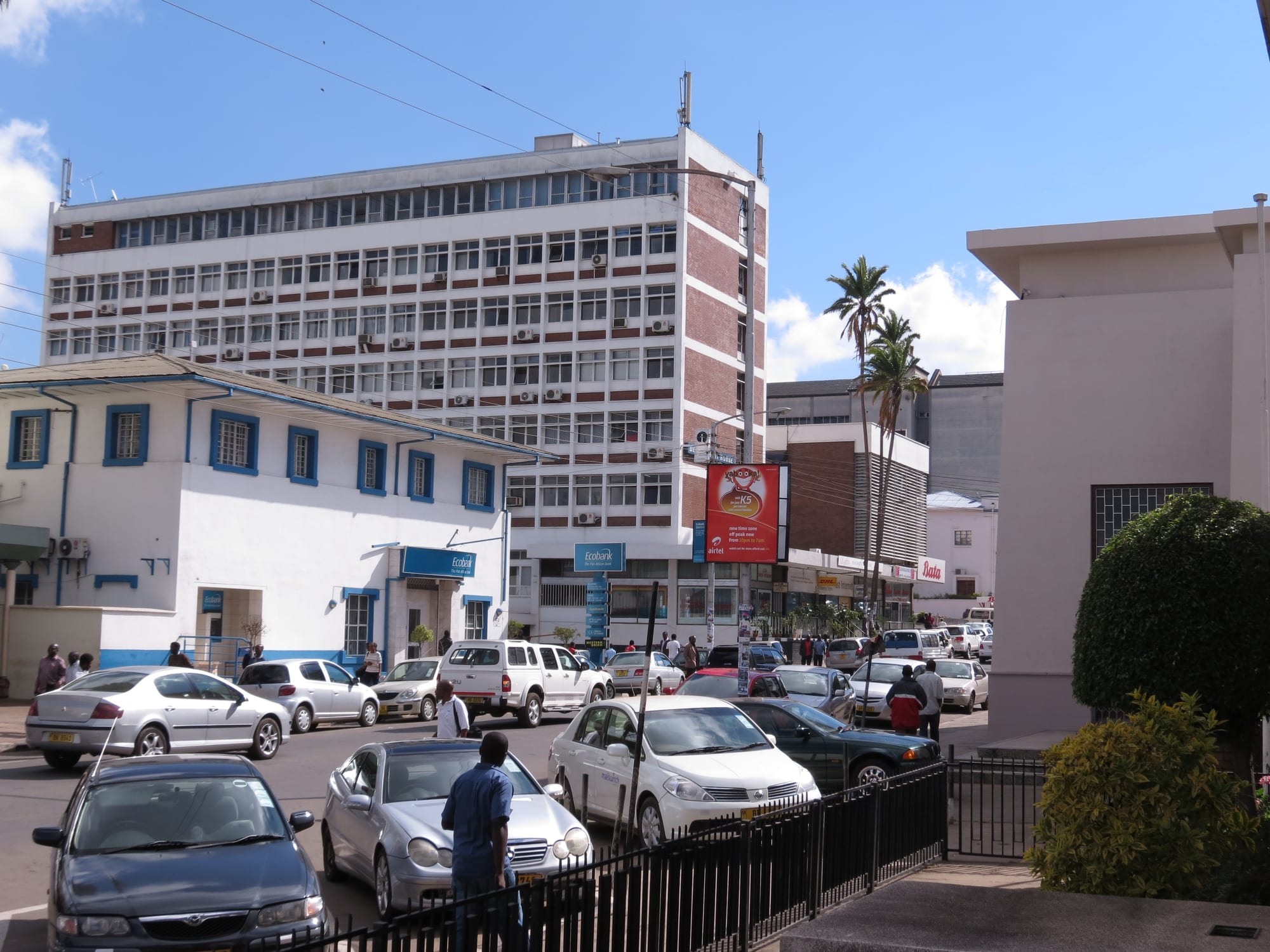
The city centre is walkable — the church, Mandala House, the banks and the markets are within about a kilometre of each other — though the ground is hilly and the pavements uneven. Beyond the centre the city is spread out over its hills, and Limbe, Chichiri and the suburbs need a minibus or taxi. Walking after dark, and walking alone on the hill paths, is not advised.
🛡️ Safety
Blantyre has more street crime than most of Malawi, with bag snatching, pickpocketing and mugging reported around the bus depots, the markets and quiet streets after dark, and theft from parked cars. The hills above the city are best walked with a guide rather than alone. Flooding and storm damage are a serious risk in the wet season, as Cyclone Freddy showed in 2023, when the city was the worst affected place in the country. Malaria is present year-round.
Use guides on remote walks, don't walk after dark, lock valuables away, take malaria prophylaxis, and treat bilharzia and sudden lake squalls as real risks. Check current official travel advice before travelling.
🌦️ Climate
Blantyre stands at around 1,000 metres in the Shire Highlands, which makes it milder than the Shire valley below. One rainy season runs from November to April, with storms and low cloud; the dry season from May to October is sunny with cool nights. Being in the southern hemisphere, summer falls between December and February.
- Summer
- warm and wet, December–February, days around 25–30°C with heavy afternoon storms and high humidity
- Winter
- dry and mild, June–August, days around 22–25°C with cool nights sometimes near 10°C
🤝 Local Customs
Greetings are expected before any request — moni and muli bwanji, with a handshake — and elders are addressed first. Dress is modest in offices, markets and churches, and Sunday is quiet through the morning. Tipping is not obligatory, though around ten per cent is normal in restaurants aimed at visitors, and small tips for guides and porters are usual.
Ask before photographing people, markets or churches, avoid photographing police, soldiers, government buildings or demonstrations, and dress modestly when visiting mission churches.
💳 Common Payment Methods
The currency is the Malawian kwacha (MWK). Cards are accepted in hotels, supermarkets, malls and larger restaurants, but network failures are common and cash runs the markets, minibuses and small shops. Cash machines in the city centre, Limbe and the malls accept foreign cards with modest limits, and US dollars in cash are useful for lodges and park fees. Foreign-currency shortages are a recurring problem in Malawi.