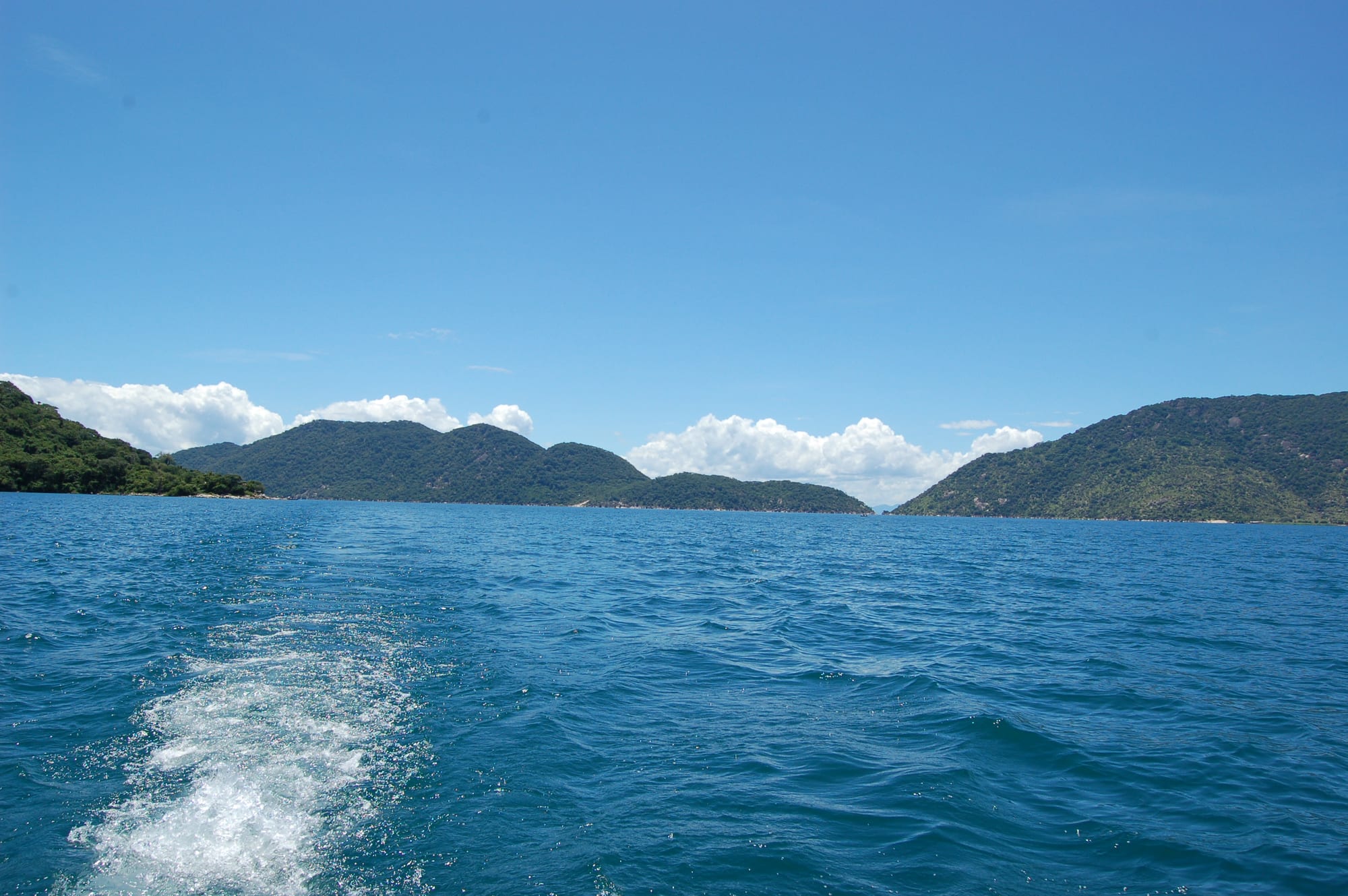
Deep blue lake water in the foreground with low wooded headlands and islands closing the bay under a bright sky

Blantyre & the Southern Region, Malawi

Cape Maclear

The wooded headlands and islands enclosing the bay at Cape Maclear, at the southern end of Lake Malawi. (Joachim Huber from Switzerland / Wikimedia Commons · CC BY-SA 2.0)

A lakeshore village at the tip of the Nankumba peninsula, at the southern end of Lake Malawi, inside Lake Malawi National Park. The fishing village of Chembe fills a wide sandy bay, with wooded hills behind and rocky islands offshore where hundreds of species of cichlid fish live in clear, shallow water.

Neighbourhoods

  • Chembe village
    • Local life
    • Markets
    • Fishing beach

    The fishing village that fills the bay and gives the place its Malawian name. Reed and brick houses, small shops, churches and a mosque stand behind the sand, and the beach itself is a working space where nets are mended, dugouts are drawn up and usipa is laid out to dry.

    Open in Maps
  • The beach strip
    • First-time visitors
    • Swimming and snorkelling
    • Budget lodges

    The line of lodges, campsites and beach bars strung along the shore among the village houses, at the western end of the bay in particular. Boat trips, kayaks and snorkelling gear are arranged here, and the sand doubles as the path between one place and the next.

    Open in Maps
  • The park shore and Otter Point
    • Quiet and scenic
    • Snorkelling
    • Walks

    The rocky headland and forested slopes beyond the village, inside Lake Malawi National Park. Footpaths climb into the hills behind the bay, and the boulder shoreline is where the cichlids are easiest to see from the water's edge.

    Open in Maps

Things to do

The lake and the park

  • Lake Malawi National Parkpark

    The protected shore, hills and islands around the Nankumba peninsula, listed by UNESCO in 1984 for the extraordinary diversity of its cichlid fish.

    Open in Maps
  • Otter Pointviewpoint

    A rocky headland at the western end of the bay inside the park, a well-known place to snorkel among cichlids and to watch the sun go down over the water.

    Open in Maps
  • Thumbi West Islandattraction

    The nearest of the offshore islands, a short boat ride out, with clear water and rock faces crowded with brightly coloured fish.

    Open in Maps
  • Domwe Islandattraction

    A larger, uninhabited island in the park near the bay, reached by boat or kayak, with wooded slopes and quiet rocky shorelines.

    Open in Maps

History in the village

  • The first Livingstonia mission sitelandmark

    The shore where the Free Church of Scotland founded its first Livingstonia mission in 1875; it lasted only a few years before the mission moved north in 1882, and the graves of several missionaries overlook the bay.

    Open in Maps

Short trips from the village

  • Monkey Bayattraction

    The lake port about 18 kilometres away by road, where the Ilala ferry calls and where most transport to and from the cape starts.

    Open in Maps
  • Mangochiattraction

    A town on the Shire River near the lake's outlet, with the Lake Malawi Museum, a colonial-era clock tower and a long-established market.

    Open in Maps

Eat and drink

Long-standing places and food districts in Cape Maclear. Hours, ratings and directions come from your maps app, always current.

Cape Maclear classics

  • Grilled chamborestaurant

    The lake tilapia, bought off the boats and grilled or fried whole, served with nsima or chips at the beach bars and village kitchens.

    Open in Maps
  • Usipa and the fish beachmarket

    The tiny silver lake fish, netted at night and dried on the open sand, then fried crisp or cooked into a relish; the beach is where the catch is landed and sold.

    Open in Maps

The village

  • Chembe village shops and stallsneighborhood

    Small shops and roadside stalls selling tomatoes, greens, bananas, groundnuts, doughnuts and roasted maize, alongside the lodge kitchens on the shore.

    Open in Maps

Experience Cape Maclear

History

The cape takes its European name from David Livingstone, who reached it in 1859 and named it after his friend Thomas Maclear, Her Majesty's Astronomer at the Cape of Good Hope. Its Malawian name is Chembe, after the village that occupies the bay. Yao and Chewa fishing communities were already established on the Nankumba peninsula, within reach of the trade routes that carried ivory and slaves from the lake towards the Indian Ocean coast.

In 1875 the Free Church of Scotland chose the bay for its first Livingstonia mission, drawn by the sheltered anchorage and the fresh water. The site proved unsuitable: poor soil and tsetse fly forced a move, and in 1882 the mission shifted north to Bandawe, eventually settling on the high Khondowe plateau. A small group of graves near the village is what remains of the attempt, and the failure of the first site is the reason the name Livingstonia now belongs to a town far to the north.

The bay stayed a fishing village through the colonial period. In 1980 Lake Malawi National Park was declared around the shore, the hills and the offshore islands, and it was inscribed as a UNESCO World Heritage Site in 1984 for the exceptional diversity of its cichlid fish. Chembe remained the largest of the fishing villages on the park's foreshore. From the 1980s the bay became a fixture on the overland route through southern Africa, and small lodges and campsites spread along the sand, giving the village a second economy alongside fishing.

Culture & Customs

Cape Maclear is a Chembe village where two ways of life share one beach. The fishing day begins before dawn, when plank boats and dugouts return with usipa and chambo, and it ends with nets spread on the sand. Beside it runs the lodge economy of boat crews, guides, cooks and curio carvers, much of it seasonal and much of it family-run.

The population is mixed Chewa and Yao, and both Christianity and Islam are part of village life; churches and a mosque stand within a few hundred metres of the beach, and the call to prayer and Sunday singing are both ordinary sounds here. Chichewa is the common language, with Chiyao widely spoken, and enough English along the shore for the tourist trade.

Football on the sand in the late afternoon is the village's shared entertainment, and music from the beach bars carries along the bay at night. Carvers and bracelet sellers work the strip, and their approach is direct; a polite refusal is understood and expected. Visitors are asked to respect the difference between the beach and the village behind it — the first is the tourist strip, the second is where several thousand people live, and modest dress and asking before taking photographs are the local expectations.

Daily Life

Several thousand people live in Chembe, in a village that has grown quickly and is hemmed in on all sides by the national park, so its houses are packed tightly along the shore. Most households depend on fishing, on the tourism trade, or on both, and a smaller number farm plots outside the park boundary or trade in the village shops.

The rhythm is set by the water. Boats go out at night for usipa, which is spread on drying racks and open sand in the morning and sold on to traders who take it inland; chambo and other tilapia are sold fresh. Declining catches, driven by years of heavy fishing pressure and a growing population, are a serious concern and have pushed more families towards tourism work.

Electricity and piped water reach the village but are not dependable, and the national fuel and foreign-currency shortages of recent years have made transport and supplies more expensive and less regular. Bilharzia in the lake, malaria and the pressure of firewood collection on the surrounding park forest are the standing local problems. Schools, a clinic and small shops serve the village, but banks, the hospital and the main market are in Monkey Bay and Mangochi.

Food

The lake supplies almost everything eaten here. Chambo, the prized tilapia of Lake Malawi, is grilled or fried whole and served with nsima, the stiff maize porridge eaten by hand, or with chips at the beach bars. Usipa, small silver fish netted at night, are dried on the sand and then fried crisp or cooked into a relish; kampango, a large lake catfish, appears when a boat lands one.

Away from the fish, meals follow the Malawian pattern: nsima with ndiwo, a relish of beans, pumpkin leaves, rape or cabbage, often cooked with groundnut flour. Rice is common near the lake. Tomatoes, onions, bananas, mangoes and papaya come from the village stalls, and roasted maize and mandasi, small fried dough cakes, are the everyday snacks.

The beach lodges cook a mixture of Malawian and international food and will grill the day's catch to order. Drinks are the national ones: Kuche Kuche and Carlsberg lagers brewed in Blantyre, chibuku, the thick commercial sorghum beer sold in cartons, thobwa, the lightly fermented maize drink made in the villages, and Malawian tea grown on the estates in the far south.

Planning tools

Budget

Cape Maclear is one of the cheapest places to stay in Malawi. Backpacker lodges, campsites and village kitchens cost very little, and the main extras are the national park entry fee, boat trips to the islands and snorkelling or kayak hire. The transfer in from Monkey Bay or Mangochi adds to the bill for anyone without a car.

Daily Budget Midrange
USD 80–200 (beachfront lodge room, meals and drinks, park fee, a boat trip to the islands, a hired car)
Daily Budget Shoestring
USD 20–40 (dorm bed or campsite, local food and grilled fish, minibuses and shared transfers)

Bring enough Malawian kwacha in cash from Monkey Bay or Mangochi; there is no reliable bank or cash machine in the village.

Best Time to Visit

May to October, the dry season, has the calmest water, the clearest visibility for snorkelling and reliable road access. September and October are hot. The rains from November to April bring storms, cloudier water and green hills, but the lake stays warm enough to swim in all year.

Suggested Number of Days

Two or three days suit most visits, enough for the lake, the park shore and the village. Four or five allow slower time on the islands or a combination with the parks and towns further south. Travel days in and out are slow, so allow for them.

First Visit
2–3 days
With Surroundings
4–5 days

Transportation

The village has no public transport of its own: everything within it is reached on foot along the beach and the single sand road. Boats are the other means of getting about, whether a lodge's motorboat, a hired kayak or a village dugout. Minibuses and pick-ups run the road to Monkey Bay, and the Ilala ferry calls at Monkey Bay on its circuit of the lake.

Agree the price and the return time before boarding any boat, and check that life jackets are available; squalls can get up quickly on the lake.

Airport & Station Connections

The cape is reached by a rough road of about 18 kilometres from Monkey Bay, which is itself roughly 70 kilometres from Mangochi and about five hours from Blantyre or Lilongwe by road. Most visitors come by hired car, a lodge transfer or minibus and pick-up; the Ilala ferry gives a slower alternative as far as Monkey Bay.

Walkability

Entirely walkable. The village and the lodges run for a couple of kilometres along one bay, and the beach itself is the main thoroughfare, so nothing takes more than half an hour on foot. There are no pavements or street lights, the sand road is rough after rain, and a torch is useful after dark.

Safety

The village is relaxed and used to visitors, but the lakeshore brings theft from rooms and beach chalets, and the water carries its own risks: bilharzia is present in the lake, squalls blow up suddenly, and malaria is year-round at this altitude. Hawking on the beach can be persistent.

Use guides on remote walks, don't walk after dark, lock valuables away, take malaria prophylaxis, and treat bilharzia and sudden lake squalls as real risks. Check current official travel advice before travelling.

Climate

Hot and low-lying, on the lake at around 480 metres, with a single rainy season. It is warm all year, with a cooler, dry stretch in the middle of the year and a hot build-up before the rains break.

Summer
hot and wet, December–February — days around 30°C with heavy afternoon storms and humid nights
Winter
warm and dry, June–August — days in the mid-20s °C, pleasant nights and calm water

Local Customs

Chembe is a village first and a resort second. Modest dress away from the beach is appreciated, especially around the mosque and the churches, and swimwear is for the shore rather than the road. Greetings matter: a handshake and a 'muli bwanji' go a long way. The beach is a working place, and people fishing, drying fish or washing should be asked before being photographed.

Tipping is not obligatory but is welcome at lodges and for boat crews and guides. Alcohol is served at the lodges and bars; drink it there rather than around the village.

Common Payment Methods

The currency is the Malawian kwacha. Cash is essential here: there is no dependable cash machine in the village, and card payment is limited to a few lodges and often unreliable. US dollars in cash are accepted for some lodge bills and park fees, and the nearest banks are in Monkey Bay and Mangochi.