💰 Budget
Costs in Bario are driven by access rather than by what is spent in the village. The flight from Miri, a guide for any walk beyond the plateau and porters for longer treks are the main expenses, while homestays are simple and usually charged with meals included. There is little to buy once there.
- Daily Budget Midrange
- USD 75–170 (hotel or resort, guided cave and longhouse tours, domestic flights)
- Daily Budget Shoestring
- USD 30–50 (homestay with meals, walking between the villages on foot)
Book the Miri flight well ahead because the aircraft are small and seats are scarce, and bring enough cash for the whole stay.
📅 Best Time to Visit
The drier months from about March to October give the best walking and the most reliable flights, since low cloud over the highlands can delay or cancel small aircraft at any time of year. Gawai Dayak at the start of June and the food and cultural festival are the busiest weeks, and the harvest fills the fields in the second half of the year.
⏳ Suggested Number of Days
Two or three days suit the plateau itself and the walks between villages. A week allows longer treks to neighbouring settlements or the mountains. Flights are infrequent and weather-dependent, so plans should hold a spare day at each end.
- First Visit
- 2–3 days
- With Surroundings
- 5–7 days
🚆 Transportation
There is no public transport. Walking is the normal way to move between the villages, on rice-field bunds and forest paths, and a few four-wheel drives and motorcycles use the rough tracks across the plateau. Lodges can arrange a vehicle for the longer stretches, and any trek beyond the settled area is done with a Kelabit guide.
Take boots that cope with mud and leeches, a torch, and a dry bag: trails cross streams and swampy ground, and rain arrives quickly.
🛬 Airport & Station Connections
Most visitors fly from Miri in a small turboprop aircraft, a flight of about an hour over forest and ridges, landing on the plateau's airstrip. Flights are limited, carry strict baggage allowances and are often delayed or cancelled by cloud. The alternative is a long and rough four-wheel-drive journey on logging roads from Miri, which takes most of a day in dry weather. Sarawak runs its own immigration, so passports are stamped on arrival even for travellers coming from Peninsular Malaysia.
🚶 Walkability
Everything within the plateau is walked. The paths between the central villages are flat and easy, though muddy after rain and slippery on the log bridges and bunds. Distances are measured in hours rather than kilometres, and the villages furthest out are a half day apart. There are no pavements, no street lighting and few signs, so a guide or a local companion is usual.
🛡️ Safety
Crime is essentially unknown and the community is watchful of visitors. The risks are remoteness and terrain: medical facilities amount to a small clinic, evacuation depends on the weather and the aircraft, and trails are muddy and crossed by streams that rise quickly after rain. Leeches are common, nights are cold by Bornean standards, and mobile coverage and electricity can be intermittent.
Walk the forest routes with a Kelabit guide, carry travel insurance that covers remote areas and a basic first-aid kit, keep medicines in hand baggage, and note that drug trafficking carries a mandatory death penalty. Check current official travel advice before travelling.
🌦️ Climate
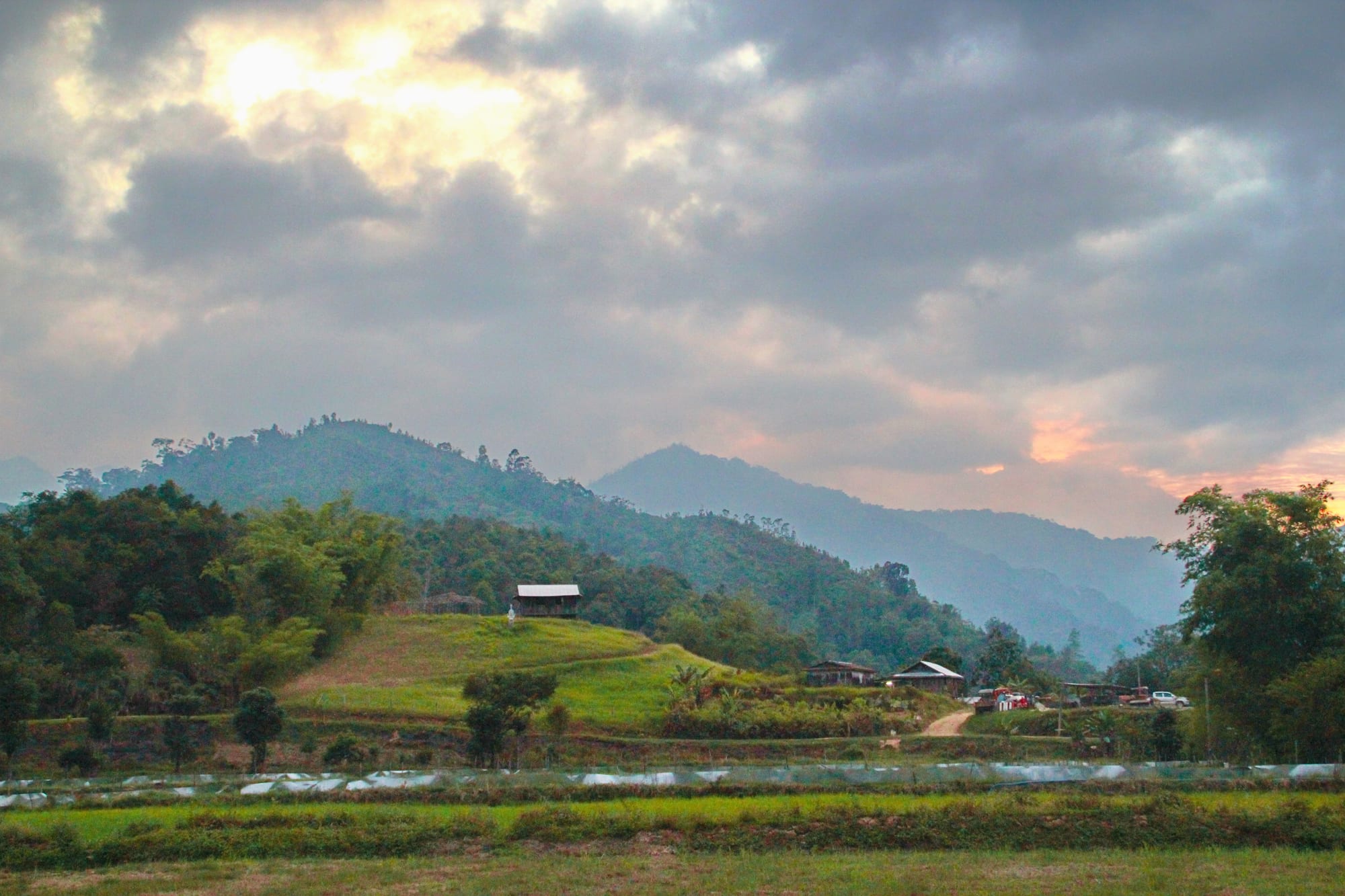
At around a thousand metres the highlands are much cooler than the Sarawak coast, with mild days, cold nights, frequent mist and rain in every month. Cloud settles over the plateau in the afternoon and often in the early morning, which is what disrupts the flights.
- Summer
- mild and often misty, roughly 15–28°C, with the drier and better walking months from about March to October
- Winter
- cooler and wetter from about November to February, roughly 14–26°C, with heavy rain and more cancelled flights
🤝 Local Customs
Bario is a Kelabit community and strongly Christian: the church is the centre of village life, Sunday is kept quietly, and meals often begin with a prayer. Elders are treated with formality, and Kelabit names change through life with the birth of children and grandchildren. Visitors are received as guests of a household rather than as customers, and it is normal to sit, eat and talk with the family. Alcohol is far less present here than in many longhouse communities.
Ask before photographing people, longhouse interiors or the stone monuments, remove shoes when entering a home or longhouse, take a small gift for hosts, and carry out all rubbish, including batteries.
💳 Common Payment Methods
The currency is the Malaysian ringgit. Bario runs on cash: there is no bank branch or reliable cash machine, cards are not accepted for homestays, guides or food, and mobile payment depends on a connection that often is not there. Enough money for the whole stay, in small notes, should be brought from Miri.