💰 Budget
Sibu is one of the cheaper towns in Sarawak. Food is very inexpensive, and hotels in the centre are modest and reasonably priced. The costs that add up are transport: domestic flights, long bus journeys on the Pan Borneo Highway, and express boats or a chartered longboat and guide for a longhouse visit upriver.
- Daily Budget Midrange
- USD 75–170 (hotel or resort, guided cave and longhouse tours, domestic flights)
- Daily Budget Shoestring
- USD 20–40 (guesthouse, coffee-shop meals, town buses and a river ferry)
Carry cash for coffee shops, the market and boat tickets, and arrange longhouse visits through a local guide rather than turning up unannounced.
📅 Best Time to Visit
March to October is drier and better for river travel and walking, though rain falls in every month. Late May and early June bring Gawai Dayak, when the town empties towards the longhouses, and July brings the Borneo Cultural Festival. The north-east monsoon from November to February raises the Rajang and can bring flooding along the river.
⏳ Suggested Number of Days
A day or two covers the town itself, which is small and easily walked. Longer stays are shaped by the river: a trip upstream to a longhouse or to the towns of the upper Rajang needs several days, and boat schedules and water levels decide how long.
- First Visit
- 1–2 days
- With Surroundings
- 3–5 days
🚆 Transportation
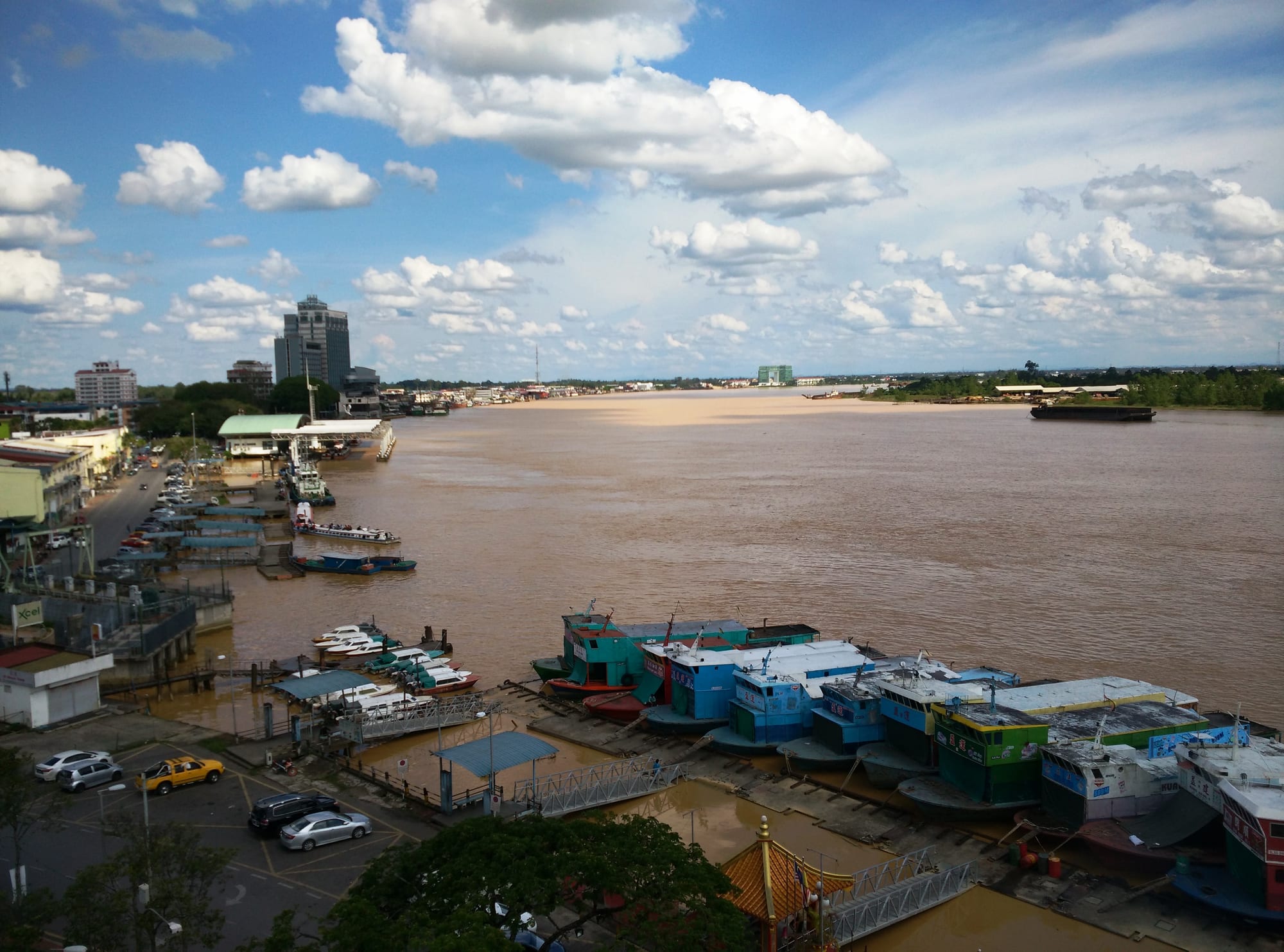
The town centre is small enough to walk. Town and regional buses run from the terminal near the market, taxis and app-based cars are available, and most visitors going further hire a car or take a long-distance coach. Express boats, long covered craft with aircraft-style seating, leave the wharves for Kanowit, Song, Kapit and, when the water is high enough, Belaga.
Buy express-boat tickets at the wharf in the morning, expect departures to be governed by the river rather than the clock, and bring a jacket for the fierce air conditioning on board.
🛬 Airport & Station Connections
Sibu Airport lies about 25 kilometres east of the town, with flights to Kuala Lumpur, Kuching, Miri and other Borneo towns; the drive in takes around half an hour. Long-distance buses along the Pan Borneo Highway connect Kuching, Bintulu and Miri, taking several hours in each direction. Sarawak runs its own immigration, so passports are stamped on arrival even for travellers coming from Peninsular Malaysia.
🚶 Walkability
The centre is flat, compact and best covered on foot: the market, the temple, the esplanade and most hotels lie within a few blocks. Pavements are uneven, covered five-foot ways give shade, and the heat and sudden downpours matter more than distance. Anything beyond the centre — the airport road, the suburbs, the parks — needs a vehicle.
🛡️ Safety
Sibu is a quiet town with little crime beyond occasional petty theft in crowds. The real risks are on and near the water: the Rajang runs fast and muddy, floods in the wet season, and carries debris after heavy rain; estuarine crocodiles live in the river system. Heat, humidity and dehydration affect visitors more than anything else.
Heed crocodile warning signs, do not swim in the river, take care on wet wharf steps and jetties, and note that drug trafficking carries a mandatory death penalty. Check current official travel advice before travelling.
🌦️ Climate
Equatorial and wet all year, hot and humid by day with frequent heavy downpours, usually in the afternoon. The heaviest rain comes with the north-east monsoon from November to February, when the Rajang can rise and flood low-lying parts of town.
- Summer
- hot and humid, about 23–33°C, with afternoon thunderstorms and high river levels after rain
- Winter
- the wettest months, about 22–31°C, with prolonged downpours from November to February
🤝 Local Customs
Sibu is majority Chinese, mostly Foochow, alongside Iban, Malay and Melanau communities, and Christianity, Chinese religions and Islam are all practised. Foochow dialect and Mandarin are heard as often as Malay, and English is widely understood. Tipping is not expected. Dress is casual but modest; shoulders and knees should be covered at mosques and temples, and shoes come off at the door. In a longhouse, visitors greet the headman first and accept at least a sip of tuak, the rice wine.
Use the right hand for giving and receiving, ask before photographing people or inside temples, and remember that alcohol is sold openly here but is avoided by Muslim residents.
💳 Common Payment Methods
The currency is the Malaysian ringgit. Cards work in hotels, supermarkets and larger restaurants, and QR-code payment is common, but coffee shops, market stalls, boat tickets and taxis are usually cash. ATMs are easy to find in the centre and scarce once the town is left behind, so cash should be drawn before heading upriver.