💰 Budget
Pátzcuaro is inexpensive, with prices at or below the national average. Rooms in the centre, many in colonial houses, are good value for most of the year but fill up and rise sharply around Day of the Dead, when they are booked weeks ahead.
- Daily Budget Midrange
- USD 70–140 (colonial guesthouse, restaurants, boat trips and taxis to the lake villages)
- Daily Budget Shoestring
- USD 25–45 (hostel or simple guesthouse, market food and charales, local buses and boats)
Book several weeks ahead for the Day of the Dead period; the plazas, churches and markets cost nothing.
📅 Best Time to Visit
The dry season from about October to April brings sunny days and cold nights. The Day of the Dead at the start of November is the most famous time to visit, with large crowds on Janitzio. The rains fall mainly in summer, when flowering begonias fill the town's courtyards and balconies.
⏳ Suggested Number of Days
Two days covers the town and a boat to the islands. Three or four allows time for the villages and ruins around the lake. Day of the Dead visits often add a night or two.
- First Visit
- 2 days
- With Surroundings
- 3–4 days
🚆 Transportation
The centre is walkable, and local buses and taxis link the plazas, the docks and the bus stations. Boats run from the pier to Janitzio and the other islands. Second-class buses from the town's older station serve the lake towns such as Quiroga and Erongarícuaro, and taxis are a good way to reach the surrounding villages.
At Day of the Dead, arrive early in the day, as highways around the lake become crowded and queues for boats to Janitzio are long.
🛬 Airport & Station Connections
Pátzcuaro is most easily reached by bus or car. Frequent buses run from Morelia, the state capital, about every half hour through the day, and from Uruapan; first-class services are less frequent. The nearest airport is General Francisco Mujica International Airport near Morelia. Drivers from Guadalajara leave the toll motorway towards Quiroga and Tzintzuntzan.
🚶 Walkability
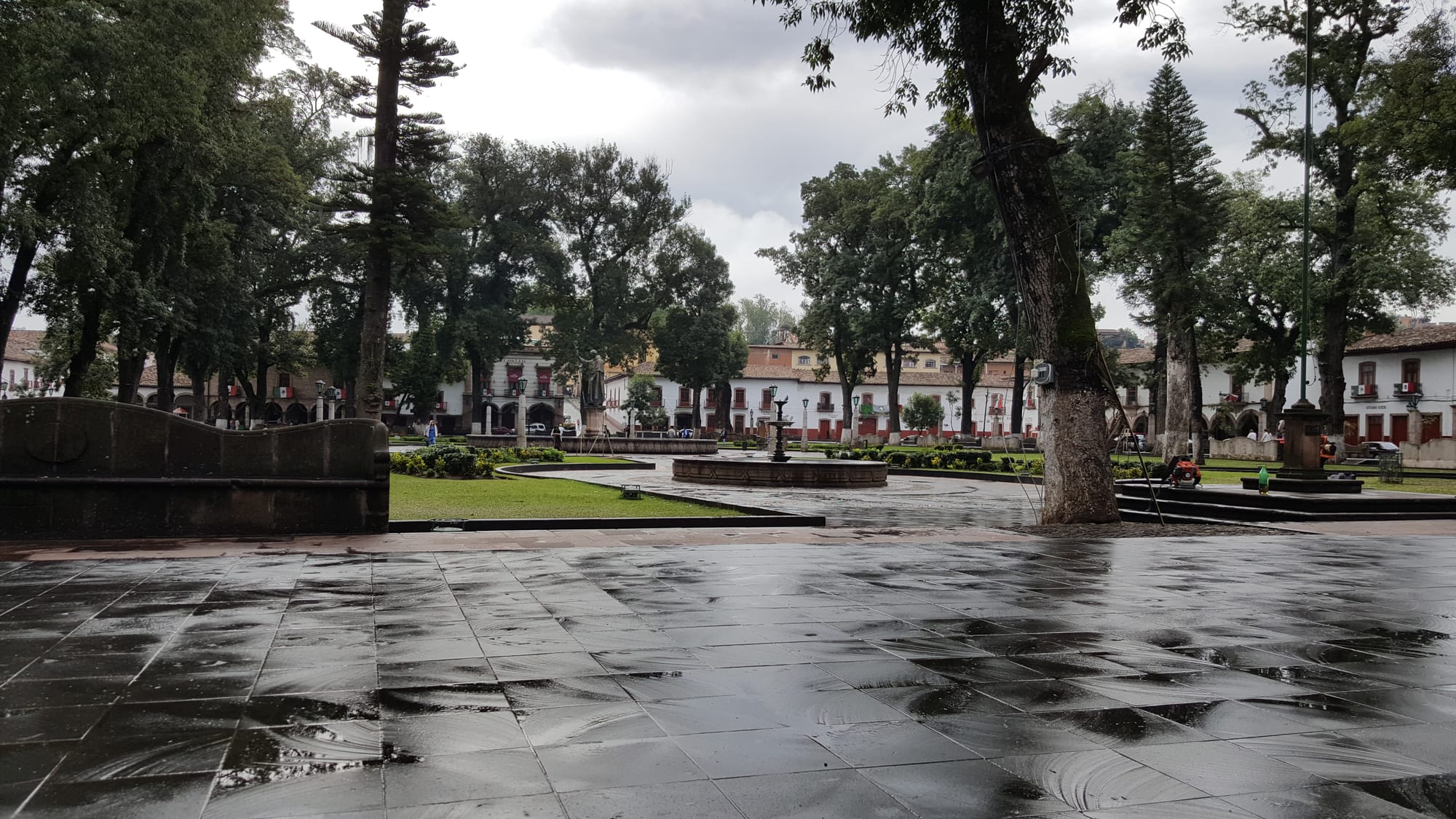
The historic centre is compact and best seen on foot, with cobbled streets running down from the plazas towards the lake. The town sits at high altitude and some streets are steep, so walking can be tiring at first. The docks are a longer walk or a short ride from the centre.
🛡️ Safety
Safety varies enormously by state and even neighbourhood. Michoacán has been badly affected by violence between armed criminal groups, including extortion and fighting in rural areas. Pátzcuaro receives many visitors, but conditions can change quickly.
Travel on main highways by day with a reputable operator, use taxis from the bus station or docks rather than walking late at night, and watch belongings in the Day of the Dead crowds. Check current official travel advice before travelling.
🌦️ Climate
A temperate highland climate with summer rain. Across the year temperatures in the municipality range from a minimum of about 1°C to a maximum of about 30°C, so days can be warm and nights cold.
- Summer
- the rainy season, with the warmest days reaching up to about 30°C
- Winter
- dry and sunny by day, with cold nights that can fall to about 1°C
🤝 Local Customs
Pátzcuaro is a Purépecha region, and the language is still spoken in the municipality and the lake villages. The Day of the Dead vigils are family and religious occasions, not performances: in the cemeteries women and children lay offerings while men often wait outside. The basilica draws pilgrims every day, especially on the 8th of each month.
In cemeteries during the vigils, keep a respectful distance, keep voices low and ask before photographing families or graves; dress modestly in churches.
💳 Common Payment Methods
The currency is the Mexican peso. Some hotels and restaurants take cards, but markets, boats, buses, taxis and most craft sellers need cash in pesos; there are ATMs in the centre.