💰 Budget
San Cristóbal has many hostels and guesthouses, and market food costs little. The cafés, international restaurants and boutique hotels of the centre charge more. Organised tours and shuttles to the canyon, the villages and further afield are sold all over town and are the usual way to reach them.
- Daily Budget Midrange
- USD 75–150 (boutique hotel, restaurants, first-class buses and organised day tours)
- Daily Budget Shoestring
- USD 30–50 (hostel bed, market comedores, colectivos and second-class buses)
Carry small notes for the villages, colectivos and entry charges; amber sold very cheaply in the street may well be plastic or glass.
📅 Best Time to Visit
The dry season from November to April brings clear, cool days and cold nights, with occasional frost from December to February. Holy Week is the busiest time for processions and festivities. The rainy season from May to October is a little warmer, greener and wetter.
⏳ Suggested Number of Days
The town itself is small and needs two or three days. Many travellers stay longer, using it as a base for the highland villages and for long day trips to the canyon, the lakes and waterfalls further away, which add a day each.
- First Visit
- 2–3 days
- With Surroundings
- 4–6 days
🚆 Transportation
The centre is compact and most people walk. Colectivo vans and minibuses run fixed routes through the town, with their destinations painted on the windscreen, and further colectivos leave for the surrounding villages. Taxis are also available. Tour agencies run shuttles to the airport and to the main sights in the region.
Colectivos to the villages leave from depots near the market and the bus stations; there is no direct colectivo between Chamula and Zinacantán.
🛬 Airport & Station Connections
The nearest airport is Tuxtla Gutiérrez International Airport, which serves San Cristóbal; the drive takes about an hour and a quarter, and shared shuttles and taxis wait outside. San Cristóbal lies 80 kilometres from Tuxtla on Highway 190. First-class buses arrive at the terminal on Avenida Insurgentes from Tuxtla, Palenque, Oaxaca, Mérida and Mexico City, and buses and colectivos run to the Guatemalan border at Ciudad Cuauhtémoc.
🚶 Walkability
Very good. The historic centre is flat and compact, and several streets, among them Real de Guadalupe and the Andador Eclesiástico, are pedestrianised. Pavements are narrow and cobbled, the hill churches are reached by long staircases, and at about 2,200 metres the altitude makes climbs tiring for new arrivals.
🛡️ Safety
Safety varies enormously by state and even neighbourhood. San Cristóbal, Palenque and the main tourist routes are visited without trouble by most travellers, but Chiapas has serious problems away from them: since around 2021 rival organised-crime groups have fought for territory near the Guatemalan border and in parts of the highlands, and road blockades and robbery on rural roads are common. In town, the areas around the hilltop churches of Guadalupe and San Cristóbal are not safe after dark.
Avoid the hilltop churches after dark, travel between towns by day, ask before photographing anyone, and follow the photography bans in Chamula's church and at Zinacantán's church. Check current official travel advice before travelling.
🌦️ Climate
A mild subtropical highland climate shaped by the altitude. The dry season from November to April is cool, with a big difference between day and night and a few days of frost; the wet season from May to October is warmer and brings most of the year's rain.
- Summer
- mild and wet — the June average is about 17°C, with most rain falling between May and October
- Winter
- cool and dry — the January average is about 12°C, nights are cold, and frost occurs on two or three days a year
🤝 Local Customs
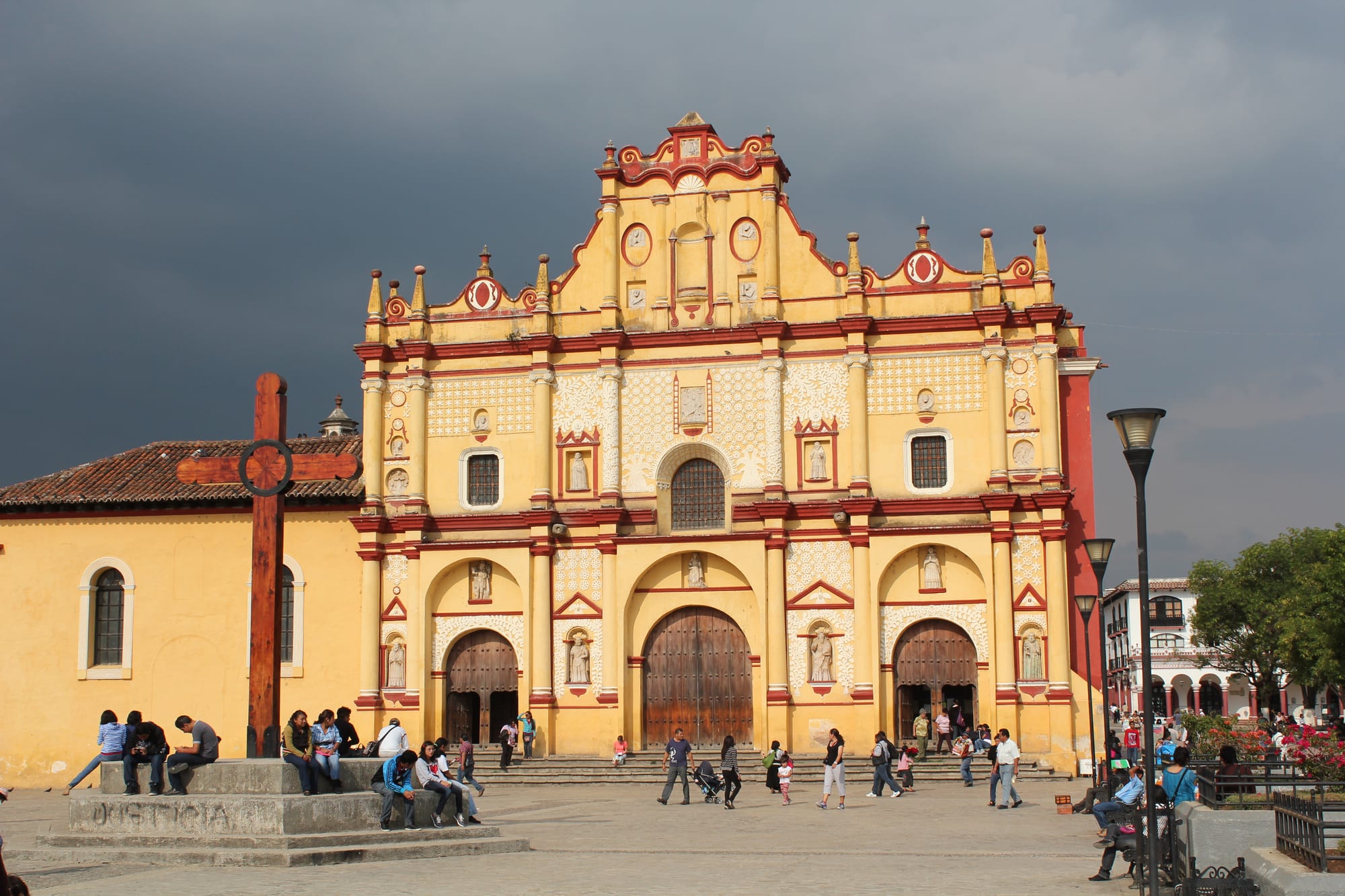
Many people in the town and the villages around it wear Indigenous clothing, and each village has its own dress. Villagers should never be photographed without permission. Churches are places of active worship, and older Indigenous women may be seen crossing the cathedral on their knees. Zapatista communities should be visited only with permission and on their own terms. Market vendors can be insistent.
Photography is prohibited inside the church at Chamula and of the church at Zinacantán.
💳 Common Payment Methods
The currency is the Mexican peso. ATMs are found in the centre, and cards are accepted in many hotels, restaurants and shops in the tourist streets, but markets, colectivos, village churches and roadside charges take cash only.