💰 Budget
Kharkhorin is inexpensive by the standards of Mongolian tourism, but reaching it is not: most visitors arrive with a hired 4x4 and driver-guide, and that vehicle is the largest single cost. In the town itself guesthouses, ger camps, canteen meals and the monastery and museum entry fees are all modest.
- Daily Budget Midrange
- USD 85–200 (ger camp with meals, a share of a 4x4 and driver-guide, horse hire, site entry fees)
- Daily Budget Shoestring
- USD 20–40 (guesthouse or simple ger camp, canteen meals, shared minivan from Ulaanbaatar)
Carry cash in tögrög for monastery and museum entry, horse hire and market food, and share a vehicle with other travellers to cut the cost of the drive.
📅 Best Time to Visit
Mid-June to early September, when the Orkhon valley is green, the ger camps are open and the district Naadam is held in July. May and late September are clear and quiet but cold at night, and many camps close. Winter visits are possible, with the monastery open and the valley under snow, but temperatures are severe.
⏳ Suggested Number of Days
The monastery, the ruin field and the museum fit comfortably into a day or two. Allow three or four to add the wider Orkhon valley, the hermitage in the mountains and the waterfall country to the south-west, which need a vehicle and long hours on rough tracks.
- First Visit
- 1–2 days
- With Surroundings
- 3–4 days
🚆 Transportation
The town is small enough to cross on foot, and there is no local bus network. Shared minivans and occasional coaches run to Ulaanbaatar and to Arvaikheer from the centre, and most visitors travel with a hired vehicle and driver. Horses can be hired from families for rides along the river, and drivers wait near the market for trips into the valley.
Agree the route, the number of days and the price with a driver before setting out, as tracks beyond the paved road are unsigned.
🛬 Airport & Station Connections
A paved road runs west from Ulaanbaatar through Lün and Kharkhorin, about 370 kilometres, and the drive takes roughly six to seven hours including stops. Shared minivans leave the capital's western bus station through the morning. Most travellers arrive as part of a longer central Mongolian loop that continues to Tsetserleg or south to Arvaikheer.
🚶 Walkability
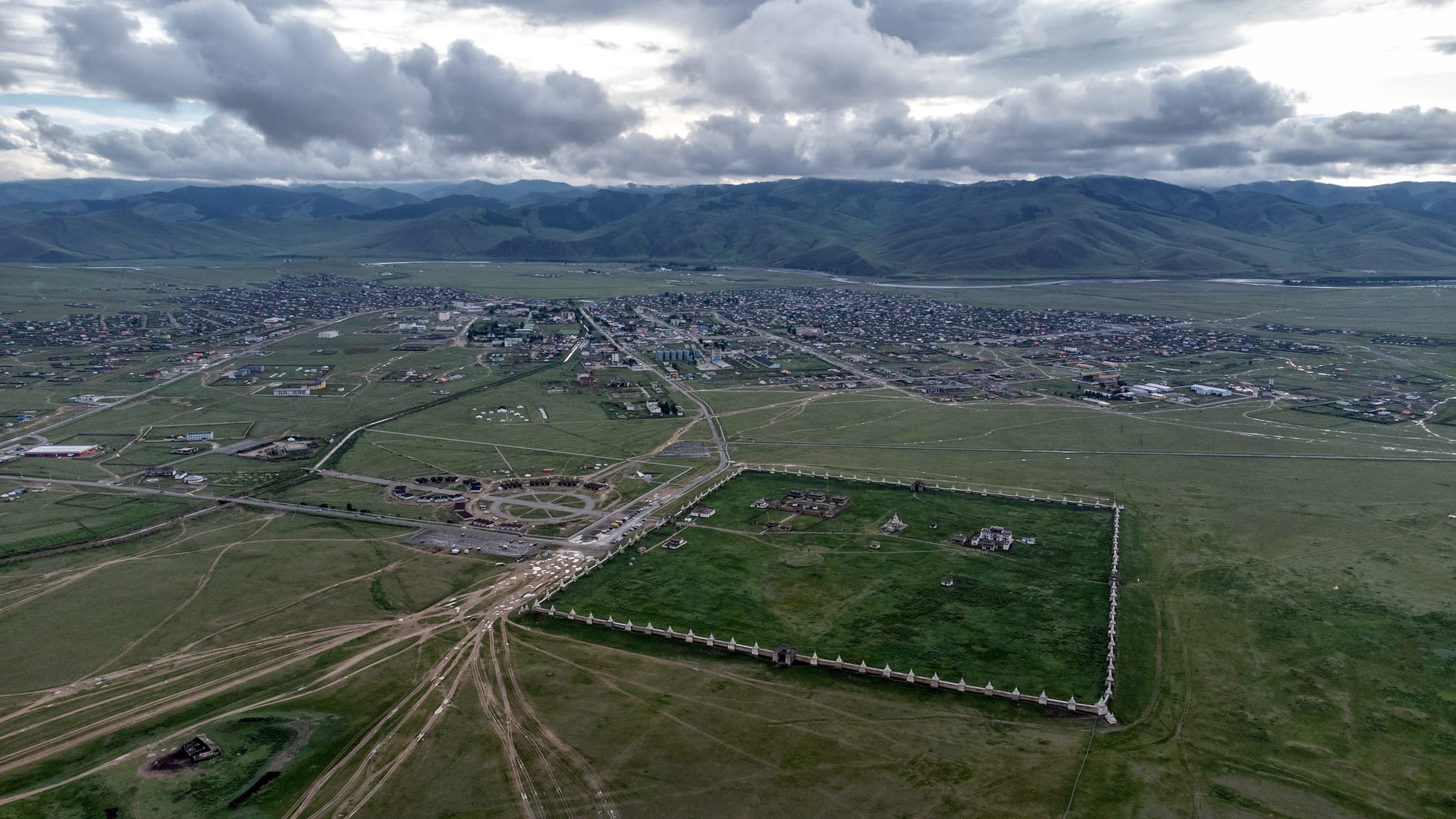
Kharkhorin is easy on foot: the monastery, the museum, the market and the guesthouses lie within a couple of kilometres of one another on flat ground, and the ruin field is open grass. Streets are unpaved away from the main road, dusty in dry weather and muddy after summer rain, and there is very little lighting at night.
🛡️ Safety
Crime is rare and the town is quiet, with the usual caution needed around drunkenness late in the evening and in petty theft in crowds at Naadam. The greater risks are practical: loose dogs on the edges of the ger districts, the river running fast and cold after rain, riding accidents, and the distance from any serious hospital.
Keep away from unfamiliar dogs, ride with a local guide, and carry warm layers and rain gear even in July. Check current official travel advice before travelling.
🌦️ Climate
A dry continental climate at about 1,500 metres, with a short warm summer, a long severe winter and large swings between day and night. Most of the year's rain falls in July and August, often as afternoon storms that turn the tracks to mud.
- Summer
- mild to warm, typically 18–25°C by day, with cool nights near 5–10°C and frequent showers
- Winter
- very cold, regularly −20 to −30°C, with thin snow cover and strong winds
🤝 Local Customs
Erdene Zuu is a working monastery as well as a monument: walk clockwise around temples and stupas, dress with shoulders and knees covered, and ask before photographing monks or ceremonies. Ovoo cairns on the hills are circled three times clockwise, and small offerings are left on them. Accepting a bowl of tea or dairy with the right hand, or both hands, is the ordinary courtesy when visiting a ger.
Tipping is not traditional, though guides and drivers are often given something at the end of a trip; stepping on a ger's threshold or pointing the feet at the hearth is avoided.
💳 Common Payment Methods
The currency is the Mongolian tögrög. There are bank branches and ATMs in the centre, and cards work in the larger shops and some camps, but market traders, horse owners and small canteens deal in cash. Bring enough tögrög from Ulaanbaatar to cover the countryside, where machines are scarce and connections unreliable.