💰 Budget
Windhoek is the cheapest place in Namibia to organise a trip: supermarkets, car hire, backpacker lodges and guesthouses are all concentrated here, and street food costs very little. The main expenses are accommodation in the centre or the eastern suburbs, a hire car, and the taxis or transfers needed to move around a spread-out city.
- Daily Budget Midrange
- USD 130–280 (a guesthouse or hotel, restaurant dinners, museum entry, a hire car and fuel)
- Daily Budget Shoestring
- USD 45–85 (a backpacker lodge or campsite, self-catering and kapana, shared transport)
Collect the hire car and do the big supermarket shop in Windhoek — prices and choice are better here than anywhere else in the country.
📅 Best Time to Visit
May to October is the easy season, dry and sunny by day with cold nights, and it lines up with the season for the parks that most visitors continue to. The rains from about December to April turn the hills green and bring heavy afternoon storms. October is the hottest month before the rains break, and the carnival in April and Oktoberfest in October are the busiest weekends for hotels.
⏳ Suggested Number of Days
The centre is small and its museums and landmarks can be seen in a day or two, which is how most travellers treat the capital at the start or end of a road trip. Three to four days allows for a township tour, the nearby reserves and hills, and the practical business of collecting a vehicle.
- First Visit
- 1–2 days
- With Surroundings
- 3–4 days
🚆 Transportation
Windhoek is a car city, spread across hills and valleys with long gaps between suburbs. Shared minibus taxis follow the main routes into Katutura and Khomasdal for a set fare per trip, and are cheap but hard for a newcomer to read; app-based and radio taxis are the usual choice for visitors. There is no urban rail or bus network of use to travellers, and most road trips start with a hire car collected in the city or at the airport.
Agree the fare before getting into a metered or hailed taxi, and use a booked car rather than a shared taxi after dark.
🛬 Airport & Station Connections
Hosea Kutako International Airport, the country's main gateway, lies about 45 kilometres east of the city, roughly 45 minutes by road; shuttles and taxis meet flights, and hire-car desks are in the terminal. The small Eros aerodrome, close to the centre, handles light aircraft and charter flights to lodges. Long-distance coaches and minibuses link Windhoek with the northern towns, the coast and South Africa, and the paved B1 runs north and south through the city.
🚶 Walkability
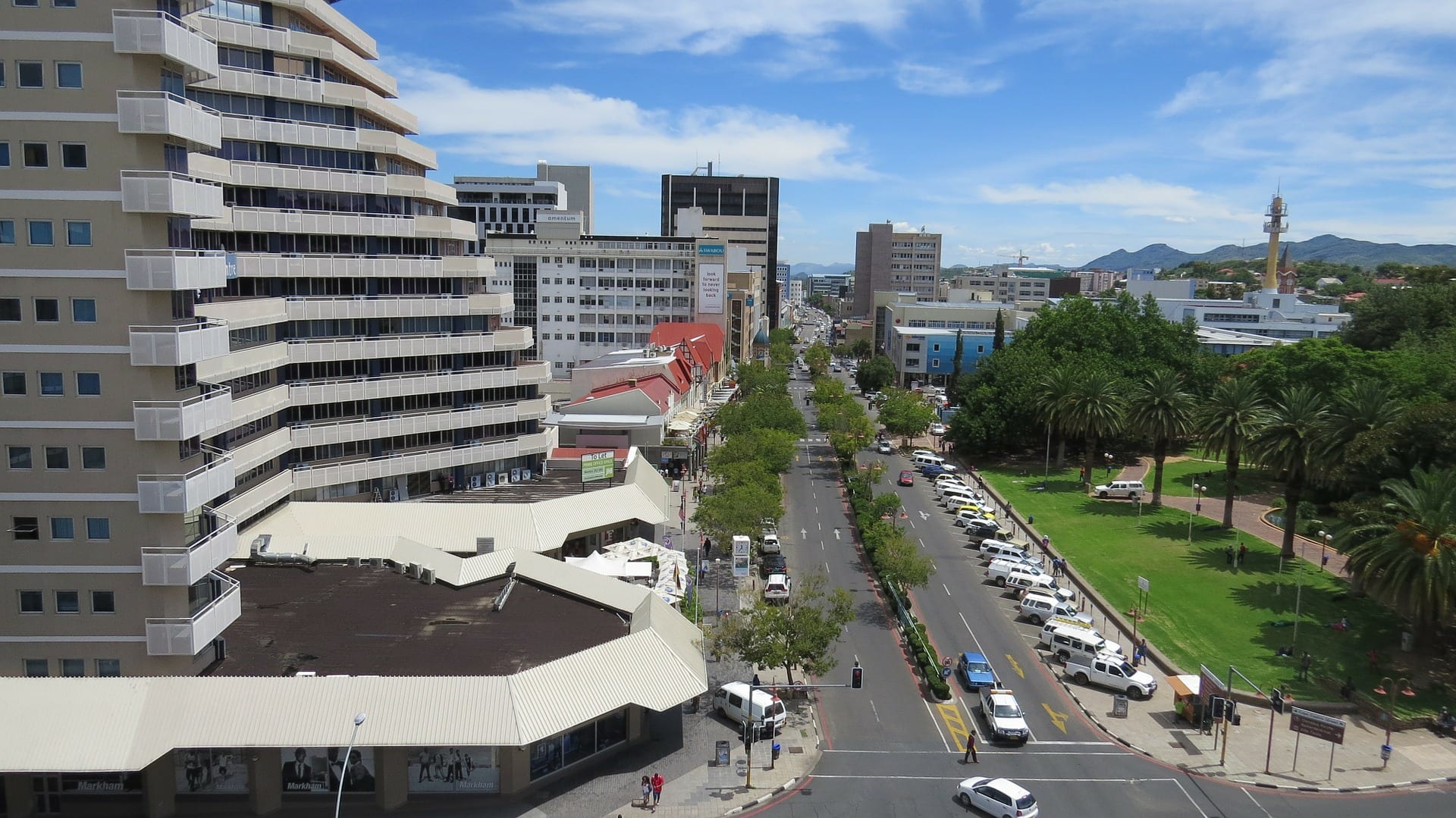
The city centre is walkable and flat enough — the Christuskirche, the museums, Post Street Mall and the main hotels are all within about fifteen minutes of each other on foot. Beyond that grid the city climbs into hills and spreads out, pavements come and go, and distances to the suburbs and to Katutura are too long to walk comfortably. The centre is quiet and poorly lit at night.
🛡️ Safety
Windhoek is a calm city by day, but it is the one place in Namibia where crime affects visitors with any regularity: bag-snatching, phone theft, car break-ins and occasional muggings, mostly in the centre after dark, around taxi ranks and on quiet streets between districts. Violent crime against travellers is uncommon, and road risks matter more on the way out of town than in it.
Namibia is one of the safer countries in Africa for visitors. Walk in the centre in daylight, use a booked taxi at night, carry little of value, leave nothing visible in a parked car, and visit Katutura with a local guide. Check current official travel advice before travelling.
🌦️ Climate
A semi-arid highland climate softened by altitude: hot, bright days, low humidity and cold nights, with almost all the rain falling in summer thunderstorms. Southern hemisphere seasons apply, so summer runs from December to February and winter from June to August.
- Summer
- hot and bright, about 30–34°C by day from December to February, with afternoon thunderstorms and mild nights
- Winter
- dry and sunny, about 20–24°C by day from June to August, with nights near or below freezing
🤝 Local Customs
Greetings matter: a handshake and a short exchange about health or the day come before business, and English, Afrikaans, Oshiwambo, Otjiherero and German are all heard in the street. Dress is neat but informal, and churchgoing is widespread on Sundays. Windhoek residents are used to visitors but not to being photographed, and asking first is expected, particularly in Katutura and at markets.
Tipping is usual at around ten per cent in restaurants, and a few dollars for guides and petrol attendants, who fill the tank and clean the windscreen. Drinking is legal and beer is a social institution, but public drunkenness is frowned upon.
💳 Common Payment Methods
The Namibian dollar (N$) is pegged one-to-one to the South African rand, and rand notes are accepted everywhere in the city, though Namibian dollars cannot be spent in South Africa. Cards are taken in hotels, restaurants, supermarkets and fuel stations in the capital, and ATMs are plentiful in the centre and the shopping malls. Cash is needed for market stalls, kapana, small shops, taxis and tips.