💰 Budget
Ibra itself is cheap: a few plain hotels along the highway, inexpensive restaurants and no entry fees worth mentioning. The cost of a stay in this area is set by the desert, since a night in a Wahiba camp with dinner and breakfast, plus a guided drive or a transfer into the dunes, costs several times more than a room in town.
- Daily Budget Midrange
- USD 130–310 (Sur hotel or desert camp with half-board, turtle-watching fee, 4x4 hire)
- Daily Budget Shoestring
- USD 40–80 (simple hotel or wild camping, local restaurants, a shared car)
Arrange a desert camp that collects guests from the tarmac at Bidiyah or Al Wasil rather than driving into soft sand without experience.
📅 Best Time to Visit
October to April, when the plain and the dunes are pleasant by day and cold at night, and the wadis are comfortable to walk. Summer is severe inland, above 40°C, and most desert camps are quiet or closed then. Air travel and events across the region have been disrupted by the war since late February 2026.
⏳ Suggested Number of Days
Half a day covers the town and its market for most visitors. Two or three days suit anyone adding a night in the dunes and a wadi on the way to the coast. The market's timing and the heat shape the plan more than distance.
- First Visit
- Half a day
- With Surroundings
- 2–3 days
🚆 Transportation
Ibra sits on the highway between Muscat and Sur, and intercity buses and shared taxis stop here. Within the town, taxis and private cars are the only practical means of getting about; there is no local bus network. Everything beyond the town needs a vehicle, and the dunes need four-wheel drive with deflated tyres and, for anyone inexperienced, a guide.
Let tyres down before driving on sand and reinflate at a garage afterwards; never enter the dunes alone or in a two-wheel-drive car.
🛬 Airport & Station Connections
Muscat International Airport is about two hours away by road on the inland highway, which continues from Ibra to Sur in another hour and a half. Intercity buses link Muscat, Ibra and Sur, and shared taxis run the same road. Nearly all visitors arrive by hire car, often on the way into the Wahiba Sands.
🚶 Walkability
The souq, the surrounding streets and the ruined quarters with their date gardens can be walked, on uneven ground and with very little shade. The modern town is strung along the highway and built for cars, and summer heat rules out walking for most of the day.
🛡️ Safety
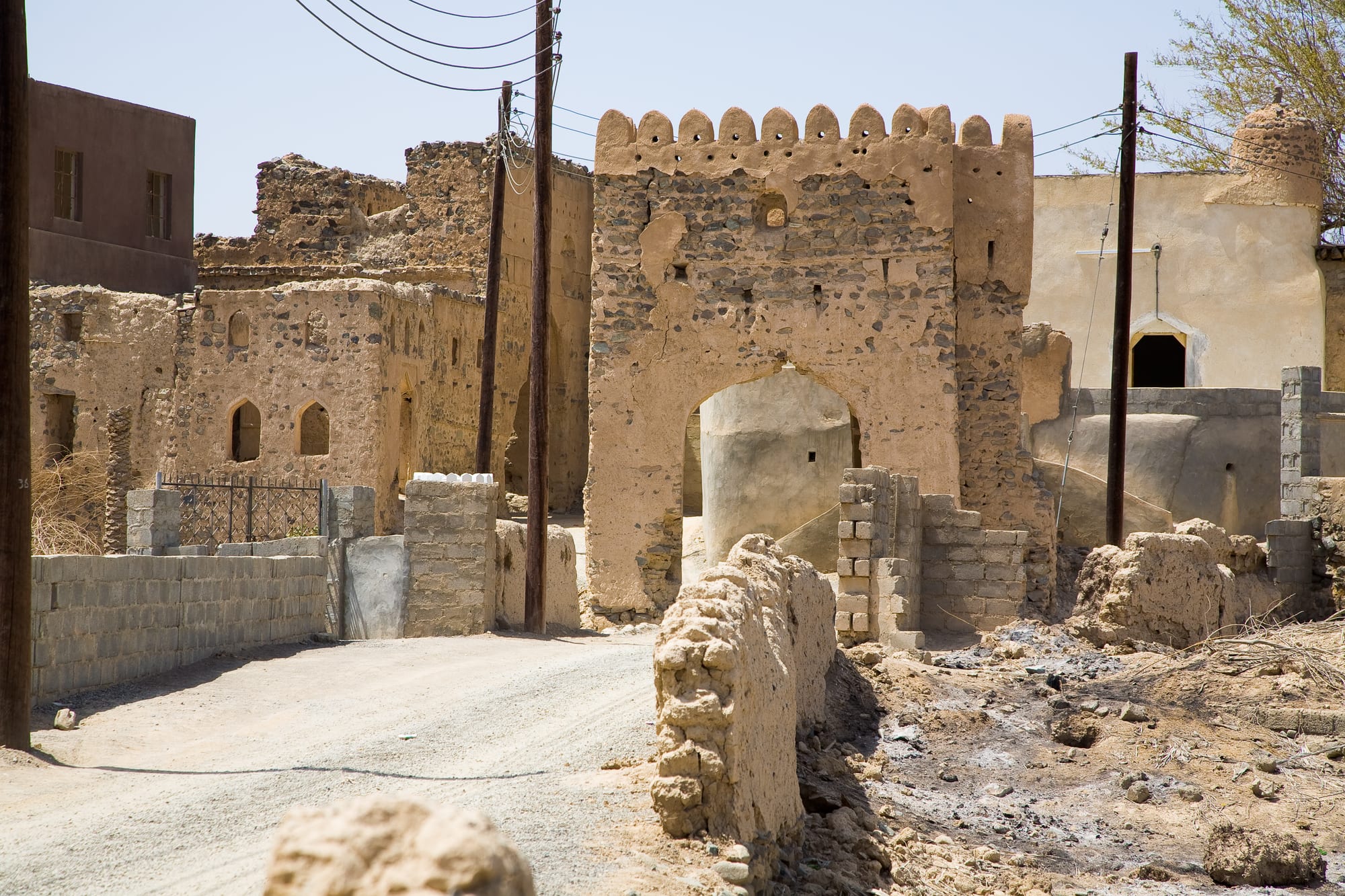
Ibra is a safe, quiet town where crime affecting visitors is rare. The real hazards are environmental: unstable walls in the ruined quarters, heat and dehydration, becoming stuck or lost in the dunes, flash floods in the wadis after rain and animals on the roads at night. Merchant ships have been attacked in the Gulf of Oman during the war in the region, and the Strait of Hormuz has been largely closed to commercial shipping since late February 2026.
Keep clear of leaning mud-brick walls, carry extra water, travel in the Sands with a guide or a second vehicle, avoid wadi beds when rain threatens, and dress modestly in town and at the souq. Check current official travel advice before travelling.
🌦️ Climate
Hot desert climate on an inland plain at the edge of the dunes, dry through the year, with a wide gap between day and night temperatures in winter. Rain is rare and comes in short storms that fill the wadis quickly.
- Summer
- very hot and dry — commonly 40–47°C by day, with warm nights and hotter air over the sands
- Winter
- warm days of about 22–30°C, with desert nights that can fall near 10°C
🤝 Local Customs
Ibra is conservative, and modest dress covering shoulders and knees is expected of visitors; women find a headscarf useful, particularly at the souq. The market day reserved for women traders is a local institution and men do not attend it. Greetings are long, guests are offered kahwa and dates, and the right hand is used for eating and giving.
Ask before photographing people, and do not photograph women at the market at all; do not use the falaj channels for washing; alcohol is sold only in licensed hotel venues.
💳 Common Payment Methods
The currency is the Omani rial, divided into 1,000 baisa. Hotels, petrol stations and supermarkets take cards, while the souq, small restaurants and desert guides generally want cash. ATMs are in the town centre; there are none in the dunes, so draw money before heading out.