💰 Budget
Karimabad is one of the more expensive places to stay in Pakistan, because nearly everything is trucked up the Karakoram Highway and because domestic tourism has pushed up room rates. Prices peak from June to August and again in the autumn colour season, when rooms in the best-known guesthouses are scarce. Food, local transport and fort entry are cheap.
- Daily Budget Midrange
- USD 55–130 (good hotel with a valley view, restaurant meals, a jeep with driver for day trips)
- Daily Budget Shoestring
- USD 15–30 (simple guesthouse, local food, shared minibuses)
Bring cash from Gilgit or Islamabad, and agree jeep hire in advance, as it is the largest single cost here.
📅 Best Time to Visit
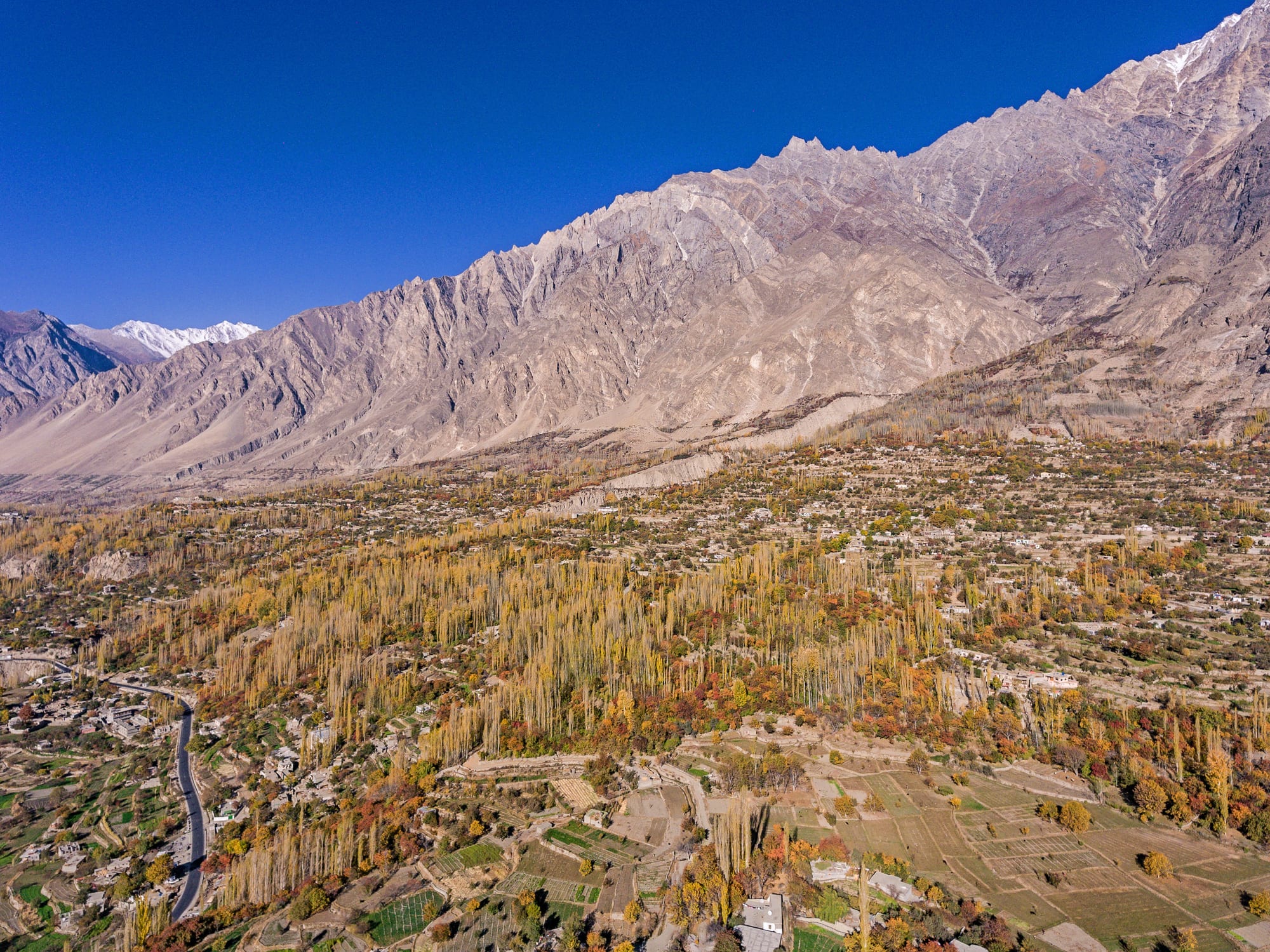
April to October. Blossom covers the terraces in April, the passes and high valleys are open and warm from June to August, and October brings the autumn colour the valley is known for. Winter is cold and quiet, with snow, power cuts and many guesthouses closed, though the mountain views are at their clearest.
⏳ Suggested Number of Days
Two or three days suit the town itself and the old villages around it. Allow four to six for upper Hunza, the side valleys and slow acclimatisation to the altitude. Weather, road closures and cancelled flights to Gilgit routinely add a day.
- First Visit
- 2–3 days
- With Surroundings
- 4–6 days
🚆 Transportation
Karimabad is small enough to cross on foot, though the lanes are steep. Minibuses and shared cars run down to Aliabad on the Karakoram Highway, from where vehicles head north towards Passu and the Khunjerab Pass and south to Gilgit. Hired jeeps with drivers are the usual way to reach the high viewpoints and side valleys, and taxis wait on the bazaar road.
Mountain roads are narrow and subject to rockfall; travel by day and use experienced local drivers.
🛬 Airport & Station Connections
Most visitors arrive by road on the Karakoram Highway. Gilgit is about 100 kilometres to the south, some two to three hours by car, and Islamabad is a long day or two of driving, either up the Indus valley or over the Babusar Pass in summer. Flights from Islamabad serve Gilgit, and are often cancelled in poor weather; from Gilgit a car or minibus completes the journey.
🚶 Walkability
The old centre is walkable and best seen on foot, with stepped lanes, irrigation channels and paths linking Baltit, Altit and Ganish. Gradients are steep and the altitude, around 2,500 metres, makes short climbs harder than they look. Anything beyond the valley floor needs a vehicle.
🛡️ Safety
Hunza is among the safest parts of Pakistan for visitors, and the main dangers are natural rather than criminal: landslides and rockfall on the highway, flash floods from glacial lakes, altitude sickness and the risks of high mountain walking. Governments advise against travel near the Line of Control, which is far to the south of Hunza, and some border areas require a permit.
Acclimatise slowly, walk with local guides above the valley, carry passport copies for checkposts, and ask locally about road conditions after rain. Check current official travel advice before travelling.
🌦️ Climate
A dry mountain climate at about 2,500 metres. Summer days are warm and sunny with cool nights, rainfall is low because the ranges block the monsoon, and winters are cold with snow. Weather changes quickly, and heavy rain in the mountains can close roads at any season.
- Summer
- warm and dry — daytime temperatures often in the mid to upper 20s °C, with cool evenings
- Winter
- cold — daytime highs often near 0 to 5°C and nights well below freezing, with snow on the terraces and the high roads
🤝 Local Customs
Most people in Hunza are Ismaili Muslims and the valley is known for relatively relaxed social rules and high literacy among women, but modest dress is still expected: covered shoulders and knees, and a scarf for women entering a prayer hall. Burushaski is the local language, with Urdu and some English widely understood. Hospitality is strong, and offers of tea are sincere.
Ask before photographing people, especially women; remove shoes at mosques and jamatkhanas; alcohol is not sold openly, and tipping a guide or driver is normal though not expected in shops.
💳 Common Payment Methods
The currency is the Pakistani rupee. Cash is used for almost everything in the valley; card acceptance is limited to a few larger hotels. There are ATMs in Aliabad and Karimabad but they run out of notes and can be offline, so most travellers bring rupees from Gilgit or Islamabad.