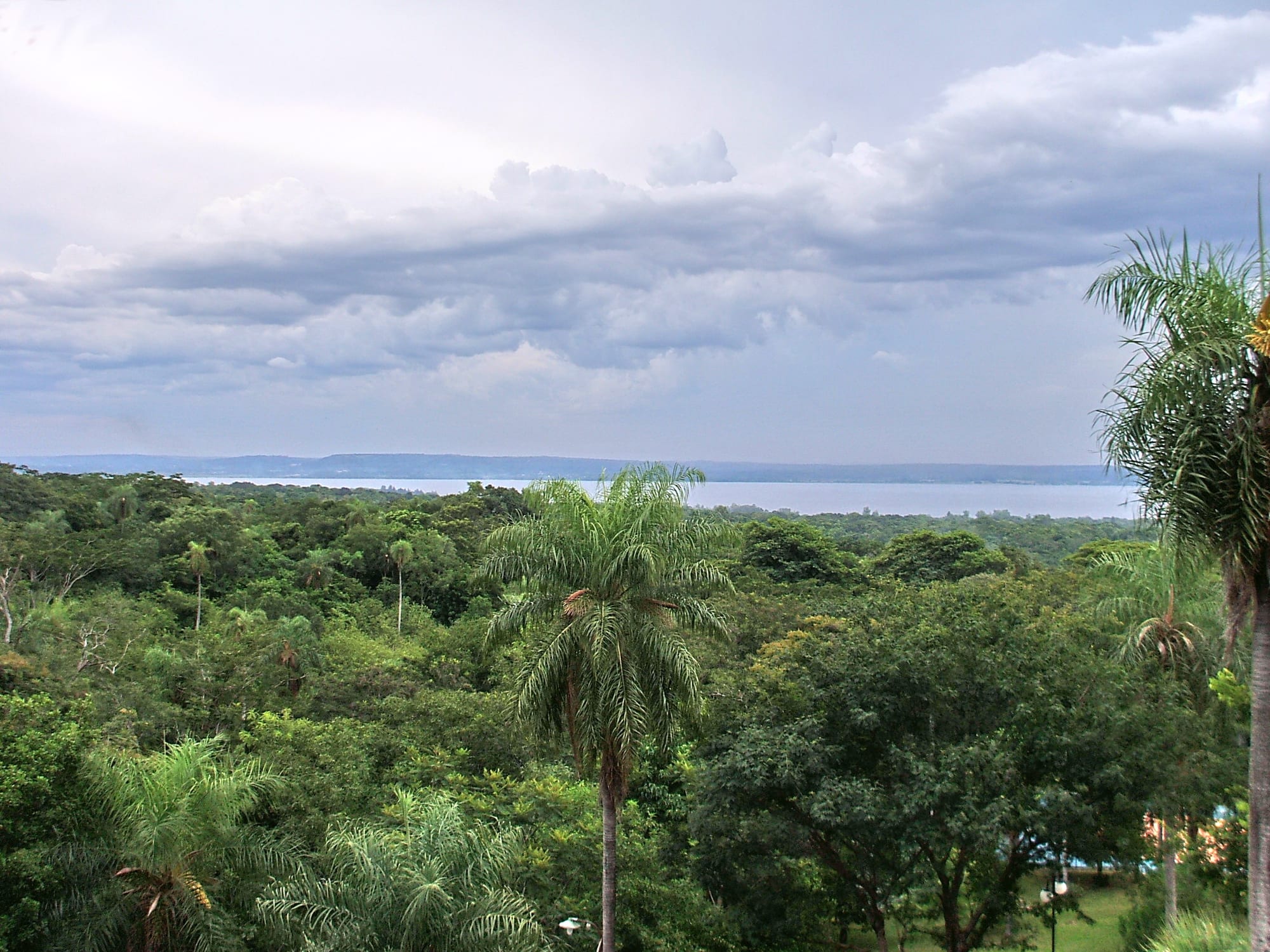
Palm trees and dense green woodland sloping down to the wide, pale waters of Lake Ypacaraí under grey clouds

Asunción & the East, Paraguay

San Bernardino

Lake Ypacaraí seen over the wooded slopes of San Bernardino. (Judas Priest88 / Wikimedia Commons · Public domain)

A small resort town on the shore of Lake Ypacaraí in the Cordillera department, about 50 km east of Asunción. Founded in 1881 by German and Swiss settlers, it became the summer retreat of Asunción's established families, and still fills with young crowds, clubs and lake sports from December to mid-February before falling quiet for the rest of the year.

Neighbourhoods

  • The lakefront
    • Nightlife
    • Summer crowds
    • Lake views

    The shore of Lake Ypacaraí, with its public beaches, clubs and the old Club Náutico, founded as the German Club in 1889. In the summer season it is the meeting point for young people from Greater Asunción, with water sports by day and pubs and clubs at night.

    Open in Maps
  • The old colony town
    • First-time visitors
    • Historic houses
    • Quiet out of season

    The streets behind the shore, where a few houses of the early German settlers from the start of the 20th century survive among summer homes, restaurants and shops selling German food and beer. Outside December to February it is a calm provincial town.

    Open in Maps

Things to do

The lake

  • Lake Ypacaraípark

    One of Paraguay's two main lakes, about 24 km long, made internationally known by the song 'Recuerdos de Ypacaraí'; boating and jet skis are popular, but pollution and algae mean swimming is not advised.

    Open in Maps

Short trips around the lake

  • Areguáneighborhood

    A town on the lake known for its pottery, strawberries, colonial architecture and cobblestone streets, with craft fairs through the year.

    Open in Maps
  • Caacupé Cathedrallandmark

    The national sanctuary of the Virgin of Caacupé, Paraguay's patroness, the country's largest place of pilgrimage, visited by Pope John Paul II in 1988 and Pope Francis in 2015.

    Open in Maps
  • Altosviewpoint

    A hill town in the Cordillera de los Altos nicknamed 'the terrace of the country' for its views over Lake Ypacaraí.

    Open in Maps
  • Ypacaraíneighborhood

    The town at the southern end of the lake, known as the 'City of Folklore' for its long-running folk festival.

    Open in Maps
  • Itauguáneighborhood

    The town officially designated the capital of ñandutí in 2012, after the lace-making that is a major part of its culture and economy.

    Open in Maps

Seasonal events

  • Summer seasonDecember to mid-February

    The resort's high season, when families from Greater Asunción move to their summer houses and the clubs, beaches and public spaces fill with young people.

  • Festival of the LakeAugust to September

    Held not in San Bernardino but in the neighbouring town of Ypacaraí: a folk festival of music, dance and crafts established in 1971, banned under Stroessner in 1986 and revived in 1989.

  • Caacupé pilgrimage8 December

    The feast of the Virgin of Caacupé, when pilgrims walk from across the country to the basilica in the neighbouring town.

Eat and drink

Long-standing places and food districts in San Bernardino. Hours, ratings and directions come from your maps app, always current.

San Bernardino classics

  • German food and breweriesrestaurant

    A legacy of the town's settlers: breweries and places selling traditional German food and drinks alongside Paraguayan grills.

    Open in Maps
  • Lakefront restaurants and pubsneighborhood

    The restaurants, pubs and clubs along the shore that are the centre of the town's summer evenings.

    Open in Maps

Around the lake

  • Areguá strawberriesneighborhood

    The lakeside town across the water is known for strawberries and strawberry products, celebrated each year with a month-long Strawberry Expo.

    Open in Maps

Experience San Bernardino

History

San Bernardino was founded on 24 August 1881, after the War of the Triple Alliance, as an agricultural colony for German-speaking immigrants. The idea came from Santiago Otto Schaerer, a German-Swiss who wrote to the Paraguayan government about the advantages the country offered to settlers; the government promised each family land, a team of oxen, seeds, passage from Buenos Aires and six months' keep. Five families arrived, and after land near Luque proved too expensive, they were settled on the shore of Lake Ypacaraí. Schaerer became the colony's first administrator, and the town was named in honour of Bernardino Caballero, president at the time.

German institutions soon followed. The German Club was founded in 1889, and in the same years the Hotel del Lago was built on the shore. There Bernhard Förster, the antisemitic activist whose model German settlement of Nueva Germania had failed, spent the last six weeks of his life before taking his own life in June 1889; he is buried in the town's cemetery. During the Second World War the German Club was expropriated, and from 1945 it became the Club Náutico de San Bernardino.

Through the 20th century the colony turned into a resort. German and Swiss immigration continued for decades before slowing from the 1970s, and the town became the main summer retreat of traditional families from Greater Asunción.

Culture & Customs

San Bernardino's identity is that of Paraguay's summer town, known locally as San Ber and called the "Summer City". From December to mid-February young people from Asunción and the surrounding towns gather at its clubs, pubs and public spaces, the lake fills with boats and jet skis, and the town is the place to see and be seen. Summer sport is part of the season: football and basketball tournaments have been held at its stadiums since the early 1980s, and the streets have hosted a motor-racing Grand Prix.

The colony's origins still show. A few houses of the early German settlers survive, the breweries and German food recall the founders. At the same time it is fully part of the Cordillera, a region of Guaraní speech, Catholic devotion and folk music. Lake Ypacaraí itself is internationally known through the song "Recuerdos de Ypacaraí" by Demetrio Ortiz, and the neighbouring towns hold the country's most famous folk festival, at Ypacaraí, and its largest sanctuary, at Caacupé.

Relations between the summer visitors and the year-round population shape the town's rhythm. Locals greet each other on the street, tereré is shared through the day, while the crowds of high summer bring a looser, louder atmosphere.

Daily Life

About 12,000 people lived in San Bernardino at the 2022 census. It is one of the wealthiest towns in Paraguay per head, and it is the summer home of traditional families from Greater Asunción, so the population and the local economy rise and fall with the seasons.

The economy depends on tourism and on the summer residents: hotels, restaurants, clubs, shops, building work and the upkeep of holiday houses employ many people, alongside small businesses serving the year-round town. In high season the town is busy late into the night, with discos and pubs full of young visitors; for the rest of the year it is a quiet town.

The main local issue is the health of Lake Ypacaraí. Toxic algae, farm run-off, deforestation and the growth of the towns around its shore have made it the most polluted lake in Paraguay, turning its water green, and swimming is no longer advised. The lake was once known as the "blue lake".

Food

San Bernardino eats like the rest of eastern Paraguay, with a German accent. Chipa, a baked bun of cassava starch, cheese and milk, is sold everywhere; sopa paraguaya, despite its name, is a cornbread made with corn flour, cheese and milk, and chipa guasu is a cake of corn grains often served at an asado. Asado, grilled beef, is both a way of cooking and a social gathering, and mandioca (boiled cassava) takes the place of bread on the table.

The town's settlers left breweries and German food and drinks, and the region's kitchen adds mbejú, a starch cake, eaten with cocido, a hot yerba mate drink, and vori vori, a thick soup with corn-flour-and-cheese dumplings.

Tereré, cold yerba mate infused with water and herbs and shared from one cup through a bombilla straw, is drunk through the hot days. Across the lake, Areguá is known for its strawberries and strawberry products, and caña is the spirit made from sugarcane juice.

Planning tools

Budget

San Bernardino is one of the wealthier towns in Paraguay and a resort, so it costs more than an ordinary country town, especially in the December to February season and at weekends, when accommodation fills with visitors from Asunción. Out of season prices fall and buses from the capital are inexpensive.

Daily Budget Midrange
USD 75–150 (lakeside hotel, restaurant dinners, taxis, a boat on the lake)
Daily Budget Shoestring
USD 30–55 (simple guesthouse, comedor lunches, chipa and buses from Asunción)

Expect higher prices and fuller rooms from December to mid-February and on summer weekends; out of season the town is quieter and cheaper.

Best Time to Visit

December to mid-February for the full resort atmosphere of clubs, water sports and crowds, though this is also the hottest and most humid time. April to October is cooler and calmer, better for walking and for the craft towns around the lake, and suits travellers who prefer a quiet lakeside stay.

Suggested Number of Days

A night or two covers the town and the lakefront. Three or four days allow time for the other towns around Lake Ypacaraí and the Cordillera. Many people from Asunción simply come for the day or a weekend.

First Visit
1–2 days
With Surroundings
3–4 days

Transportation

The town is small enough to cover on foot. Buses link it with Asunción and with the other lake and Cordillera towns, but services between the smaller towns are limited, so a hire car or driver makes it far easier to combine several places in one outing.

Avoid driving on rural roads at night, when livestock, motorbikes and poor lighting make them dangerous.

Airport & Station Connections

San Bernardino is about 50 km east of Asunción. Buses leave from the Asunción bus terminal. The nearest international airport is Silvio Pettirossi in Luque, on the Asunción side.

Walkability

The centre and the lakefront are compact and easy to walk. Summer heat makes walking hard in the middle of the day, and reaching the other lake towns needs a bus, taxi or car.

Safety

Paraguay is relatively safe and low-profile for visitors. San Bernardino is a quiet, well-off town for most of the year; in the summer season the crowds around the clubs and beaches bring the usual risks of busy nightlife. Pollution and toxic algae mean swimming in Lake Ypacaraí is not advised.

Keep an eye on belongings in summer crowds, use a taxi late at night, follow local advice on the water, and take mosquito precautions against dengue. Check current official travel advice before travelling.

Climate

Humid subtropical, with rain spread through the year and summer thunderstorms. Summer (December–February) is hot and humid; winter (June–August) is mild and mostly sunny, with occasional cold snaps from the south.

Summer
December–February: hot and humid, with temperatures at the lake ranging from about 20°C to 38°C
Winter
June–August: mild, with temperatures at the lake ranging from about 3°C to 25°C

Local Customs

Spanish and Guaraní are both spoken, and the town's German and Swiss heritage shows in some houses and food. Tereré, cold yerba mate shared from one cup, is offered and passed round everywhere; accepting it is a friendly gesture. Dress is relaxed in summer, but beachwear is for the lakefront.

Greet people when entering a shop, ask before photographing residents, and dress modestly at churches such as the basilica in Caacupé.

Common Payment Methods

The currency is the guaraní (PYG), and prices run into the tens of thousands. Cards are taken at hotels and larger restaurants, but cash is needed for buses, small shops and food stalls; carry small notes and use ATMs in the town or in Asunción.