💰 Budget
Máncora is more expensive than the cities of the north coast. Beach hotels and bungalows rise sharply in price around Christmas, New Year, Easter and the July holidays, when Peruvians from Lima fill the town. Outside those weeks hostels and simple guesthouses are good value and set lunches on the main road are cheap.
- Daily Budget Midrange
- USD 75–150 (beach hotel or bungalow, restaurant meals, surf lessons and a boat trip)
- Daily Budget Shoestring
- USD 25–50 (hostel bed, set lunches, mototaxis and local buses)
Book well ahead for the holiday weeks; outside them, rooms are easy to find.
📅 Best Time to Visit
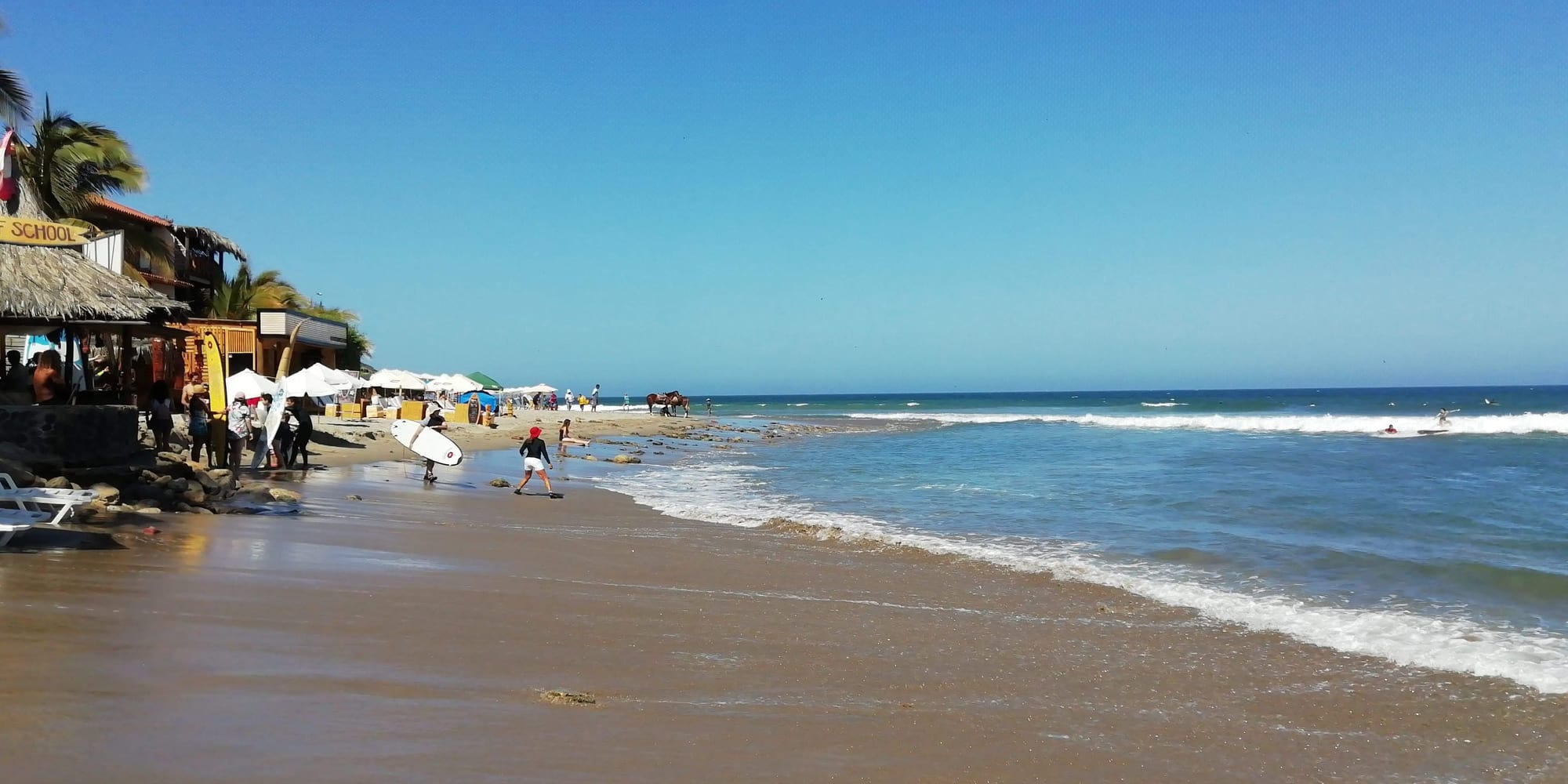
The sun shines for most of the year. December to April is the beach season and the busiest time, and big waves for surfing break in December and January. From about July to October humpback whales pass the coast, and the town is quieter outside Peruvian holidays.
⏳ Suggested Number of Days
Two or three days give time for the beach and the surf; many travellers stay much longer to learn to surf or simply rest. Allow more for the quieter beaches along the coast north and south.
- First Visit
- 2–3 days
- With Surroundings
- 4–6 days
🚆 Transportation
The town is small enough to walk, and mototaxis cover short hops to the beaches. Frequent buses and colectivos run along the Pan-American Highway to Los Órganos, Talara, Piura and Tumbes, and long-distance coaches stop a couple of blocks north of the main tourist area.
Take overnight coaches from established companies, and agree a mototaxi fare before setting off.
🛬 Airport & Station Connections
The nearest airport for travellers is Capitán FAP Víctor Montes Arias International Airport at Talara, used for quicker access to Los Órganos, Máncora and Punta Sal; the airports of Tumbes and Piura are the alternatives, with transfers by road. Máncora is about 187 km north of Piura on the Pan-American Highway, and coaches from Lima take around twenty hours. Buses also run from Ecuador across the border.
🚶 Walkability
The centre is a short strip along the highway and the beach, easily covered on foot, though the main road is noisy with traffic and mototaxis. The quieter beaches to the south are a mototaxi ride away.
🛡️ Safety
The standard tourist circuit — Lima's Miraflores and Barranco, Cusco, the Sacred Valley, Arequipa, Puno — is generally safe with urban precautions, but crime has risen. In Máncora, belongings left on the beach go missing, and the party scene brings the usual risks of drink and drugs. El Niño floods can cut roads.
Keep valuables in the hotel safe, stay in busy parts of the beach and town at night, and watch drink and drug intake when partying. Check current official travel advice before travelling.
🌦️ Climate
A dry tropical climate, hot and sunny for most of the year and warmer than the coast further south. The sea is the main difference: warm currents keep it far warmer than the water off Lima. In El Niño years heavy rain can fall and the heat can reach around 40°C.
- Summer
- December to May is the hot season, with sea temperatures of about 24–26°C
- Winter
- June to November stays warm and sunny, with the sea at about 21–23°C
🤝 Local Customs
Máncora is an informal beach town: swimwear is normal on the sand but not in shops or restaurants away from the beach. Locals are used to visitors from Lima, Ecuador and much further afield. A tip of around 10 per cent is usual in sit-down restaurants.
Respect the surf etiquette in the line-up, ask before photographing fishermen, and keep noise down near the quieter beach hotels at night.
💳 Common Payment Methods
The currency is the sol (PEN). Larger hotels and restaurants take cards, but cash is needed for mototaxis, buses, beach stalls and small eateries. The town has ATMs, which charge fees, and US dollars are easily exchanged.