💰 Budget
Tacna is inexpensive by Peruvian standards, and it is known for low-priced shopping thanks to its duty-free zone, which draws many visitors from Chile. Hotels in the centre are good value, and meals in traditional restaurants and menú lunches cost little.
- Daily Budget Midrange
- USD 75–150 (central hotel, restaurant meals, taxis, a day trip to the valley or to Arica)
- Daily Budget Shoestring
- USD 25–50 (hostel or simple hotel, menú lunches and markets, local buses and colectivos)
The city centre, the Paseo Cívico, the Alameda and the cathedral cost nothing to see, and a menú lunch in a traditional restaurant is the best-value meal.
📅 Best Time to Visit
Tacna is a desert city, mild and almost rainless all year, so any season works. Late August is the most memorable time, with the Paseo de la Bandera and the anniversary of the city's return to Peru; summer, from December to February, is the warmest season in the valley.
⏳ Suggested Number of Days
Most visits to the city take one or two days. Three days give time for the surrounding valley and a trip across the border as well; long queues at the frontier can add to the time needed.
- First Visit
- 1–2 days
- With Surroundings
- 3 days
🚆 Transportation
The centre is small and easily walked. Taxis are plentiful and cheap for the battlefield, Pocollay and the bus terminals, and buses and colectivos cover the wider city. Tours of the Valle Viejo route take in the bodegas, the petroglyphs and nearby villages.
Use registered taxis, and agree the fare before setting off where there is no meter.
🛬 Airport & Station Connections
Coronel FAP Carlos Ciriani Santa Rosa International Airport has flights to Lima and Arequipa. The Pan-American Highway (Peru Highway 1) runs north to Moquegua and Arequipa and south to Arica. Colectivo taxis to Arica leave from the international bus terminal next to the domestic one, and the trip takes about one and a half to two hours including border formalities.
🚶 Walkability
The historic centre is compact and flat, and the Paseo Cívico, the Alameda Bolognesi and the main museums are a few minutes apart on foot. The newer districts are spread out across the desert and are better reached by taxi.
🛡️ Safety
The standard tourist circuit — Lima's Miraflores and Barranco, Cusco, the Sacred Valley, Arequipa, Puno — is generally safe with urban precautions, but crime has risen. Tacna is a busy trading city, where petty theft in markets and at the bus terminals is the main risk. Like the rest of the south it is highly seismic: the 2001 earthquake damaged the city.
Carry a passport near the border and at checkpoints, keep valuables close in the markets and terminals, and do not take fresh fruit, vegetables or animal products into Chile. Check current official travel advice before travelling.
🌦️ Climate
A mild desert climate, almost without rain, with an average temperature of about 18.6°C. Days are generally sunny and temperate, nights are cooler, and the valley's irrigated fields stand out against the bare hills.
- Summer
- December–February is the warmest season, sunny, with maximum temperatures that can reach about 32°C
- Winter
- June–August is mild and dry, with cooler nights when minimums fall to around 8°C
🤝 Local Customs
Tacneños are known for their strong patriotic identity, shaped by the half-century under Chile: monuments, street names and festivals commemorate independence and the War of the Pacific, and the reincorporation of 28 August is treated with great seriousness. Visitors from Chile are an everyday part of the city's economy, and relations are practical and friendly.
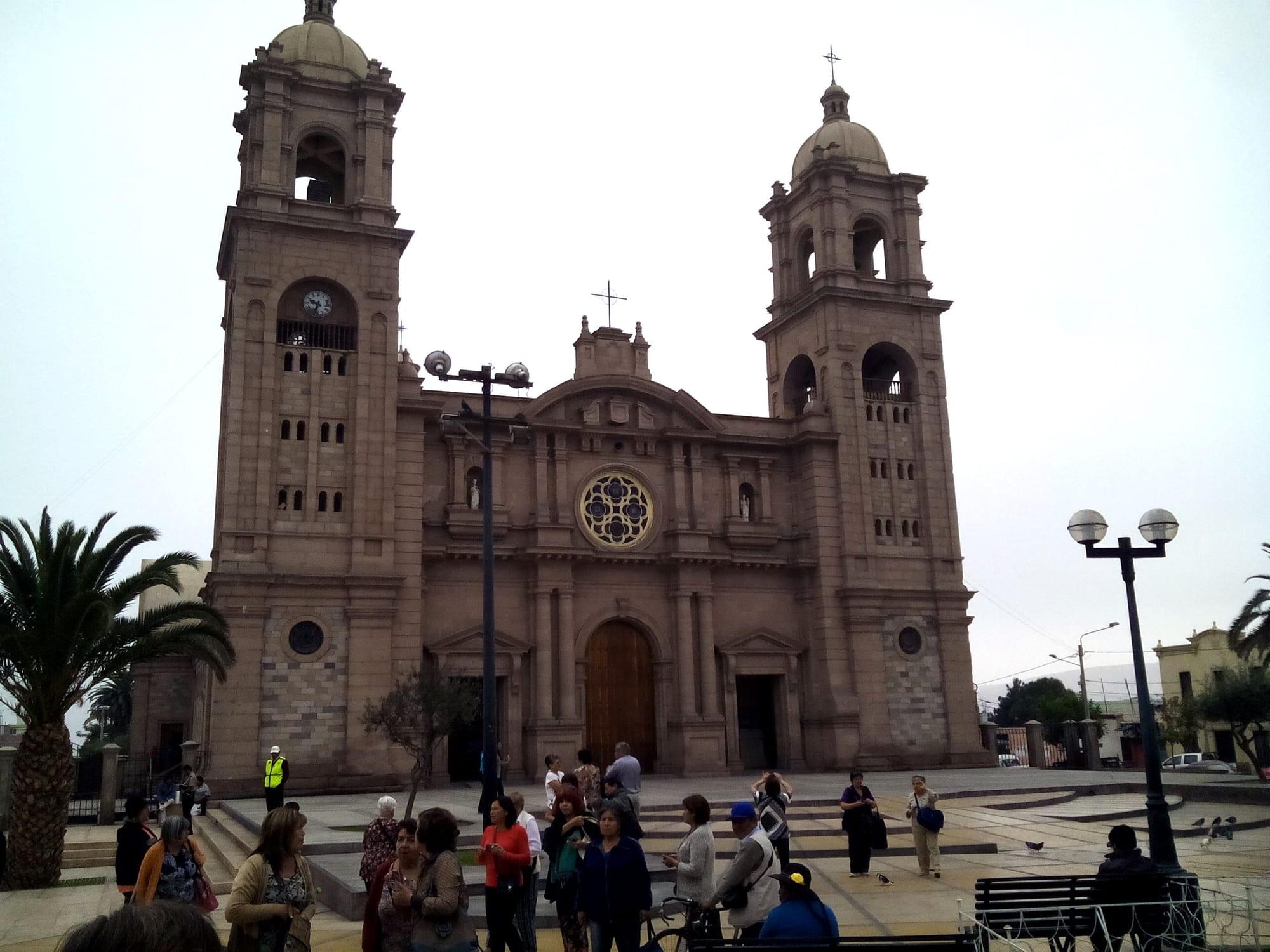
Show respect at the war memorials and during the flag procession, and dress modestly in the cathedral and other churches.
💳 Common Payment Methods
The currency is the sol (PEN). Cards are widely accepted in shops, hotels and restaurants in the centre; carry cash for markets, colectivos and small purchases. ATMs are common but charge fees, and US dollars are easily exchanged.