History
The south was settled by farming peoples long before the Inca. In the Colca valley the Collaguas and Cabanas carved the slopes into terraces still farmed today, and near Moquegua the Wari built a fortified outpost on the flat-topped mountain of Cerro Baúl. The Inca brought the region into their empire and made offerings on the high volcanoes, where child sacrifices such as the girl known as Juanita, found on Ampato in 1995, were preserved in the ice.
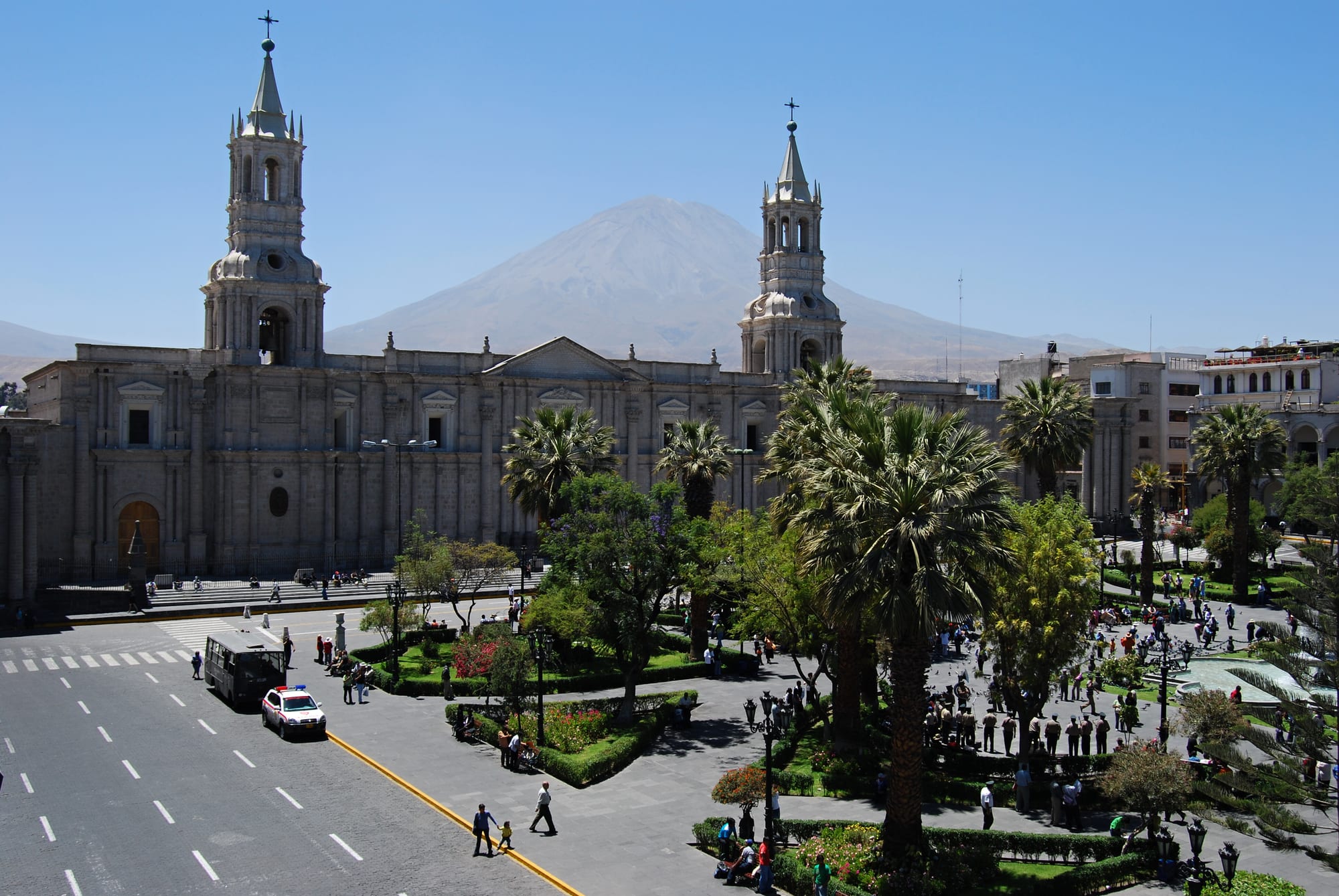
The Spanish founded Arequipa in 1540, and it grew into a wealthy colonial city of Spanish families, wine estates and churches built from sillar, the white volcanic stone. The eruption of Huaynaputina in Moquegua in 1600, the largest in the recorded history of South America, buried villages and damaged Arequipa, and earthquakes have struck the city repeatedly. Arequipa later earned a reputation as a rebellious city, the launch point of several revolts and coups in the 19th and 20th centuries.
The War of the Pacific reshaped the far south. Chile occupied Tacna and Arica after the Battle of Alto de la Alianza in 1880, and Tacna remained under Chilean administration until the Treaty of Lima of 1929 returned it to Peru while Arica stayed Chilean. In the 20th century large copper mines opened at Toquepala and Cuajone, and a severe earthquake in 2001 damaged Arequipa, Moquegua and Tacna.