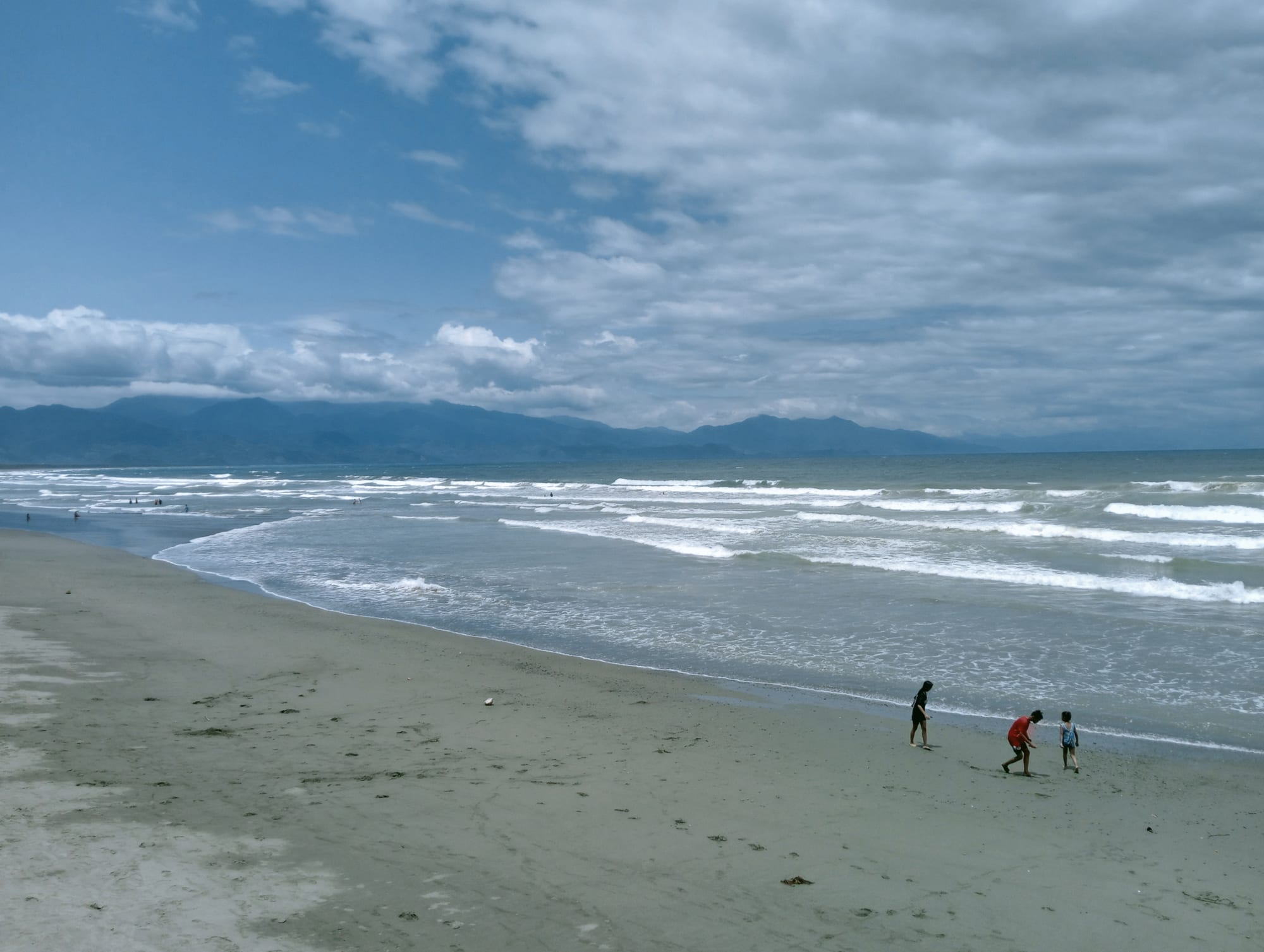
A long grey-sand beach with lines of breaking surf and blue mountains along the far side of the bay

Manila & Central Luzon, Philippines

Baler

Surf rolling into Sabang Beach at Baler, with the Sierra Madre beyond the bay. (Ralff Nestor Nacor / Wikimedia Commons · CC BY-SA 4.0)

The capital of Aurora province, on the Pacific coast of Luzon behind the Sierra Madre, where a long grey-sand bay takes a steady swell. It is the birthplace of President Manuel Quezon and the site of the 1898–99 siege of its church, and since the 1970s it has been the best-known surfing town in northern Luzon.

Neighbourhoods

  • Sabang
    • Beaches
    • Surfing
    • Best for food

    The beach barangay about two kilometres from the town centre, where the surf schools, board hire, beachfront hotels and most of the restaurants are. The sand is grey and the bay is long, so it rarely feels crowded outside holiday weekends.

    Open in Maps
  • The town centre
    • Historic district
    • Local life
    • Close to public transport

    The old core around the church, the provincial capitol and the public market, a few streets back from the sea. Buses from Manila arrive here, and the museums and historic houses are within a short walk of one another.

    Open in Maps
  • Cemento and the southern headland
    • Quiet and residential
    • Views
    • Surfing

    The far side of the bay towards the port and the lighthouse, with a reef break, a rocky shore and the road out to the coves. It is quieter than Sabang and reached by tricycle.

    Open in Maps
  • The inland barangays
    • Waterfalls
    • Countryside

    Rice fields and coconut groves running back towards the Sierra Madre, where the roads lead to river pools and the waterfalls that give the town its wet-weather alternative to the beach.

    Open in Maps

Things to do

History in the town

  • San Luis Obispo de Tolosa Churchlandmark

    The stone church where a Spanish detachment held out for 337 days from July 1898, cut off from the news that Spain had lost the war; the survivors are remembered as the Last of the Philippines.

    Open in Maps
  • Museo de Balermuseum

    The town museum, with an account of Baler's history, local artefacts and a mural of the wave that destroyed the old settlement in 1735.

    Open in Maps

Beaches and surf

  • Sabang Beachbeach

    The town's main beach, a long stretch of grey sand with a beach break that suits beginners, lined with surf schools and places to stay.

    Open in Maps
  • Charlie's Pointbeach

    A break at the headland north of the beach, named from a line in Apocalypse Now, whose helicopter attack and surfing sequences were shot at Baler in 1976 and 1977 and introduced surfing to the town.

    Open in Maps
  • Dicasalarin Covebeach

    A sheltered white-sand cove south of the town beyond the headland, reached by a rough private road.

    Open in Maps

Waterfalls and the mountains

  • Ditumabo Fallsattraction

    A high waterfall at Ditumabo in the neighbouring town of San Luis, reached by a rocky walk of about an hour up the river bed, ending in a cold plunge pool.

    Open in Maps
  • Aurora Memorial National Parkpark

    Protected rainforest straddling the mountain road to Nueva Ecija, with rivers, waterfalls and some of the least disturbed forest left on this side of the Sierra Madre.

    Open in Maps
  • Ermita Hillviewpoint

    The hill above the town where survivors of the 1735 wave swam for refuge, now a viewpoint over the bay and the coast.

    Open in Maps

Seasonal events

  • Philippine–Spanish Friendship Day30 June

    The anniversary of the end of the 1898–99 siege of the church, marked nationally and kept as a non-working holiday in Aurora, with ceremonies in the town.

Eat and drink

Long-standing places and food districts in Baler. Hours, ratings and directions come from your maps app, always current.

Baler classics

  • Seafood along Sabangneighborhood

    Beachfront kitchens grill the day's catch — tuna, tanigue and squid — and serve it with rice, sinigang and kinilaw, raw fish cured in vinegar and calamansi.

    Open in Maps
  • Pancit Balerrestaurant

    A local noodle dish topped with shredded chicken, chicharon and hard-boiled egg, sold at carinderias in the town and named for the place itself.

    Open in Maps
  • Suman and coconut sweetsmarket

    Sticky rice steamed in palm leaves, bibingka and coconut sweets from the market and roadside stalls, the usual thing to carry home from Aurora.

    Open in Maps

Cafés

  • Surf cafés at Sabangcafe

    Small cafés behind the beach serve coffee, breakfasts and rice bowls to surfers from first light, many of them run by returnees from Manila.

    Open in Maps

Experience Baler

History

Franciscan missionaries settled the Baler valley in the late 16th century, and the town lived for three hundred years as an isolated Pacific outpost, reached from the rest of Luzon only by mountain trails and by sea. A tidal wave in 1735 destroyed much of the settlement, and it was rebuilt on higher ground, an event still marked at Ermita Hill.

Its best-known episode came at the end of Spanish rule. In June 1898 a small Spanish detachment took refuge in the stone church as Filipino revolutionary forces besieged the town. They held out for 337 days, long after Spain had lost the war and ceded the Philippines to the United States. When they surrendered in June 1899 they were allowed to leave as friends rather than prisoners, and the episode, known in Spain as the Last of the Philippines, is commemorated in both countries.

Baler was also the birthplace of Manuel L. Quezon, born in 1878 and president of the Commonwealth from 1935. Aurora province is named after his wife, Aurora Aragon Quezon, also born here, and became separate in 1979 with Baler as its capital.

The modern town owes its character to a film. In 1976 and 1977 the crew of Apocalypse Now shot the helicopter attack and surfing sequences at Baler, and the film is credited with starting surfing in the Philippines; by the 1990s the town had become the surfing capital of the Pacific coast, and a law of 2023 recognised it as the birthplace of Philippine surfing. The opening of better roads over the Sierra Madre put it within a day's reach of Manila and turned tourism into the mainstay it is now.

Culture & Customs

Baler is a small provincial capital with a strong sense of its own history: the siege, the Quezons and the film are all civic property, retold on markers, in the museum and by tricycle drivers. The annual town fiesta for Saint Louis of Toulouse brings processions, a market and reunions of families who have moved to Manila, and the province marks its foundation with its own celebrations.

Surfing has given the town a second identity. A local surfing community formed after the filming in the 1970s, and instructors, board shapers and beach-side businesses are now a recognised trade passed between families. Competitions bring surfers from across the country, and the culture that has grown around them — early mornings, cafés, music at the beach — sits easily beside the older rhythms of mass, market and fiesta.

Aurora sits on a cultural boundary. Tagalog is the common language, but Ilocano settlers came over the mountains in the 20th century, and Dumagat-Agta communities, among the earliest inhabitants of the Sierra Madre, live in the uplands and along parts of the coast, with their own languages and a long history of marginalisation. The town's manners are those of the Tagalog provinces: respectful address to elders, the mano gesture, indirect refusal, and an obligation to feed anyone who arrives.

Daily Life

About 45,000 people live in Baler, which is the seat of the provincial government and the largest town on a long, thinly populated coast. Provincial offices, schools and the hospital are here, and people travel in from the smaller towns north and south for anything official.

Fishing and farming still underpin much of the economy — rice, coconuts and root crops inland, small boats working the bay — but tourism now sets the tone in Sabang, with guesthouses, surf schools, restaurants and tricycle drivers depending on weekend and holiday visitors from Manila. Many households have members working in the capital or abroad, and the population swells and shrinks with the school and holiday calendar.

Geography shapes daily life more here than in most Philippine towns. The Sierra Madre cuts the province off from the plains, so goods arrive by a single mountain road that closes in bad weather and prices reflect the journey. The same mountains take the brunt of Pacific typhoons, and rebuilding after storms is a routine part of the year. Mornings begin with surfers and fishermen on the water before the heat, the middle of the day is slow, and evenings belong to the beachfront and the plaza.

Food

Baler eats from the Pacific. Tuna, tanigue, squid and reef fish come off the boats each morning and are grilled whole, fried, or turned into kinilaw, raw fish cured in vinegar and calamansi with onion, ginger and chilli. Sinigang, the sour tamarind soup, is made here with fish as often as pork, and shellfish and seaweed salads appear when the sea allows.

The town's own dish is pancit Baler, a noodle plate topped with shredded chicken, crushed chicharon and slices of hard-boiled egg, eaten at carinderias and fiestas. Inland barangays supply the rest: upland rice, root crops, bananas and coconuts in every form, from the milk in stews to buko juice sold at the roadside. Tinapa, smoked fish, and dried fish are the everyday protein.

Sweets are mostly rice and coconut. Suman, sticky rice steamed in palm leaves and eaten with sugar or ripe mango, is the thing people carry back over the mountains, along with bibingka, coconut jam and peanut brittle. The surf economy has added cafés serving Philippine coffee, banana pancakes and smoothies along the beach road, but the market at dawn — fish, vegetables, rice cakes and hot broth — remains the town's real kitchen.

Planning tools

Budget

Baler is inexpensive. Beachfront rooms at Sabang cost a fraction of resort prices elsewhere in the country, carinderia meals are very cheap, and the main outlays are the long journey in, board hire with an instructor, and tricycle or van trips to the waterfalls and coves. Prices rise over Holy Week, Christmas and long weekends, when the town fills with Manila visitors.

Daily Budget Midrange
USD 50–110 (beachfront hotel, restaurant meals, a hired van or tricycle for the day, board hire)
Daily Budget Shoestring
USD 20–40 (guesthouse or hostel, carinderia meals, tricycles, one surf lesson)

Book rooms ahead for long weekends and Holy Week, and hire a tricycle by the day rather than per trip when visiting the coves and falls.

Best Time to Visit

The surf season runs roughly from October to March, when swell from the northeast reaches the bay most consistently; beginners often prefer the smaller waves from about April to June. The Pacific coast of Aurora gets rain through much of the year and takes the first impact of typhoons between June and November, when roads can close and the sea is dangerous.

Suggested Number of Days

Two days is enough for the town and the beach given how long the journey takes. Three or four allow the falls, the coves and the coast road, and anyone learning to surf will want several days in the water.

First Visit
2 days
With Surroundings
3–4 days

Transportation

Tricycles are the local transport and cover the town, Sabang and the nearer barangays for small fixed fares; vans and jeepneys run north and south along the coast road to the other Aurora towns. Vans and tricycles can be hired by the day for the waterfalls and coves, some of which are reached by rough tracks. Motorbikes are widely rented.

Hire a tricycle or van by the day for the outlying sights, and check road conditions after heavy rain before setting out over the mountains.

Airport & Station Connections

Baler lies about 230 kilometres from Manila, but the Sierra Madre stands in between: direct buses take roughly six to eight hours, climbing the winding Aurora road from Nueva Ecija. Services run from Manila terminals, including overnight departures, and there are buses and vans from Cabanatuan and other Central Luzon towns. The nearest airports are Clark and Manila.

Walkability

Easy within each part of town: the centre is a few flat streets around the church and the market, and Sabang is a single beachfront strip that can be walked end to end. The two kilometres between them are usually covered by tricycle, as the road is narrow and has little shade, and the waterfalls and coves are well beyond walking distance.

Safety

Crime is uncommon and the town is used to visitors. The hazards are the sea and the weather: rip currents on the beach, a rocky reef at the southern end, and a Pacific coast that takes typhoons directly, with heavy rain closing the mountain road and cutting the province off for a day or more. River crossings on the way to the waterfalls rise quickly in rain.

Surf and swim where the schools and lifeguards are, treat rip currents seriously, and do not attempt the falls or the mountain road during a storm warning. Monitor PAGASA for storms, keep away from volcanic danger zones, take dengue precautions year-round, and do not travel to the Sulu provinces or the Zamboanga peninsula. Check current official travel advice before travelling.

Climate

Hot and humid, with rain spread more evenly through the year than on the western side of Luzon: the Sierra Madre catches the northeast monsoon, so the months from November to February that are dry in Manila can be wet here. Temperatures usually run between 24 and 33°C. The typhoon season from June to November brings the strongest storms.

Summer
March–May is hot and comparatively dry, around 28–34°C, with smaller surf and calm mornings
Winter
December–February is warm, around 24–30°C, wetter than Manila and the main season for swell

Local Customs

Tagalog and Ilocano are both spoken in Aurora, with English widely understood, and the town is Catholic and small enough that visitors are noticed and greeted. Surf culture has made it relaxed by provincial standards, but swimwear stays at the beach, churches ask for covered shoulders, and elders are addressed respectfully. Fiesta hospitality is generous and hard to refuse.

Cover up away from the beach, ask before photographing people or their houses, and respect instructions from surf schools about where beginners may paddle out.

Common Payment Methods

The currency is the Philippine peso. Cash is the norm: tricycles, market stalls, carinderias, board hire and most guesthouses take nothing else. There are cash machines in the town centre, but they run out over long weekends and holidays, so it is wise to arrive with enough pesos for the stay.