💰 Budget
Chelyabinsk is mid-priced by Russian standards and cheaper than Moscow. Foreign bank cards do not work, so the whole stay has to be paid from cash brought into the country and exchanged for roubles.
- Daily Budget Midrange
- USD 85–180 (mid-range hotel, restaurants, museums, taxis by app)
- Daily Budget Shoestring
- USD 30–60 (hostel bed, canteens and pelmeni, trams and marshrutkas)
Kirovka, Revolution Square, the parks and the lakes cost nothing; a Traktor hockey match is the classic paid evening out.
📅 Best Time to Visit
June to August for the lakes, which are warm enough for swimming in those months, and for walking on Kirovka. Late winter suits skiing and skating in the city's forests and parks. Timing matters less than the national picture: most governments advise against all travel to Russia.
⏳ Suggested Number of Days
The centre and its museums can be seen in a day or two. Allow three or four days to add the mountain lakes and ridges of the Urals to the west, which take two or three hours to reach by suburban train.
- First Visit
- 1–2 days
- With Surroundings
- 3–4 days
🚆 Transportation
The city has buses, trams and trolleybuses, and private marshrutka minibuses that stop on request and cover the whole city quickly; fares are paid to the driver on boarding. A metro begun in 1992 has never been finished. Suburban trains run from the main station towards the mountains.
Carry passport, visa and migration card at all times, and agree taxi fares before getting in, as drivers at the airport may try to overcharge.
🛬 Airport & Station Connections
Kurchatov Chelyabinsk International Airport (Balandino) is 18 km north of the city, with flights from Moscow and other Russian cities. Trains from Moscow take about 34 to 41 hours, and the line continues east into Siberia and south to Kazakhstan. Yekaterinburg is 200 km to the north; buses between the two leave every 20–30 minutes and take three to four hours.
🚶 Walkability
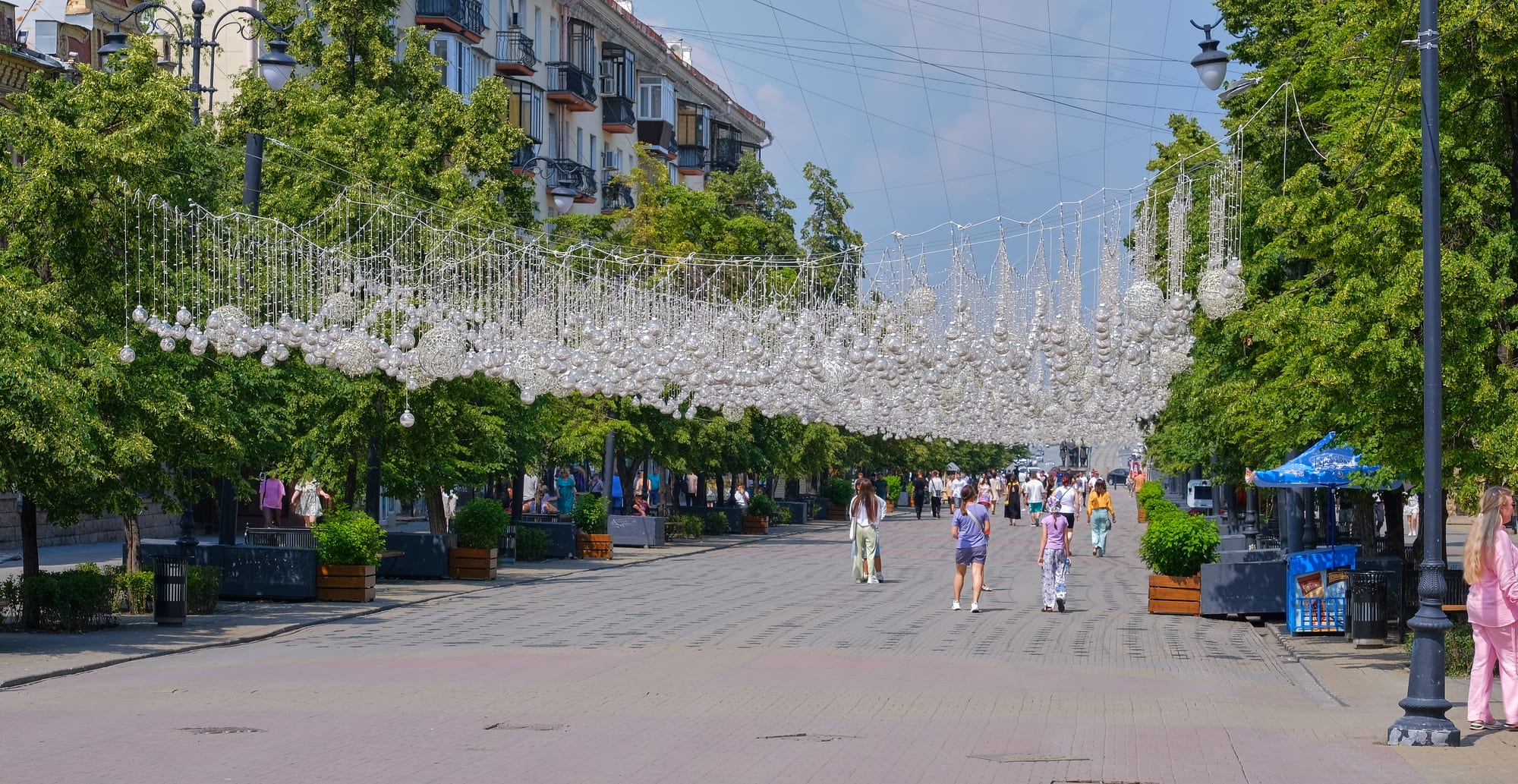
The centre is walkable: Kirovka, Revolution Square, the opera house and the main museums lie close together on and around Lenin Avenue. The city as a whole is spread out along wide avenues between large industrial districts, so trams and buses are needed beyond the centre. Pavements are icy for much of the winter.
🛡️ Safety
The Urals lie far from the front line, but the national risks apply in full: arbitrary detention of foreigners on political charges, wartime censorship laws and near-total loss of consular support. Chelyabinsk is a centre of steel and military production, and the oblast has been home to secret nuclear research and production reactors since the early Cold War. Air pollution is a long-standing local complaint.
Most governments advise against all travel to Russia and against any travel near the Ukrainian border. Do not photograph factories, military sites, bridges or energy infrastructure, and keep political opinions offline. Check current official travel advice before travelling.
🌦️ Climate
Humid continental, with warm summers and cold winters; the annual average is about 3°C. Most rain falls in summer, July being the wettest month and January the driest.
- Summer
- warm — July averages about 19°C
- Winter
- cold — January averages about −14.9°C
🤝 Local Customs
Most people are Russian, with Tatar and Bashkir minorities, and English is spoken by few, mostly the young. Strangers rarely smile in the street, which is no sign of hostility. On marshrutkas passengers ask one another to pass fares forward to the driver. Tipping is not necessary but expected in restaurants; more than 10 per cent would be unusual.
Cover shoulders and knees in churches, where women usually cover their hair; dress modestly at mosques and ask before photographing people.
💳 Common Payment Methods
The currency is the rouble (RUB). Western and Japanese credit and debit cards — Visa, Mastercard, American Express and JCB — do not work in Russia, and most foreign cards cannot be used at Russian ATMs; some shops serving many foreigners accept UnionPay. Bring enough cash for the whole stay and exchange it at banks.