💰 Budget
Food and local transport are cheap by Russian standards, and Chechen cafés are inexpensive. The main costs are flights, a hotel in the centre and a driver or guide for trips beyond the city. Foreign cards do not work, so every rouble has to come from cash brought into the country.
- Daily Budget Midrange
- USD 85–170 (hotel, restaurants, taxis, a driver or guide for the mountains)
- Daily Budget Shoestring
- USD 30–60 (guesthouse, cafés, buses and shared taxis)
Carry enough cash for the whole stay, and agree prices with drivers before setting out.
📅 Best Time to Visit
Late spring and early autumn avoid the heat of midsummer and the cold of winter; early summer brings the most rain as well as the most sunshine.
⏳ Suggested Number of Days
The centre of Grozny can be seen in a day or two. Trips into the mountains of Chechnya need a driver and long days on the road, adding a day or two more.
- First Visit
- 1–2 days
- With Surroundings
- 3–4 days
🚆 Transportation
The tram system was destroyed in the wars and has not been rebuilt, so the city depends on buses — around fifty routes — minibuses and taxis, and a car is the easiest way around. App-based car sharing and electric scooters arrived in 2018.
Carry a passport at all times for checkpoints, and use known taxis or a driver arranged in advance.
🛬 Airport & Station Connections
Grozny's airport, named after Akhmat Kadyrov and also known as Severny, is 7.5 km north of the city and reopened in 2007, with flights to Moscow and some international routes. The railway, restored in 2005, brings long-distance trains from Moscow in about two nights.
🚶 Walkability
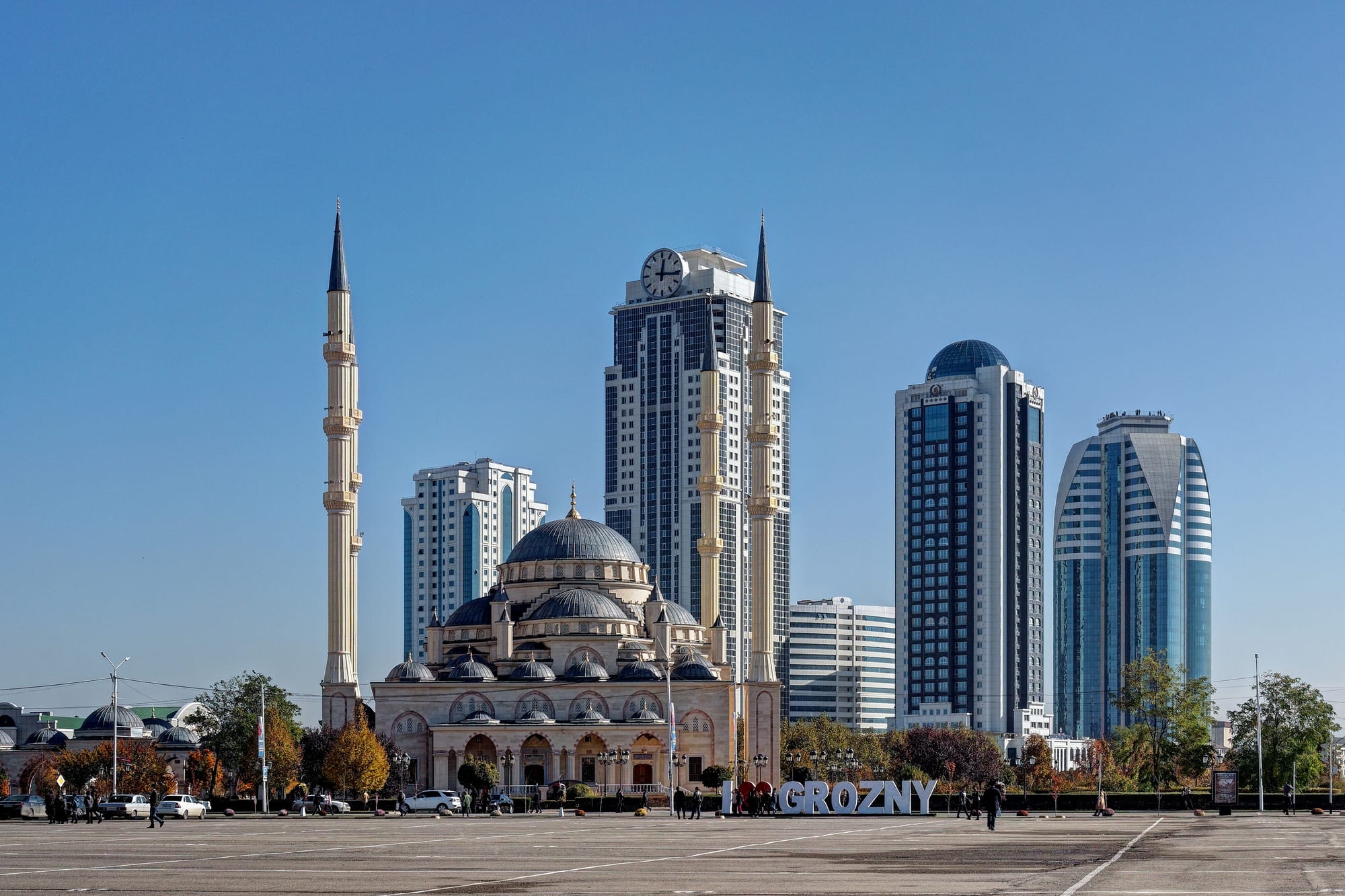
The rebuilt centre is pleasant on foot: Vladimir Putin Avenue, the mosque park and the Grozny-City towers are close together, with wide pavements and planted boulevards. Beyond the centre distances grow and a car or taxi is needed.
🛡️ Safety
Beyond the ordinary crime of a large European city, the decisive risks are political and legal: near-total loss of consular support, a real risk of arbitrary arrest and lengthy detention of foreigners on politically motivated charges (and their use in prisoner swaps), sweeping wartime censorship laws, and the possibility that men of certain ages, including dual nationals, face conscription or exit bans. Chechnya is governed by Ramzan Kadyrov, whose security forces human rights organisations accuse of killings and kidnappings; widespread torture and anti-gay purges have been reported. Checkpoints are everywhere, consular help is very limited, and unexploded ordnance from the wars can still be found.
Most governments advise against all travel to Chechnya, Ingushetia, Dagestan and the neighbouring republics; mountain hazards and avalanches add further risk. Most governments advise against all travel to Russia and against any travel near the Ukrainian border. Do not photograph police, security forces or official buildings, avoid political discussion in public, and never touch unidentified objects. Check current official travel advice before travelling.
🌦️ Climate
A humid continental climate with hot summers and cold winters. Rainfall peaks in early summer, which is also the sunniest time of year.
- Summer
- hot and long — the heat sometimes passes 35°C in the shade
- Winter
- cold, with occasional severe frosts of −20°C and below
🤝 Local Customs
Chechnya is a conservative Sunni Muslim society, and public life follows rules set by the republic's leadership. Dress is modest for both men and women and respect for elders and for guests is central to Chechen manners.
There are no bars and drinking alcohol in public is prohibited; dress modestly and ask before photographing anyone.
💳 Common Payment Methods
The currency is the rouble (RUB). Visa and Mastercard cards issued abroad do not work, ATMs will not accept foreign cards, and most transfers are blocked, so cash brought in and exchanged at banks is the only reliable means of payment.