💰 Budget
The spa towns charge more than the rest of the North Caucasus, especially in summer, and a sanatorium stay with treatment is the typical way Russians visit. Food and local transport stay cheap. Foreign cards do not work, so every rouble has to come from cash brought into the country.
- Daily Budget Midrange
- USD 85–180 (hotel or sanatorium, restaurants, the cable car, a driver for trips into the mountains)
- Daily Budget Shoestring
- USD 30–60 (guesthouse or hostel, cafés and canteens, buses and suburban trains)
Carry enough cash for the whole stay, and agree prices with drivers before trips into the mountains.
📅 Best Time to Visit
Late summer and early autumn: autumn is moderately dry, and October still has many warm, sunny days. May to July is the rainiest time, with frequent short thunderstorms, and spring is changeable and windy. Winter is mild for the mountains, with light snowfalls.
⏳ Suggested Number of Days
Two or three days are enough for the town and its park. Allow four or five to take in the neighbouring spa towns and the mountains; Russian sanatorium visitors traditionally stay much longer for a course of treatment.
- First Visit
- 2–3 days
- With Surroundings
- 4–5 days
🚆 Transportation
The centre and the park are walkable, and the park's cable car climbs the ridge. Local buses and minibuses serve the rest of the town, and suburban electric trains, running since 1936, link Kislovodsk with Yessentuki, Pyatigorsk and Mineralnye Vody. Trips into the mountains are by minibus or hired driver.
Carry a passport at all times for police checks, and agree taxi fares in advance or use an app.
🛬 Airport & Station Connections
The nearest airport is Mineralnye Vody, outside the town of the same name. The railway from Mineralnye Vody has reached Kislovodsk since 1894; long-distance trains run from Moscow, and suburban electric trains connect at Mineralnye Vody.
🚶 Walkability
Good in the centre: the station, the boulevard, the Narzan Gallery and the lower park are close together. The town is hilly, its districts lie at different heights between about 725 and 1,400 metres, and the park paths climb steadily towards the ridge, so walks can be tiring.
🛡️ Safety
Beyond the ordinary crime of a large European city, the decisive risks are political and legal: near-total loss of consular support, a real risk of arbitrary arrest and lengthy detention of foreigners on politically motivated charges (and their use in prisoner swaps), sweeping wartime censorship laws, and the possibility that men of certain ages, including dual nationals, face conscription or exit bans. Kislovodsk is in Stavropol Krai rather than one of the North Caucasus republics, but it sits almost on their borders.
Most governments advise against all travel to Chechnya, Ingushetia, Dagestan and the neighbouring republics; mountain hazards and avalanches add further risk. Most governments advise against all travel to Russia and against any travel near the Ukrainian border. Carry a passport, keep to marked paths in the park and the hills, and do not photograph police or military sites. Check current official travel advice before travelling.
🌦️ Climate
A moderately continental mountain climate with many sunny days. The valley is well ventilated by mountain winds, summers are comparatively cool, with nights 10–15°C colder than the days, and winters are fairly mild, with light snowfalls.
- Summer
- comparatively cool — July and August average about 19°C, and very hot days are rare
- Winter
- fairly mild for the mountains — January averages about −2°C, with cold snaps when Arctic air arrives
🤝 Local Customs
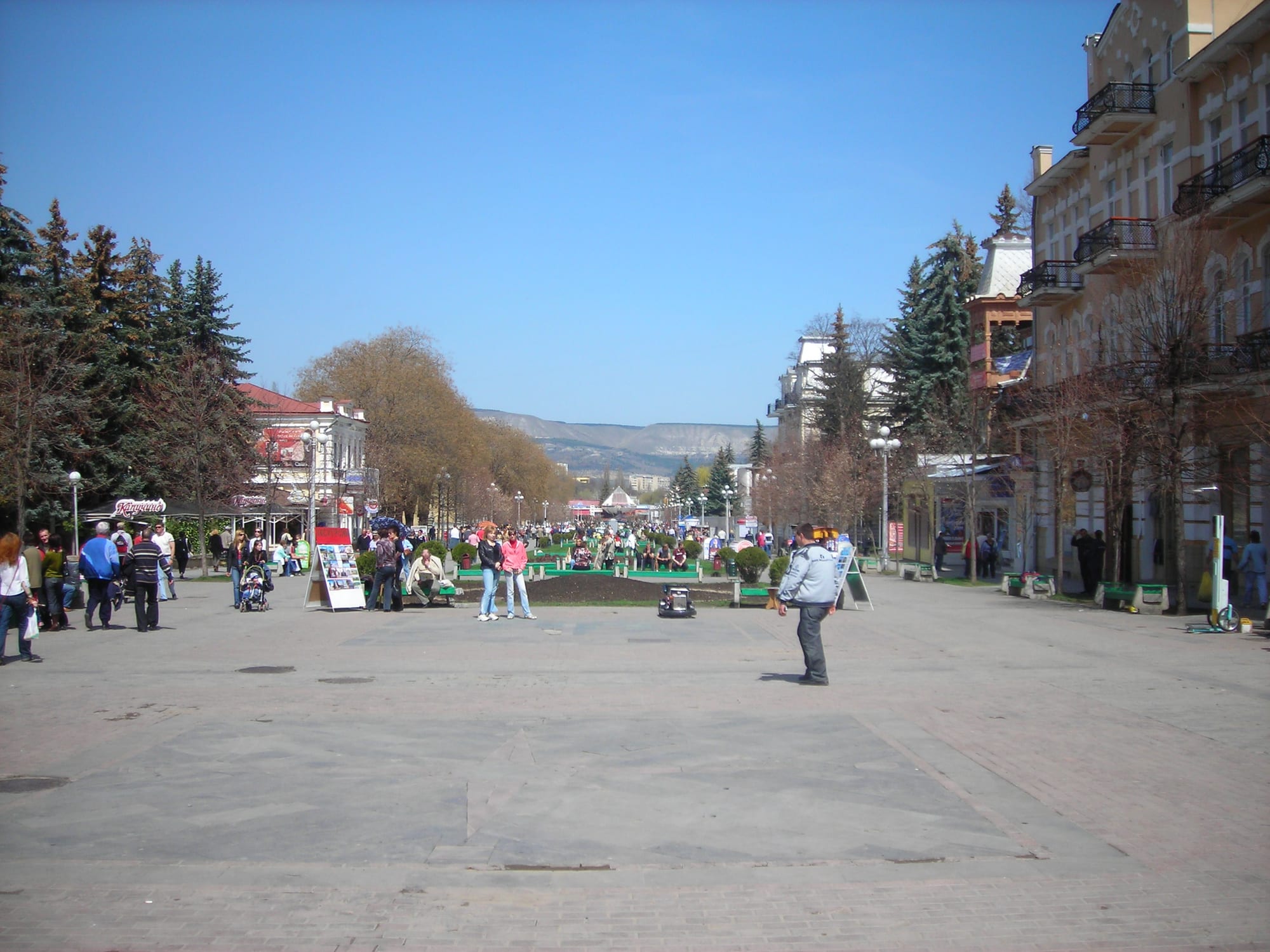
Kislovodsk is a resort town with Russian habits: the evening stroll on the boulevard, mineral water taken at the pump rooms, and a sanatorium routine of treatments and walks. It is largely Russian and Orthodox, with neighbours from the Caucasus republics and a long history of Jewish and other communities.
Dress is relaxed in the resort, but more modest clothing is expected in churches and the mosque; ask before photographing people.
💳 Common Payment Methods
The currency is the rouble (RUB). Visa and Mastercard cards issued abroad do not work, ATMs will not accept foreign cards, and most transfers are blocked, so cash brought in and exchanged at banks is the only reliable means of payment.