💰 Budget
Makhachkala is one of the cheaper cities in Russia for food, guesthouses and local transport. Drivers and guides for the mountain villages and canyons are the main extra cost. Foreign cards do not work, so every rouble has to come from cash brought into the country.
- Daily Budget Midrange
- USD 85–170 (hotel, restaurants, museum tickets, a hired driver for trips out of the city)
- Daily Budget Shoestring
- USD 30–60 (hostel or guesthouse, cafés and bakeries, minibuses and shared taxis)
Carry enough cash for the whole stay, and agree prices with drivers before setting out.
📅 Best Time to Visit
May to early October, when the summer season on the coast is warm and dry; autumn is the wettest time of year. Winters are mild but often overcast. Ramadan affects opening hours of cafés and restaurants.
⏳ Suggested Number of Days
Two or three days cover the city itself. Trips into the surrounding countryside need a driver and long days on the road, so including them roughly doubles the stay.
- First Visit
- 2–3 days
- With Surroundings
- 4–6 days
🚆 Transportation
The city is spread along the coast between the mountain and the sea and is crossed mostly by minibus, shared taxi and private car; traffic is heavy and public transport is poorly organised. Trips beyond the city are by hired car with a driver or by minibus from the bus stations.
Carry a passport at all times for police checkpoints, and use app-booked or known taxis.
🛬 Airport & Station Connections
Uytash Airport, named after the pilot Amet-khan Sultan, lies near the city, just south of Kaspiysk, with flights to other Russian cities and some international routes. Makhachkala station is on the North Caucasus Railway, with long-distance trains from Moscow taking about two nights, and trains to and from Baku call here.
🚶 Walkability
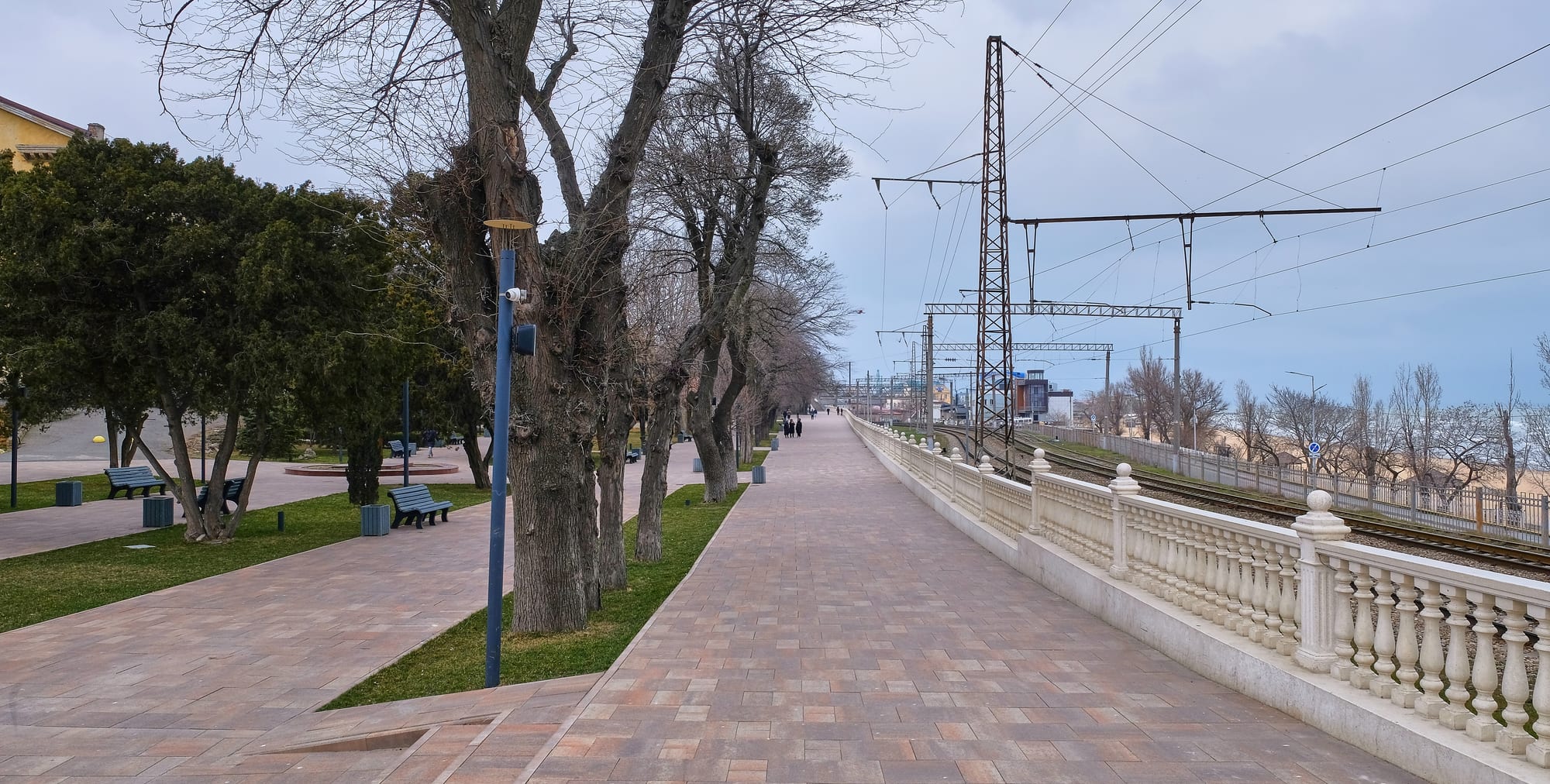
The centre is compact enough to walk between the mosque, the cathedral, the museums and the seafront. Beyond it the city sprawls along busy roads with uneven pavements and heavy traffic, and the railway line cuts the streets off from the beach except at crossings.
🛡️ Safety
Beyond the ordinary crime of a large European city, the decisive risks are political and legal: near-total loss of consular support, a real risk of arbitrary arrest and lengthy detention of foreigners on politically motivated charges (and their use in prisoner swaps), sweeping wartime censorship laws, and the possibility that men of certain ages, including dual nationals, face conscription or exit bans. Makhachkala has a heavy security presence. In October 2023 a mob stormed the city's airport looking for passengers from Israel; in June 2024 gunmen attacked churches, synagogues and a police post in Makhachkala and Derbent, killing a priest; and in September 2026 a Ukrainian drone attack damaged the port.
Most governments advise against all travel to Chechnya, Ingushetia, Dagestan and the neighbouring republics; mountain hazards and avalanches add further risk. Most governments advise against all travel to Russia and against any travel near the Ukrainian border. Expect frequent checkpoints, do not photograph police or security sites, and travel outside the city only with a known driver. Check current official travel advice before travelling.
🌦️ Climate
A dry, semi-arid climate shaped by the Caspian and the rain shadow of the Caucasus. Summers are hot and sunny, winters mild and often overcast, and most rain falls between September and November.
- Summer
- hot — the summer months average about 24°C, with daytime highs reaching 36–38°C
- Winter
- mild — January and February average about 1°C, and snow rarely lies
🤝 Local Customs
Most people are Sunni Muslims, and religious observance is strong. Dress is conservative, especially near mosques. Hospitality to guests is taken seriously, elders are treated with marked respect, and Russian is the common language among the city's many peoples.
Alcohol is far less available than elsewhere in Russia and drinking in public is frowned upon; ask before photographing people, especially women.
💳 Common Payment Methods
The currency is the rouble (RUB). Visa and Mastercard cards issued abroad do not work, ATMs will not accept foreign cards, and most transfers are blocked, so cash brought in and exchanged at banks is the only reliable means of payment.