💰 Budget
Cap Skirring is the most expensive corner of the Casamance, because its hotels are built for holidaymakers and much of what they sell is brought in by road. Village guesthouses, market food and shared taxis cost very little; beach hotels, hired vehicles and flights are what raise the total.
- Daily Budget Midrange
- USD 80–210 (beach hotel, restaurant meals, a car and driver for village and river trips)
- Daily Budget Shoestring
- USD 25–50 (campement or small guesthouse, market and street food, shared taxis)
Carry enough cash, as card payments are limited to a few hotels and cash machines in the village can be empty or out of service.
📅 Best Time to Visit
November to April, the dry season, is the main season: warm, sunny and green early on, with calm sea and the villages accessible. The rains from about June to October are heavy, many hotels reduce their opening, and the tracks into the countryside turn to mud, though the landscape is at its greenest.
⏳ Suggested Number of Days
Two or three days suit a stay on the coast. Four to six make sense for anyone ranging further into the Casamance, since travel here is slow and each journey takes longer than the distance suggests.
- First Visit
- 2–3 days
- With Surroundings
- 4–6 days
🚆 Transportation
The village is small enough to cross on foot, and bicycles, motorbike taxis and a few shared taxis handle everything else. Hotels arrange cars and drivers, and pirogues can be hired for trips along the coast and into the creeks. Sept-place taxis run the road to Ziguinchor.
Agree the fare for a taxi or a pirogue before setting off, and allow far longer than the distance suggests on unsurfaced roads in the rains.
🛬 Airport & Station Connections
Cap Skirring Airport lies a few kilometres from the village and takes flights from Dakar and services from Europe. Overland, the road from Ziguinchor takes roughly an hour and a half to two hours; Ziguinchor itself is reached from Dakar by the overnight ferry, by air, or by road through The Gambia.
🚶 Walkability
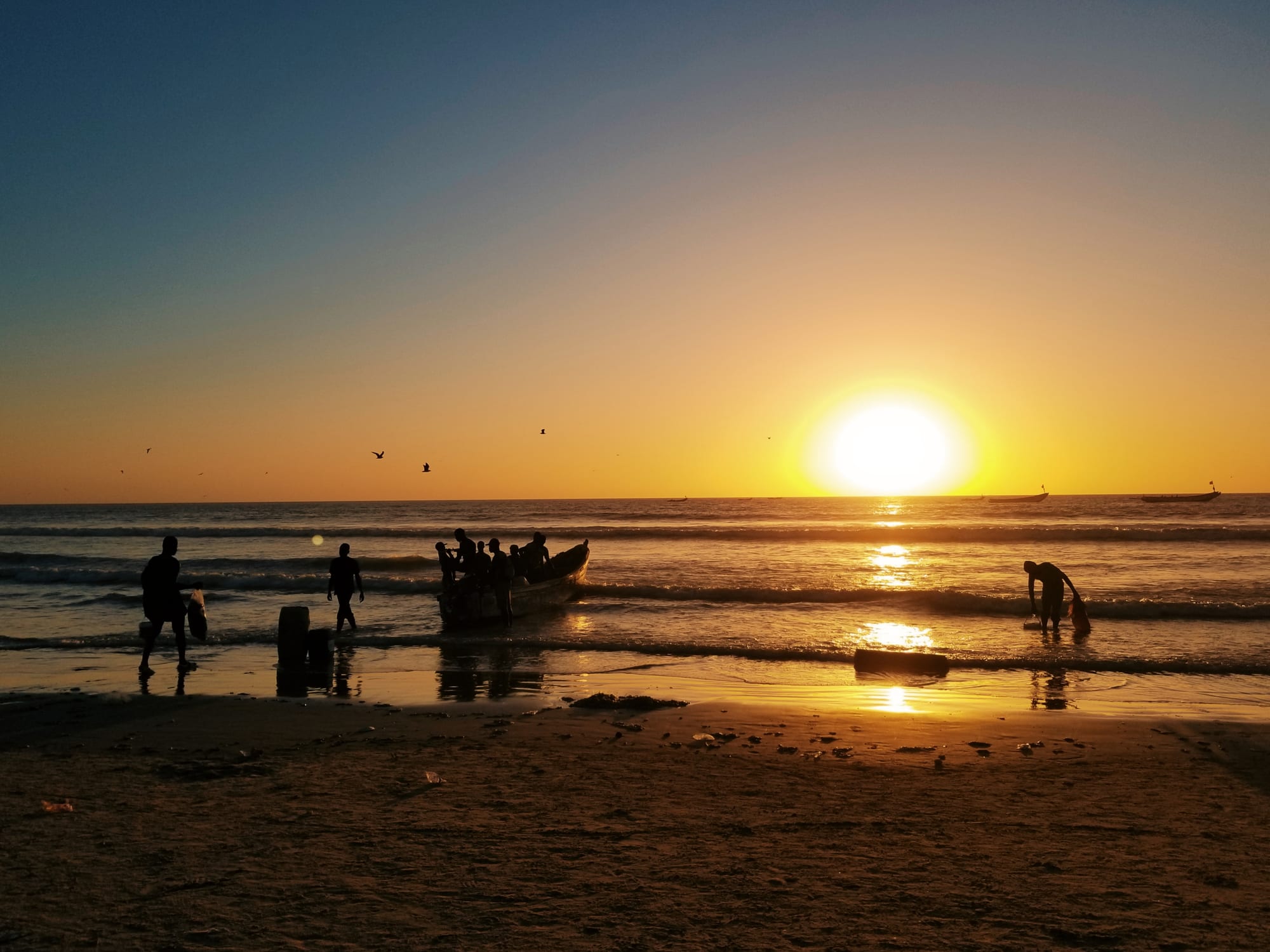
Easy on foot within the village and along the beach, where a walk of several kilometres in either direction passes fishing camps and palm groves. There are few pavements and little street lighting, sand tracks replace roads in places, and the villages of Kabrousse and Diembéring are a long walk or a short ride away.
🛡️ Safety
The Casamance separatist conflict, fought at low intensity since the 1980s between Senegal's army and factions of the MFDC independence movement, has not formally ended, though peace agreements were signed with some factions in 2022 and 2025; the coast, Ziguinchor and the main roads see regular visitors. Around Cap Skirring the risks are ordinary ones: opportunistic theft from beaches and unlocked rooms, persistent informal guides, road accidents and a strong Atlantic surf with rip currents. Rural areas near the border with Guinea-Bissau still carry landmine risk.
Stick to main roads and established routes in rural Casamance, do not walk into bush areas near the borders, and take malaria precautions. Check current official travel advice before travelling.
🌦️ Climate
Tropical and the wettest corner of Senegal, with a long dry season and heavy summer rains. The sea keeps the cape a little cooler and breezier than the interior, and humidity is high from June to October.
- Summer
- hot, humid and very wet, around 25–32°C, with downpours from June to October
- Winter
- warm and dry, around 20–32°C, with sunny days and mild nights
🤝 Local Customs
The Casamance is Diola country, and religion here mixes Islam, Catholicism and traditional practice. Sacred forests and shrines around the villages are not open to outsiders and should not be entered or photographed. Greetings are long and matter, French is the language of business and Diola the language of the villages, and modest dress away from the beach is expected.
Ask before photographing people, ceremonies or village shrines, keep swimwear to the beach, and accept that some sites and rites are closed to visitors.
💳 Common Payment Methods
The currency is the West African CFA franc (XOF), pegged to the euro. Hotels may take cards, but almost everything else — taxis, the market, village guesthouses, boat hire — is cash. Cash machines exist in the village and in Ziguinchor but cannot be relied on, so notes are worth bringing from Dakar or Ziguinchor.