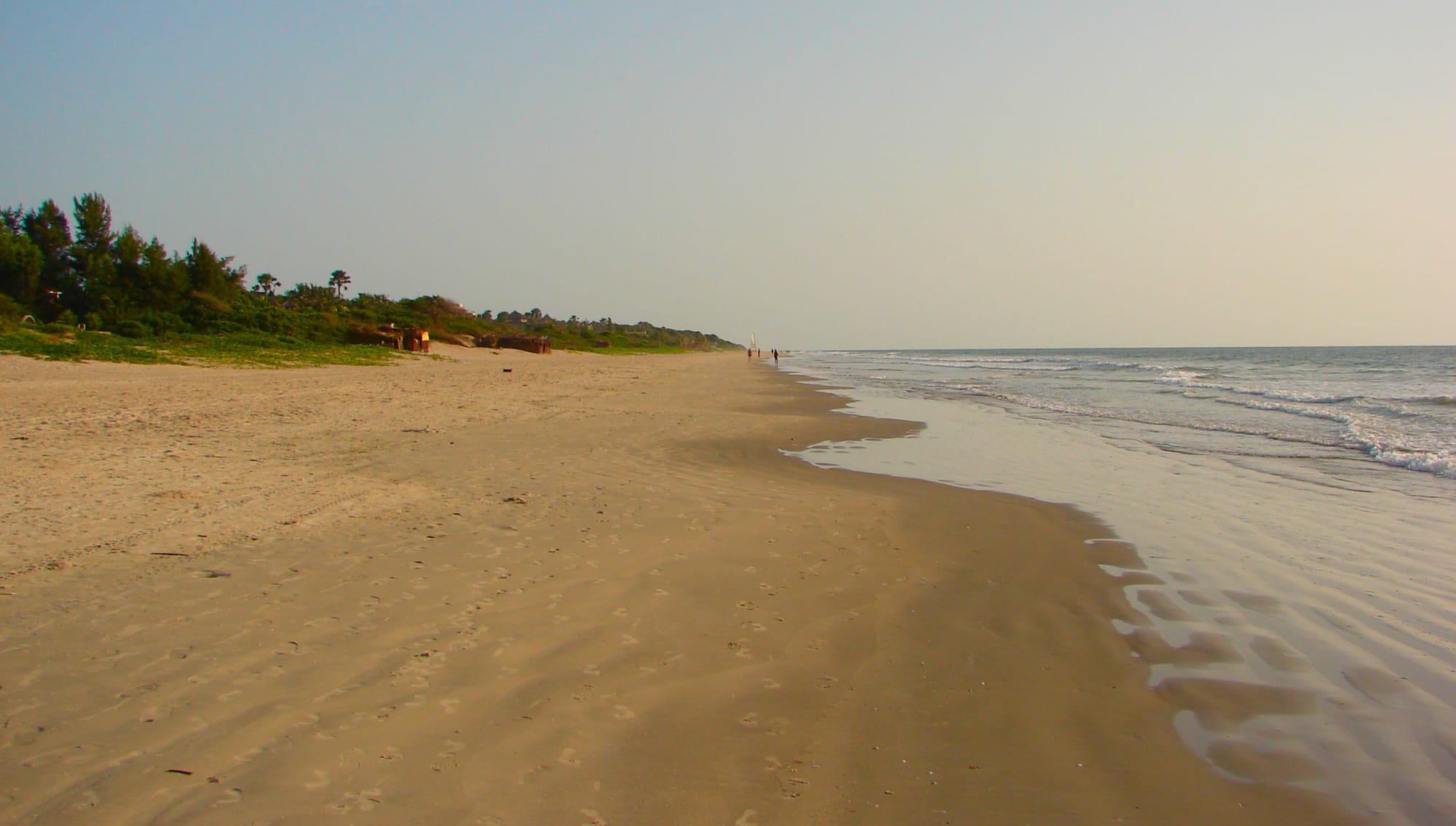
A wide, empty sandy beach with gentle waves on the right and low green trees and palms along the shore

Senegal

The Casamance & the East

The beach at Cap Skirring, on the Atlantic coast of the Casamance, stretching south towards Guinea-Bissau. (Bjørn Christian Tørrissen / Wikimedia Commons · CC BY-SA 3.0)

Senegal's green south and wide east — the Casamance, cut off from the north by The Gambia, with its rice paddies, forests, Diola villages and Atlantic beaches, and the savanna east of Tambacounda and Kédougou, where the Niokolo-Koba park and the Bassari hills reach towards Guinea and Mali.

Explore The Casamance & the East

History

The Casamance developed apart from northern Senegal. The Diola (Jola) settled the coastal rice lands many centuries ago in villages without kings, except for the priest-kings of places such as Oussouye. Inland, Mandinka states tied to the Kaabu kingdom ruled the middle Casamance, and Fula herders later founded the kingdom of Fuladu around Kolda. The Portuguese founded Ziguinchor in the 17th century as a trading post, and it was ceded to France in 1888. The French had already built a post on Carabane island in the 1830s.

Colonial rule faced resistance. The best-remembered figure is Aline Sitoé Diatta, a young Diola woman who urged villagers to refuse French wartime requisitions of rice and was arrested in 1943; she died in exile in Timbuktu and is honoured today as a national heroine.

After independence, grievances over land, neglect and the distance from Dakar fed a separatist movement, the MFDC, whose rebellion began in 1982. Decades of low-intensity conflict followed, with ceasefires, splits within the movement and army operations; recent years have brought peace agreements with some factions and the return of displaced villagers. The east has a quieter modern story: Tambacounda grew as a railway town on the Dakar–Niger line, and Kédougou, long remote, has been transformed by a gold boom.

Culture & Customs

The Casamance is Senegal's most culturally distinct region. The Diola, the largest group on the coast, are Muslim, Catholic or followers of traditional religion, and sacred forests still host initiation rites such as the bukut. The Kumpo, a masked figure covered in palm leaves who appears at village festivals, is a Diola tradition. In Mandinka areas, the Kankurang, a masked figure of the initiation rites, is listed by UNESCO as intangible heritage.

Many people speak Diola, Mandinka, Pulaar or Balante as well as Wolof, and Ziguinchor's Portuguese past survives in a local creole. Many Casamançais stress their difference from the Wolof north.

The Bassari country around Kédougou has its own traditions: the Bassari and Bedik peoples live in hill villages and hold initiation festivals with masks and dances, alongside Fula and Malinke neighbours. Music ranges from the kora of the Mandinka to Diola drumming and the ekonting, a folk lute.

Daily Life

Ziguinchor is the largest city, a port and market town on the Casamance river, with a university. Kolda, Sédhiou, Bignona and Oussouye serve their districts; in the east, Tambacounda is a transport crossroads and Kédougou a fast-growing mining town.

The Casamance is Senegal's breadbasket for rice, grown in flooded paddies worked with the long-handled Diola spade, and it produces cashews, mangoes, palm oil and fish. Tourism centres on Cap Skirring. The east lives on cotton, livestock, farming and, increasingly, industrial and artisanal gold mining around Kédougou.

Life follows the rains, with the rice season from June to November. Current issues include the legacy of the conflict, land mines in some farmland, rural poverty, unregulated gold mining, and deforestation from illegal logging.

Food

The Casamance has a distinctive cooking tradition. Yassa, chicken or fish marinated in lemon and onions, is widely said to have originated here. Soupou kandja is a thick okra and palm-oil stew with fish or seafood, served over rice, and caldou is another Casamance fish dish. Oysters from the mangroves are grilled or dried, and rice is eaten at almost every meal.

Palm products are central: red palm oil for sauces and palm wine, tapped from the trees and drunk in the villages. Cashew nuts, mangoes and other fruit are sold at roadsides in season.

In the east the diet shifts to millet, maize and fonio, a small grain grown in the Kédougou hills, with groundnut sauces and grilled meat. Across the region, bissap and baobab juices and ataya tea are the everyday drinks.

Attractions & Natural Wonders

In the lower Casamance, Ziguinchor has its colonial quarter, markets and river port, and is the base for trips into the region. The Diola villages are the main draw: Enampore's large round impluvium house, Mlomp's two-storey earth houses and giant fromager trees, and Oussouye, seat of a traditional king. Cap Skirring's beaches stretch south towards the border with Guinea-Bissau, and to the north the coast continues to Kafountine and Abéné. Carabane island, at the river mouth, was the first French trading post in the Casamance.

Further east, the Casamance river winds past Sédhiou and Kolda through forest and farmland. Tambacounda is the gateway to Niokolo-Koba National Park, a UNESCO World Heritage Site of savanna, gallery forest and the Gambia river, with hippos, antelopes such as roan and western Derby eland, primates including chimpanzees, and a small population of lions.

The Bassari country hills around Kédougou form the UNESCO-listed cultural landscape of the Bassari, Fula and Bedik peoples. Visitors walk to hill villages such as Iwol, to Bassari villages on the hilltops, and to the Dindéfélo waterfall, which falls from a cliff near the Guinean border.

Cities in The Casamance & the East

Planning basics

Budget

Daily costs in the towns are low, with cheap food and simple hotels in Ziguinchor, Kolda and Tambacounda, and campements in the Diola villages. Cap Skirring's beach hotels are priced higher, as are safari lodges and the vehicles needed for Niokolo-Koba and the Kédougou hills, which are the main costs of a trip to the east. Getting to the Casamance by ferry or air also adds up.

Daily Budget Midrange
USD 80–210 (beach or lodge hotel, restaurants, a car and driver or guided park visit)
Daily Budget Shoestring
USD 25–50 (campement or basic hotel, local food, sept-place taxis)

Book a cabin on the Dakar–Ziguinchor ferry ahead in the busy season, and carry cash, as cash machines are few outside the main towns.

Safety

The Casamance separatist conflict, fought at low intensity since the 1980s between Senegal's army and factions of the MFDC independence movement, has not formally ended, though peace agreements were signed with some factions in 2022 and 2025; the coast, Ziguinchor and the main roads see regular visitors. Some rural areas near the borders with The Gambia and Guinea-Bissau still carry landmine risk. In the east, Kédougou region borders Mali, and the gold-mining areas are rough and remote.

Stick to main roads and established routes in rural Casamance, do not walk into bush areas near the borders, and take malaria precautions. Check current official travel advice before travelling.

Climate

The Casamance is the wettest part of Senegal: the rains last from around June to October and are heavy, and the landscape stays green much of the year. The east is savanna, drier than the Casamance but wetter than the north, and is very hot before the rains; Tambacounda is among the hottest towns in the country. The Kédougou hills are slightly cooler.

Summer
hot and very wet, around 25–33°C in the Casamance; the east is hotter, often near 40°C in April and May
Winter
dry and warm, around 18–33°C, with cool nights inland and harmattan dust in the east

Transportation

Ziguinchor is reached from Dakar by an overnight ferry, by air, or by road through The Gambia via the Senegambia bridge; the all-Senegal inland route via Tambacounda is much longer. Cap Skirring and the villages are reached by road from Ziguinchor. In the east, the main road runs from Dakar via Kaolack to Tambacounda and on to Kédougou, and Niokolo-Koba requires a four-wheel-drive vehicle.

Travel by day, use the ferry or a direct route to Ziguinchor, and hire a vehicle with a guide for the park.

Best Time to Visit

November to April is the best season: dry, green early on, with easier roads and good game viewing in Niokolo-Koba as the water sources shrink. Parks and some roads can be hard to access in the rains. The Bassari country's initiation ceremonies are usually held in the dry season and early rains, and the Casamance's Kumpo dances accompany village festivals.